A Subdomain Surfaces. The Pattern Is Familiar.
Apple registered genai.apple.com this week. The domain appeared in DNS records and was spotted by AppleInsider, setting off the wave of pre-WWDC speculation that Apple’s product leak cycle reliably generates. The domain itself says almost nothing specific — “genai” could refer to generative AI infrastructure, a new Siri brand, an AI developer platform, or a consumer-facing product that Apple wants to name distinctly from the existing “Apple Intelligence” umbrella. What it says unambiguously is that Apple has a generative AI announcement large enough to warrant a dedicated subdomain, and the WWDC keynote on June 8 is where that announcement will land.
WWDC 2026 runs June 8-12. The keynote opens the conference and is where Apple’s OS updates and platform-level announcements are made. This year, Apple will announce iOS 27, iPadOS 27, macOS 27, tvOS 27, watchOS 27, and visionOS 27 — all with AI features that build on the Apple Intelligence framework introduced in 2025. The M5 chip family (M5, M5 Pro, M5 Max, M5 Ultra) is expected to be central to the hardware announcements, providing the on-device compute foundation for the AI capabilities the software will expose.
The specific content of genai.apple.com — what product or service it represents — will be known in fifteen days. What can be assessed now, based on the public record of Apple’s AI direction, is substantial enough to sketch what June 8 probably looks like.
The $1 Billion Gemini Deal and What It Means for Siri
Apple announced in January 2026 a multi-year, non-exclusive partnership with Google under which Apple will pay Google approximately $1 billion annually for access to a custom 1.2 trillion-parameter Gemini model to power Siri. The Bloomberg report from Mark Gurman, who has been the most reliable source on Apple’s AI strategy, described the deal as non-exclusive — meaning Apple is not locked to Gemini and can use other models for other tasks or at other tiers.
The non-exclusive framing is the key context for understanding Apple’s broader AI model marketplace strategy, which the May 14 iOS 27 preview indicated clearly: Apple is building a platform that allows users to select third-party AI providers — Google, Anthropic, and others — to power specific Apple Intelligence features. The Gemini deal is Apple’s bet on a specific provider for the capabilities that require a frontier model, while the marketplace architecture ensures Apple isn’t permanently dependent on any single provider.
For Siri specifically, the $1 billion Gemini integration represents the largest capability upgrade in the assistant’s fifteen-year history. Siri’s current limitations are well-known: poor contextual understanding, inconsistent multi-step task handling, failure modes that competitors don’t exhibit at comparable frequency. A Siri backend powered by a 1.2 trillion-parameter Gemini model with Apple’s on-device privacy architecture sitting above it is a fundamentally different product than the current Siri, regardless of what it’s called.
The genai.apple.com subdomain may be where Apple announces the name and positioning for whatever this upgraded Siri becomes. “Apple Intelligence” was the 2025 umbrella brand. “GenAI” as a dedicated subdomain suggests either a distinct product within that umbrella or a new platform positioning for the AI capabilities Apple is about to unveil.
M5 Chips and the On-Device AI Architecture
Apple’s AI strategy has two layers that are always presented as complementary but are strategically distinct. On-device AI — running models on the Neural Engine in Apple Silicon — enables privacy-preserving AI that processes sensitive data locally without sending it to a server. Cloud AI — routing tasks to larger models via Private Compute Cloud or partner APIs — enables capabilities that require more compute than any device carries locally. Apple’s value proposition is that it handles the routing between these layers seamlessly and privately.
The M5 chip family is the hardware foundation that determines what’s possible in the on-device layer. Each generation of Apple Silicon has increased the Neural Engine’s performance, and each increase has expanded the set of AI tasks that can run locally without cloud routing. M4 enabled more capable on-device models than M3. M5 is expected to continue that trajectory with specific optimizations for the generative AI workloads — text, image, and multimodal inference — that Apple Intelligence features require.
The implications for developers are significant. The capabilities Apple exposes through its AI frameworks (Core ML, Create ML, the forthcoming AI APIs in iOS 27) are bounded by what the hardware can support locally. Each M5 upgrade expands the application space for on-device AI development, and the developer tools announced at WWDC will define what that expanded space looks like for the apps built on the next generation of Apple devices.
iOS 27 and the AI Model Marketplace
The iOS 27 AI model marketplace announcement — that users will be able to choose third-party AI providers to power Apple Intelligence features — has significant implications for Anthropic, Google, and OpenAI, all of whom have been courting Apple for integration deals. For consumers, it represents the most significant shift in how AI is experienced on the iPhone since the launch of ChatGPT integration in 2024.
The marketplace model is strategically interesting for Apple because it externalizes the competitive race between AI model providers without Apple having to pick permanent winners. Consumers who prefer Claude over Gemini can route their Apple Intelligence features through Claude. Consumers who prefer ChatGPT can use that. Apple captures the platform premium — the distribution, the privacy architecture, the interface design — while the model providers compete on capability and price for the consumer’s AI preference.
For the AI model providers, appearing in Apple’s marketplace is the consumer distribution channel with the highest reach in the premium smartphone market. iPhone users tend to be higher-income and more likely to pay for premium services. Access to that audience through a trusted Apple integration is worth negotiating significant terms to achieve. The genai.apple.com subdomain may be where Apple announces the marketplace’s structure, the initial provider set, and the developer APIs that allow third-party AI integration at the system level.
Fifteen Days
Apple’s WWDC leaks are consistently accurate in identifying what products are coming and consistently misleading about the details that matter. The subdomain tells you a major AI announcement is coming. The hardware leaks tell you M5 is coming. The OS numbering tells you iOS 27 is coming with AI features. What none of this tells you is the specific framing Apple will use, the demo that will make the capability legible to a general audience, or the specific product decisions that will distinguish what Apple is doing from what Google and Microsoft and Samsung are also doing.
That framing and that demo are what June 8 is for. Apple’s best keynotes have always been moments where capabilities that existed technically were presented in ways that made their implications clear and compelling. The AI capabilities coming in iOS 27 and macOS 27 exist technically, in parts, across the Google and Microsoft and Samsung ecosystems already. The question is whether Apple has assembled them into something that feels like a coherent new capability rather than a collection of features, and whether the genai.apple.com product — whatever it is — represents that coherence.
The domain is registered. The conference is fifteen days away. The subdomain is Apple telling you, indirectly, that the answer to that question is yes.
You Can’t Connect The Dots Looking Forward
The genai.apple.com domain registration is the wrong thing to read closely. The right thing to read closely is the sequence: Apple spent eighteen months saying publicly that it was moving carefully on AI while Siri fell further behind Gemini and ChatGPT in every visible benchmark, made the Gemini integration deal that it publicly framed as a partnership of convenience, and simultaneously registered a subdomain that implies something far more coherent than a partnership of convenience.
The dots, looking backwards from the WWDC announcement, will connect in a way that makes Apple’s silence look like strategy rather than delay. That is how Apple has always worked. The iPod was not obvious before it existed — music players existed, hard drives existed, the iTunes deal with the labels was a minor trade-press story. The iPhone was not obvious before it existed — the patents were filed, the antenna tests were run, the carrier deals were signed, and none of it read as a coherent announcement until the announcement happened.
What Apple is about to show is a system, not a feature. The subdomain implies a product with its own identity — not Siri updated, not Gemini rebranded, but something Apple is confident enough to put behind a dedicated domain. The Gemini deal is one input to the system. M5 is one input. The on-device privacy architecture is one input. The iOS 27 AI model marketplace framework — the decision to allow competing AI models inside the iOS layer — is another. Looking forward, none of these connect. Looking backwards from the WWDC keynote, they will. That is the design of the announcement, and probably the design of the product.
Apple’s AI Integration Follows a Predictable Pattern of Incumbent Defense
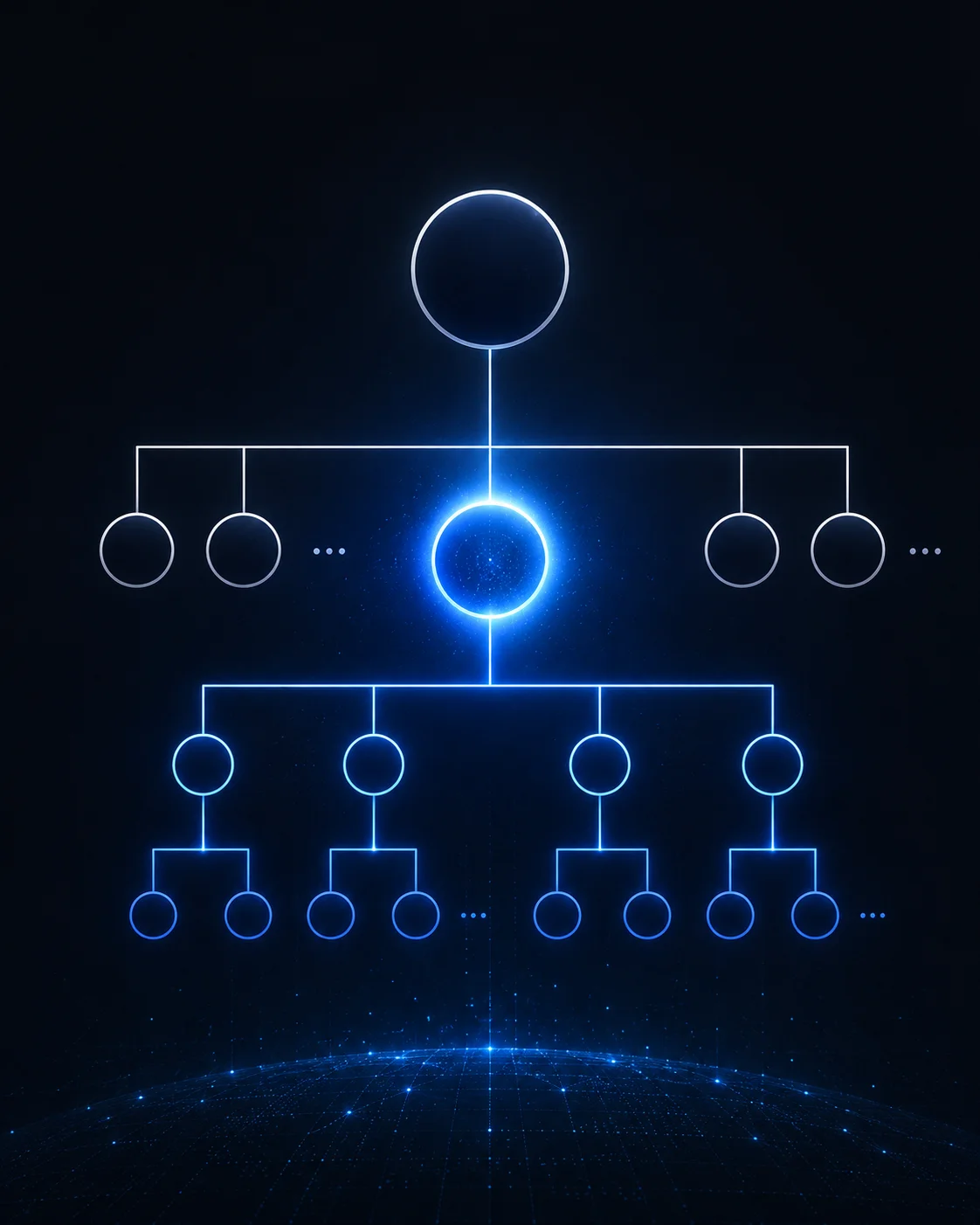
Clayton Christensen’s disruption framework makes a consistent observation about how successful incumbents respond to new technology categories: they integrate the capability into the existing platform rather than build a new platform around it. WWDC 2026 is Apple executing this playbook precisely.
The genai.apple.com subdomain, the Gemini integration under Apple Intelligence branding, and the iOS AI Extensions API all route third-party AI capabilities through Apple-controlled interfaces. This is not Apple building a frontier AI lab. It is Apple building a distribution layer for AI that lives above the model layer — the same position it took with search (Google as the default behind Apple’s search surface), with mapping (competing through experience while others build the cartography), and with payments (Apple Pay as the interface layer above the card networks).
Apple’s developer documentation for the iOS AI Extensions framework confirms the integration architecture: third-party models enter the device experience through Apple-defined privacy APIs and capability surfaces that Apple can modify, restrict, or expand as competitive conditions change. The question Christensen’s framework asks is not whether Apple can defend its position at the model layer — it isn’t trying to. The question is whether the interface layer is defensible against LLM-native products, including platforms with growing enterprise footprints that don’t require routing through Apple hardware. Apple’s investor communications frame AI as a services revenue expansion. Christensen would note that framing is correct for the installed base and potentially underestimates the markets where the installed base doesn’t set the terms.