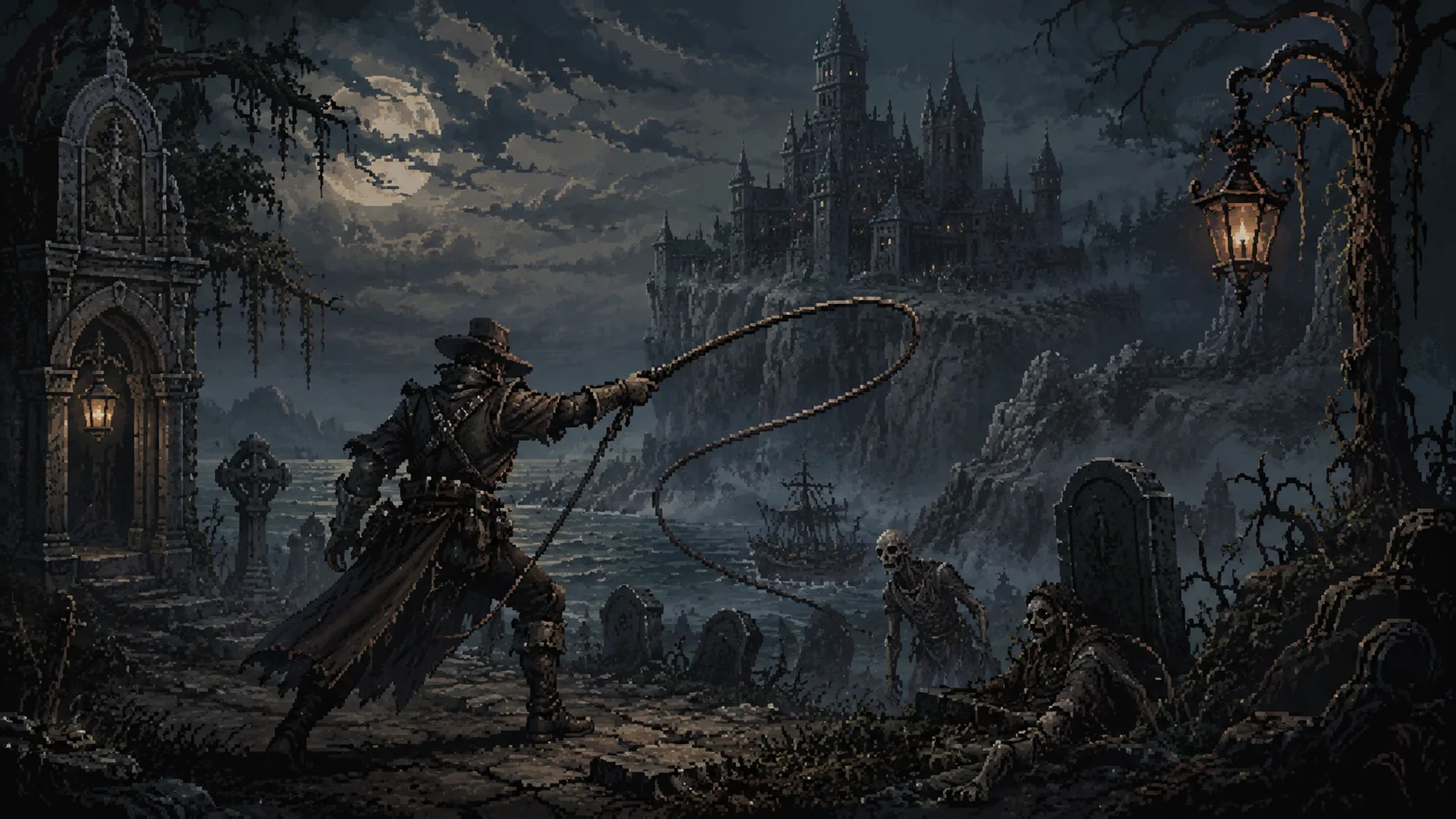
The Studio That Proves Indie Can Win
Yacht Club Games built its reputation on Shovel Knight — a 2014 Kickstarter platformer that sold millions, earned critical acclaim most AAA releases would envy, and established the studio as one that understood what made classic games great and could execute on it at a level that surpassed most big-budget competitors.
Mina the Hollower launched today on PC, PlayStation 5, Xbox Series X/S, Nintendo Switch, and Nintendo Switch 2 to reviews that suggest Yacht Club has done it again — and then some. A 92 on Metacritic based on 38 critic reviews. A 93 on OpenCritic. Perfect scores from IGN, RPG Site, Screen Rant, and multiple other outlets. The highest-rated game of 2026, in a year that has already delivered 007 First Light (which we covered earlier this month), Forza Horizon 6, and Pokémon Pokopia. CBR’s review of Mina landing a score above all three is a claim that deserves attention: an independent studio with no publisher backing, no franchise IP, and no marketing budget comparable to any major release has produced the best-reviewed game of the year so far.
What Mina the Hollower Is
Mina the Hollower is a top-down action-adventure game with obvious debts to the original Legend of Zelda and the Game Boy Zelda titles that refined the formula. The player controls Mina, a grave-robber on a mysterious island populated by supernatural threats, navigating overworld environments, entering dungeons, acquiring new tools, and solving puzzles that use those tools in increasingly clever combinations. The format is one of gaming’s oldest and most proven: Legend of Zelda invented it in 1986, and every entry in that franchise since has been a demonstration of how much creative space exists within a structure of overworld exploration, dungeon navigation, and tool-based puzzle design.
Yacht Club’s specific contribution is executing that format with the mechanical precision that comes from a studio that has spent a decade studying what makes tight game design feel right. Mina’s movement — the whip she uses as both combat tool and traversal mechanic, the burrow ability that allows her to move briefly underground — is described in reviews as immediately readable and steadily revelatory, the kind of movement system that feels intuitive from the first moment and is still teaching you new things in the final hours. GamingTrend’s assessment that Mina “manages not only to equal the series that inspired it, but in some ways surpasses it” is a bold claim for any game, and the frequency with which reviewers are reaching for Zelda comparisons without qualification suggests it’s not hyperbole.
The horror aesthetic — dark island setting, Victorian-adjacent visual design, monsters drawn from folklore rather than fantasy convention — gives Mina a tonal identity that distinguishes it from the bright, friendly aesthetic that Shovel Knight operated in. Mina the Hollower is not a children’s game despite its accessible mechanics. It is a game that happens to be playable by anyone with any level of experience, but whose visual and tonal language addresses adults with a taste for gothic atmosphere and European horror mythology. The combination of mechanically accessible design with thematically mature aesthetics is a balance that few games achieve; Mina apparently does.
The Indie Metacritic Argument
The specific claim that Mina the Hollower is the highest-rated game of 2026 — above major franchise entries from established publishers — is the argument that the independent games industry has been making about itself for the past decade, now rendered in a single data point. The narrative that indie games “punch above their weight” has been softened over years of critical success into something more accurate: the best independent studios, operating with creative freedom that publisher relationships typically constrain, consistently produce games that are better-reviewed than the median major-studio production.
The economics that enable this are counterintuitive. Mina the Hollower was developed on a budget that is a fraction of what any major publisher spends on a comparable release. Yacht Club has no marketing department of the scale that Activision, EA, or even medium-sized publishers operate. The game won’t receive the retail shelf space, the TV advertising, or the promotional integration that major publishers buy as a matter of course for new releases. Its visibility will come from word of mouth, from review coverage, from YouTube and streaming recommendations, and from the cumulative reputation that Yacht Club built with Shovel Knight over twelve years of post-release support.
And yet the Metacritic score is 92. The reason is not mysterious: Yacht Club made the game they wanted to make, without the compromises that publisher relationships and franchise expectations impose, and they made it at the level of craft that their decade of study of classic game design prepared them for. Creative freedom is not a guarantee of quality — most independently developed games are not exceptional. But for studios that have demonstrated the taste to know what makes games great and the technical competence to execute on that knowledge, creative freedom produces outcomes that constrained development rarely does.
Game of the Year Candidacy in a Strong Year
2026 has been an unusually strong year for games through May. 007 First Light’s launch received the first serious GoldenEye comparison in nearly three decades. Forza Horizon 6’s Japan setting is being called the best entry in that franchise. The cozy games market has continued to mature with multiple high-quality releases. And now Mina the Hollower arrives to claim the year’s highest Metacritic score — in a year that wasn’t short on competition for that distinction.
The game of the year conversation in gaming media typically crystallizes around the major fall releases — the Novembers and Octobers when publishers concentrate their biggest launches ahead of the holiday buying season. A game launching at the end of May that earns legitimate game of the year discussion needs to be exceptional enough to remain in the conversation through six more months of releases, including whatever the major publishers have scheduled for fall 2026. Mina the Hollower will need to hold its critical reputation against that competition.
Shovel Knight’s trajectory is instructive. It launched in 2014 to exceptional reviews, won numerous game of the year awards for its release year, and has never left the conversation about classic indie games because the quality of the original design sustained it. The sequels, expansions, and spinoff content that Yacht Club released over the following decade maintained and deepened the critical and fan reception that the original earned. If Mina the Hollower follows a similar arc — and the early indicators suggest it’s positioned to — Yacht Club will have built a second franchise with game of the year-caliber quality. That is not a normal outcome for any studio of any size. For a small independent developer without publisher backing, it is remarkable.
What Yacht Club Proves About the Games Industry
The broadest claim that Mina the Hollower’s success supports is one about the structure of the games industry in 2026 — specifically about where creative risk-taking is happening and why. The major publishers that dominate gaming revenue are primarily operating franchise IP, sequels, and live-service models that optimize for player retention metrics rather than critical achievement. The creative risks — original IP, new game mechanics, tonal experimentation — are concentrated in the independent development community, where studio survival depends on making something people find worth paying for rather than something that maximizes engagement metrics within an existing player base.
This isn’t a criticism of major publishers — they are rational actors responding to the economics of their market. It’s an observation about where in the industry the games that win game of the year awards are coming from. Shovel Knight. Undertale. Hollow Knight. Hades. Celeste. The Forgotten City. Disco Elysium. The highest-profile critical achievements of the past decade in gaming have disproportionately come from small independent studios making original games with limited budgets and complete creative control.
Mina the Hollower joins that company as of today. Yacht Club Games has made the highest-rated game of 2026. A studio that started with a Kickstarter campaign twelve years ago, that has never had a publisher, that operates on budgets that major studios spend on individual cutscenes, has produced something that the entire industry — the thousand-person studios, the franchise IP owners, the AAA publishers — could not match this year. That’s not a fluke. It’s a pattern. And it’s worth understanding why.
The Decision That Made the Score Possible
Metacritic 92 is not something that happens by accident or by budget. It is the outcome of a specific kind of product discipline: knowing exactly what the game is for before the first line of code is written, and building every subsequent decision in service of that answer. The larger the team, the harder this discipline is to maintain — more people means more perspectives on what the game could be, more stakeholder opinions about what it should include, more surface area for feature creep to compound across a multi-year production cycle. Yacht Club, working at the scale they work at, has fewer people arguing for additions that don’t serve the core.
The specific discipline visible in Mina the Hollower’s design is scope restraint. The game is not trying to be the longest or the most content-dense in its genre — it is trying to be the most precisely realised. A fifteen-hour experience that is exactly what it intended to be produces a different critical response than a thirty-hour experience that is competent across its full length but exceptional in none of it. Reviewers describing the game as “tight” and “focused” are not damning it with faint praise. They are identifying the design decision that made the score achievable.
Yacht Club’s track record makes the pattern legible: Shovel Knight launched at 90. The DLC expansions each maintained quality discipline rather than expanding scope to justify the price. Mina the Hollower at 92 is not a surprise if you’ve been watching the studio’s decision-making across a decade. They have consistently chosen to do fewer things at a higher level of finish rather than more things at an adequate level. That choice is harder to make as a studio grows and as publisher expectations about content hours expand — and Yacht Club has made it every time.
The broader context for this launch is an indie gaming market where the successful titles are increasingly those that solve one specific problem for one specific player with precision, rather than attempting broad-audience appeal at reduced quality. Mina the Hollower is a gothic Metroidvania for people who want a gothic Metroidvania done correctly. It doesn’t need to be anything else, and the Metacritic 92 is the proof that it isn’t trying to be.