100% on OpenCritic. Day One on Game Pass. The Series Found Its Setting.
Forza Horizon launched in 2012 in Colorado. It went to Southern Europe, Australia, Britain, and Mexico. It never went to Japan, and for fourteen years that absence was the loudest recurring request in the game’s community. Japan was the answer to every “where should Horizon go next” thread that showed up in gaming forums between 2012 and 2025. Playground Games said no repeatedly — the design demands of the map were too complex, the cultural expectations were too high, the risk of a Japan setting that didn’t do justice to the real locations was a reputation risk for a series built on automotive tourism as much as racing.
Forza Horizon 6 shipped Thursday on Xbox Series X/S and PC. Premium Edition owners got four days early access starting Tuesday. The OpenCritic score is 100% — every critic who reviewed it recommends it. The Metacritic average is in the high eighties for the console version. Game Informer called it “remaining on the podium.” Autoblog’s review, coming from a publication that covers actual cars rather than car games, called it “the Japan that Forza fans have always wanted.” The series that said no to Japan for over a decade finally said yes and landed perfectly.
The Map
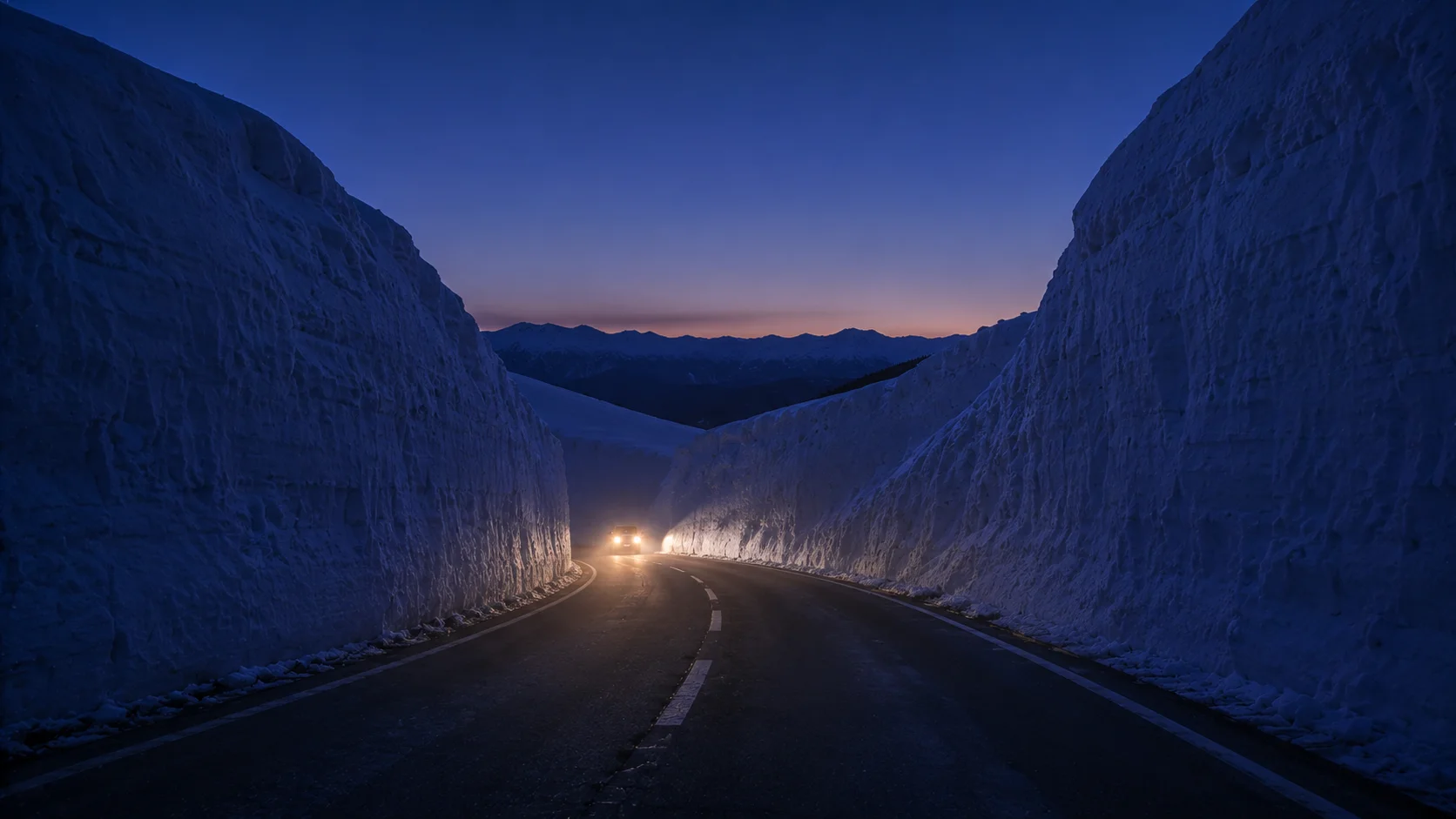
The map spans fictional representations of the Kantō, Chūbu, and Kansai regions simultaneously. Tokyo-inspired city streets with elevated highways and neon-lit tunnels. The Japanese Alps rendered with the verticality that European racing maps have historically done better than any Horizon game. The Noto Peninsula’s coastal highways. A snow corridor modeled on Yuki-no-Otani — the Tateyama Kurobe Alpine Route’s famous snow wall, where road crews cut through walls of snow tens of meters high — that reviewers are calling one of the most visually striking environments in the series’ history.
The geographic range is what makes the Japan setting work in a way that a single-city or single-region interpretation wouldn’t. A Tokyo-only map would be urban circuit racing dressed as open world. A countryside-only map would be beautiful and empty. The combined Kantō-Chūbu-Kansai structure — rural mountain passes connecting to coastal highways connecting to city environments — is exactly the variety that Horizon maps need to sustain fifty hours of content without the player exhausting any single environment type.
The snow environment specifically is Playground’s biggest technical achievement in the series. Horizon 5 in Mexico had weather systems — the seasonal storm events were one of that game’s most impressive visual moments. Horizon 6’s snow corridor and Japanese Alpine winter environments are a permanent-season area rather than a weather event, which means the lighting, the handling physics, and the visual design are all optimized for snow in a way that an occasional storm event can’t be. Driving through the Yuki-no-Otani corridor in a rear-wheel-drive sports car at speed, with snow walls fifteen meters high on either side, is a specific experience that no Horizon map has produced before.
550 Cars and the Japanese Roster Problem
The launch roster is more than 550 cars — larger than Horizon 5’s launch lineup. The Japanese manufacturer coverage is comprehensive in a way that a Japan-set game demanded: Toyota, Nissan, Honda, Mazda, Subaru, Mitsubishi, and Lexus all represented across generations and performance tiers. The initial reviews note that the Japanese domestic market cars — the cars that were sold only in Japan and are largely unknown in Western markets — are a particular highlight. A Nissan Silvia S13 hatchback in stock form, a Honda Beat kei car, a Toyota Soarer from 1990 — these are cars that Horizon’s traditional European and American manufacturer focus never justified including. The Japan setting creates an opportunity for the catalog to expand in directions that serve the franchise’s automotive enthusiast core.
The 100% OpenCritic recommendation isn’t universal on every element. Several reviewers note that the Japanese sports car coverage, while strong, has room for expansion through the planned post-launch car packs. The roster is comprehensive at launch by Horizon standards, but fans of JDM culture will inevitably identify gaps — there are always gaps in a catalog this large. The direction of the launch roster, and what it implies about the DLC roadmap, is encouragingly specific to the setting rather than generic expansion.
Game Pass and the Commercial Architecture
Forza Horizon 6 is available on Xbox Game Pass on day one. This is Playground Games’ standard distribution strategy for the Horizon series, and it’s worth contextualizing in 2026’s gaming market structure. The Premium Edition early access price was $99.99. The standard edition is $69.99. Game Pass Ultimate is $19.99 per month. For a subscriber who accesses the game on launch day through Game Pass and plays it for two months before unsubscribing, the effective cost is $40 — and they had access to the premium early access window at no additional charge if they held the right tier of Game Pass.
The commercial argument for day-one Game Pass on a title with this review score is not obvious from a traditional game sales perspective. A 100% OpenCritic game in the most requested setting in the series’ history would generate significant launch week sales without the subscription safety net. In a year when Saudi Arabia is taking EA private for $55 billion, Microsoft’s calculation is that Game Pass engagement — users who launch Horizon 6, play it, and stay subscribed because the catalog justifies continued payment — generates more long-term revenue than maximizing week-one sales from the audience that would have bought it anyway.
The argument also serves the PlayStation 5 version, which Microsoft has confirmed is coming post-launch with no date announced. The Game Pass release on Xbox and PC in May establishes the game’s cultural presence before the PS5 audience can access it. When the PS5 version ships, it arrives with fourteen months of cultural conversation already built — the reviews, the community guides, the viral Yuki-no-Otani clips — creating a pull effect on PlayStation players who’ve been watching Xbox players enjoy the game they can’t have yet.
What Playground Got Right About the Fourteen-Year Wait
Playground’s hesitation about Japan was publicly stated across multiple interviews over the years. The concern was that a Japan map that didn’t deliver on the expectations the setting created would be a reputational setback for a series that had earned its audience through consistent quality. Japan wasn’t the only map the community requested — the Middle East, South Korea, South Africa, and India also appear regularly in the same threads — but it was the one with the most vocal and specific expectations. Enthusiasts had specific mountain passes they wanted, specific circuits they expected to reference, specific cultural touchpoints they considered essential.
The decision to wait until Horizon 6 rather than shipping a Japan map in Horizon 4 or 5 appears in retrospect to have been the right call. The current generation hardware — the Xbox Series X/S and its PC equivalents — provides the rendering capability to do the Yuki-no-Otani snow corridor properly. The team that shipped Horizon 5 had the most complex weather and environment technology in the series’ history at that point. Horizon 6 builds on both. A Japan map built on the Horizon 4 engine would have been technically inferior to what Playground has now delivered, and the community would have known it.
The fourteen years of community pressure, combined with the technical capability to do the setting justice, produced a game that reviewers are calling both the best Horizon game and the best realization of the series’ core concept: automotive tourism as a form of entertainment, where the car and the landscape are co-equal elements of the experience. Like GTA 6’s November 2026 release, Horizon 6 lands as a cultural event the industry organises around. Japan was worth waiting for. The reviews say so. The 100% OpenCritic says so. And the snow walls say it every time someone drives through them for the first time.
It’s on Game Pass Now
If you have Xbox Game Pass or PC Game Pass, you have access to Forza Horizon 6 right now. If you’ve played any previous Horizon game and have been waiting for the Japan setting, the reviews are unambiguous: the game delivered. The Premium Edition early access window is live through this weekend; the standard edition on Game Pass is already available.
The PS5 version is coming. When it arrives, it will have the benefit of everything the Xbox and PC community has already discovered. The best Horizon game in the series’ history is running on Xbox right now, with Japan finally getting the treatment fourteen years of asking earned. The snow walls are there. The Tokyostreet tunnels are there. The 550 cars are there. It was worth the wait.
What Playground Built That Other Studios Quietly Envy
Spend any time around game-development teams and you hear the same thing about Playground’s Horizon series, said with a mix of admiration and frustration. The studio has been making the same kind of game for fourteen years and it keeps getting better. Most studios chasing that pattern give it three or four entries before the team gets restless, the next entry pivots toward something more “ambitious,” and the consistency that earned the audience evaporates.
Playground did not do that. The team kept asking the same question — what does a beautiful, accessible open-world driving game feel like when the map is real, the cars are well-modelled, and the friction between you and the joy of driving is as low as engineering can make it — and kept answering it slightly better each cycle. The result is that Horizon 6 lands with the goodwill of five prior entries, the trust of a player base that knows what it is getting, and an OpenCritic score that reflects fourteen years of refinement rather than fourteen months of feature-list expansion.
That kind of patience is rare in interactive entertainment. The lesson is not “make better Forza games.” It is “find the thing your team is actually good at and keep doing it longer than the industry’s attention span suggests is wise.”
A 100% OpenCritic Score Measures Unanimity, Not Merely Excellence
Aggregate review scores collapse distribution into a single number. Metacritic’s weighted average can reach 91 with one or two negative reviews quietly absorbed into the calculation. A 100% on OpenCritic means something structurally stricter: the binary metric requires every published critic to recommend the game without exception. That is a unanimity threshold, not merely an excellence threshold — and unanimity across fifty or more reviewers with genuinely different taste profiles is a rarer outcome than a high weighted average.
Among major studio releases with wide critical coverage, 100% OpenCritic scores appear in a small fraction of releases in any given year. Most flagship games carry one or two dissenting reviews, often from critics who weight genre conventions differently: the driving-game skeptic who penalizes the franchise for repetition, or the reviewer whose scoring system does not permit the top rating for any game in a genre they consider derivative. Forza Horizon 6’s 100% means none of those dissenting reviews materialized — not because the game is above criticism, but because fourteen years of iteration in open-world driving has resolved the most common objections before reviewers could raise them.
The data implication is worth noting separately from the praise: a game that scores 100% has reduced its critical tail risk to zero. That is not a purely creative achievement. It is an operational one — a measure of how thoroughly Playground’s accumulated craft covers the space of things critics reliably penalize. Whether Forza Horizon 7 can replicate it at a second unconventional setting is the cleaner test of whether Japan was a structural advantage or a one-time match between franchise and geography.