Salesforce Agentforce Is Generating Real Enterprise AI Revenue
Salesforce reported $9.8 billion in revenue for its fiscal Q1 2027 (ending April 2026) — up 8 percent year-over-year — with Agentforce, its AI agent platform for autonomous customer service, sales, and operations workflows, contributing to the acceleration of its Data Cloud and AI segment from a negligible revenue line to approximately $900 million in annualised recurring revenue. Salesforce’s Q1 FY2027 earnings disclosures show Agentforce-enabled deals accounting for a growing share of new business bookings — management stated that deals including Agentforce close at a higher average contract value than equivalent Salesforce platform deals without Agentforce, and that customer expansion rates on Agentforce accounts are running above the company’s historical expansion rate for similar customer cohorts. The commercial signal is the clearest validation Salesforce has produced for its AI platform bet since the original Agentforce announcement in September 2024.
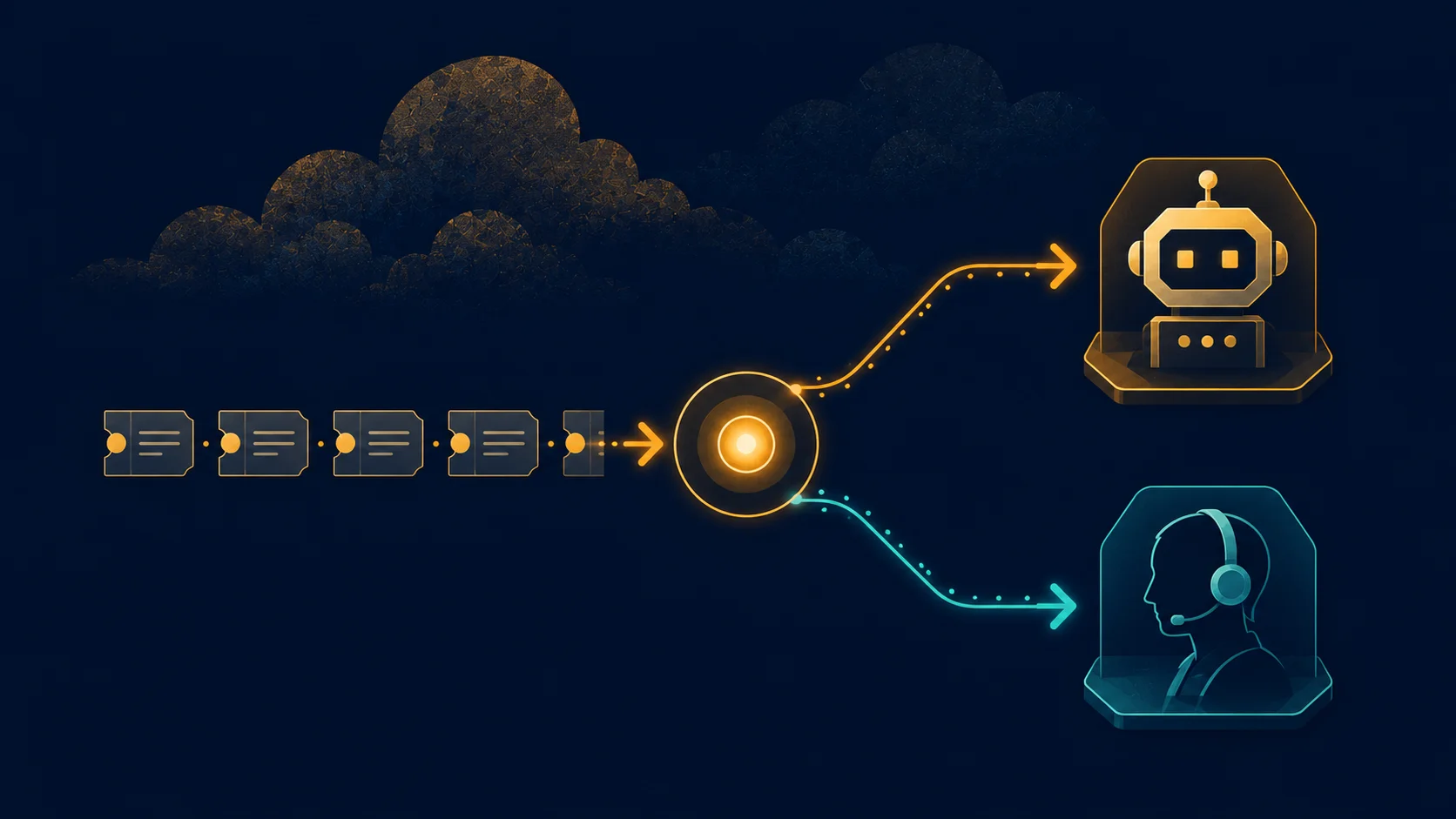
Agentforce represents Salesforce’s answer to the question of where the enterprise CRM market goes after conventional software automation has been fully deployed. Salesforce’s core products — Sales Cloud, Service Cloud, Marketing Cloud — have been workflow automation platforms for two decades, helping companies manage customer relationships through structured processes and data capture. Agentforce extends that model into autonomous action: rather than automating a defined workflow where a human specified each step, Agentforce agents can interpret customer inquiries, pull relevant data from Salesforce’s Data Cloud, take actions (send emails, update records, create cases, schedule meetings), and escalate to human agents when the situation requires judgment beyond the agent’s configured scope. The distinction between conventional CRM automation and AI agent automation is the difference between a pre-programmed playbook and an agent that reads the situation and determines the appropriate next step. Multi-agent enterprise orchestration across the broader enterprise AI market has established that agentic AI workflows require orchestration infrastructure — Salesforce’s advantage is that it built its orchestration layer on top of the CRM data where most enterprise customer-interaction records already live.
What Agentforce Does in the Customer Service Layer
Agentforce’s highest adoption to date is in customer service — the business function where the volume of routine inquiries is highest and the cost of human agent time is most measurable. A customer service agent handling billing inquiries, order status questions, subscription changes, and account updates spends the majority of their working hours on queries that follow predictable patterns with well-defined resolution paths. Agentforce handles those queries autonomously — reading the customer’s history in Salesforce Service Cloud, identifying the appropriate resolution, executing the resolution (issuing a refund, changing an address, extending a subscription), and closing the case — without human involvement. The autonomous resolution rate that Salesforce customers are reporting for Agentforce-handled service volumes ranges from 40 to 70 percent depending on the complexity distribution of the query type, with human escalation handling the remainder.
The commercial case for customer service AI agents is the most straightforward in enterprise AI: the cost of a human agent handling a routine inquiry is typically $8-15 per interaction; the cost of an AI agent handling the same inquiry on Salesforce’s platform is approximately $0.50-2.00 depending on data retrieval and model call volume. An enterprise running 500,000 monthly service interactions that shifts 50 percent to AI agent handling reduces its service cost by $2-4 million per month while maintaining resolution quality for the inquiry types within the agent’s autonomous capability. Those economics are generating purchase decisions that do not require complex ROI modelling: the payback period is short enough that procurement teams can approve Agentforce without extensive internal analysis. Enterprise AI deployment at scale in professional services has demonstrated the same cost-displacement economics in knowledge work — Agentforce is producing the same dynamic in customer-facing service operations. Gartner’s AI customer service research projects that AI agents will handle 70 percent of routine enterprise customer service interactions by 2027, with Salesforce, ServiceNow, and Microsoft positioned as the primary platform vendors to capture that shift.
How Agentforce Competes With Microsoft Copilot
Microsoft’s Copilot for Dynamics 365 — its AI agent layer for enterprise CRM and ERP — is Agentforce’s most direct competitive threat in the enterprise market. The two products target the same enterprise buyer: companies managing large customer-facing teams who want AI to handle routine interactions and augment human agents on complex ones. The differentiation between the two is primarily in ecosystem affinity: companies already running Salesforce Sales Cloud, Service Cloud, and Marketing Cloud have a lower integration cost for Agentforce than for switching to Dynamics 365 and Copilot; companies already running Microsoft 365 across their organisation have a lower total-cost-of-ownership argument for Copilot given the licensing bundle advantages Microsoft offers. Enterprise CRM decisions in 2026 are consequently less about which AI agent product is superior in isolation and more about which CRM ecosystem the organisation is already committed to.
Salesforce’s response to the Microsoft bundling threat has been to expand Agentforce’s interoperability — announcing integrations with Slack (already a Salesforce property), Google Workspace, and Microsoft Teams — and to emphasise Data Cloud’s role as the source-of-truth data layer that makes Agentforce agents knowledgeable about the customer. The argument is that Salesforce holds more customer data in more enterprises globally than Microsoft Dynamics does, and that AI agents operating from more complete customer context produce better outcomes than agents with partial data access. Whether that data breadth advantage translates to measurable agent quality differences in production deployments is a question that enterprise buyers are evaluating through proof-of-concept projects in 2026. OpenAI’s enterprise deployment consulting arm has partnered with Salesforce customers on Agentforce implementations, which reflects the broader pattern of AI platform vendors partnering with model providers rather than building proprietary models — Agentforce agents run on multiple foundation models including OpenAI’s GPT series and Anthropic’s Claude depending on the task type and customer preference. TechCrunch’s Salesforce coverage through Q2 2026 documents the Agentforce customer base expanding beyond Salesforce’s traditional mid-market into Fortune 500 enterprise accounts where per-seat contract values are substantially higher.
The Sales Cloud AI Layer and What It Adds to the Product
Beyond customer service, Salesforce has deployed Agentforce capabilities into its Sales Cloud product — the CRM that manages pipeline, opportunity tracking, and account management for B2B sales organisations. Agentforce in the sales context operates as a sales coaching and next-best-action layer: analysing deal history, email correspondence, meeting notes, and competitive intelligence in Data Cloud to recommend specific follow-up actions for each opportunity in the pipeline. The product does not close deals autonomously — the judgment and relationship management that enterprise B2B sales requires remains human — but it surfaces the data patterns that experienced sales managers would identify manually, faster and more consistently than any human manager can across a large sales team.
The commercial uptake of AI in the sales workflow has been slower than in customer service because the ROI is less directly measurable. Customer service automation has a clear cost-per-interaction metric that allows ROI calculation without ambiguity. Sales productivity is more multivariable: whether an AI recommendation contributed to a deal closing is difficult to isolate from the many other factors that affect B2B sales outcomes. Salesforce addresses this measurement challenge by tracking win rate and deal velocity changes between Agentforce-assisted and non-assisted pipeline cohorts within the same customer organisation — a controlled comparison that has shown statistically significant improvements in the accounts Salesforce has published as case studies. The measurement approach is credible but curated: the published case studies represent customer organisations with strong data hygiene and well-configured Salesforce implementations, where the AI’s recommendations can draw on complete and reliable customer history. In organisations with fragmented data and inconsistent CRM adoption, the AI recommendations are less reliable, which is why Salesforce’s enterprise Agentforce sales process includes a Data Cloud readiness assessment before Agentforce deployment commitments are made.
What Salesforce’s Agentforce Revenue Figure Actually Measures and What It Does Not
The “$1 billion in Agentforce ARR” figure that Salesforce disclosed is a useful benchmark for one question and a misleading answer to several others. The useful question it answers is whether enterprise buyers are willing to add an AI agent line item to their Salesforce contract — and the answer is yes, at scale. The questions it does not answer include: at what stage of deployment are the Agentforce contracts that make up that ARR; what proportion of Agentforce customers have moved past pilot into production workflows; and what the renewal rate looks like at 12-18 months. Enterprise software ARR is a leading indicator of deployment intent, not a lagging indicator of successful deployment. A billion dollars in Agentforce contracts tells you that enterprise buyers are signing; it says nothing about whether the agents being deployed are actually replacing the human labour hours they were sold on replacing.
Nate Silver’s framework for reading data carefully applies directly to enterprise AI adoption reporting: the signal that matters is not the headline number that the company chose to disclose, but the underlying metric the headline number is proxying for — and whether the proxy is a good one. Agentforce ARR is a measure of enterprise willingness to pay for AI agent access. The underlying metric Salesforce cares about is whether Agentforce is generating measurable operational outcomes — reduction in customer service headcount, increase in resolved tickets per agent hour, measurable improvement in lead-to-close conversion — that justify the renewal decision 18 months after signing. Those numbers would tell you whether Agentforce is genuinely transforming customer service operations or whether it is a new technology budget line that enterprise buyers added to appear current with the AI cycle.
Salesforce has not disclosed the operational outcome data, and it is unlikely to disclose it until the numbers are large enough and consistent enough to be more useful as marketing than they are dangerous as a confession of deployment immaturity. What the $1 billion ARR figure does confirm is that Salesforce has successfully positioned Agentforce as a credible AI investment category for enterprise procurement committees — a non-trivial commercial achievement given the scepticism with which enterprise IT budgets typically treat first-generation AI products. Whether that positioning converts into a durable revenue stream or into a cohort of non-renewals 18 months from now is the question the ARR figure cannot answer, and the question that determines whether Agentforce is a genuine business or a product cycle beneficiary. The ARR number is where the story starts; the renewal cohort at 18 months is where it ends, or doesn’t.