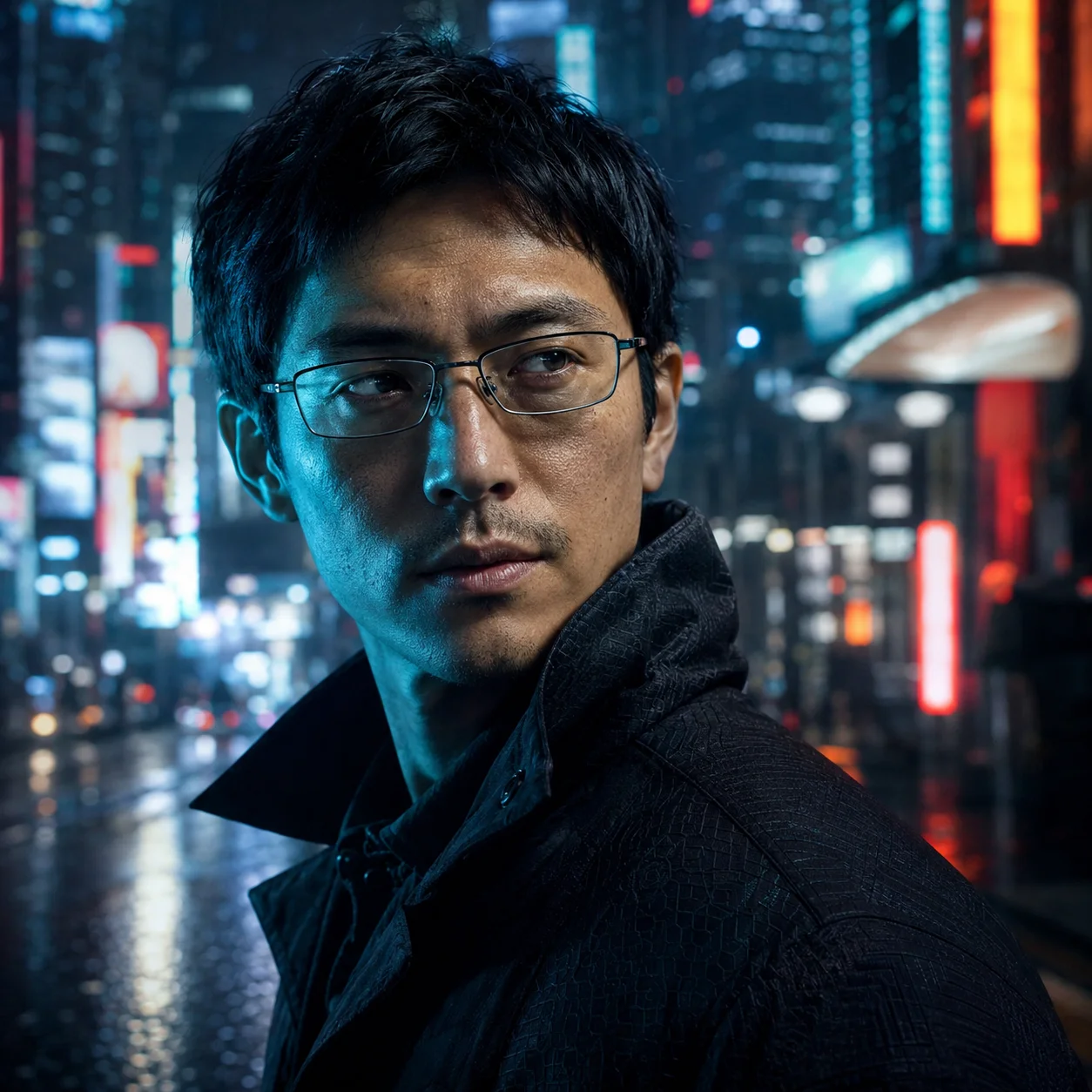
The Hitman Studio Makes James Bond From Scratch
IO Interactive built its reputation on Hitman — specifically on the version of Agent 47 that the studio rebuilt from 2016 onward, a character who moves through social systems, reads environments, and executes plans in spaces designed to reward creativity and patience. The rebooted Hitman trilogy is one of the most thoughtfully designed stealth game series of the last decade: levels that function as giant mechanisms, where understanding the rules of a space is the prerequisite for breaking them with maximum elegance.
007 First Light releases Wednesday on PlayStation 5, Xbox Series X/S, and PC. It is IO Interactive’s first James Bond game — an original origin story, not an adaptation of any existing film — and it arrives with early access for pre-order customers opening Tuesday. The question the game has to answer is whether the studio’s specific design expertise transfers to Bond, or whether the Hitman framework doesn’t survive the translation from a bald assassin with no biography to a character with sixty years of cultural weight and a very specific set of expectations.
The Origin Story Problem
007 First Light stars Patrick Gibson as a 26-year-old James Bond — a naval air crewman who performs a heroic act, is offered the chance to join the newly revived Double 0 program, and then watches a mission go wrong in ways that will presumably define who he becomes. The story is original: no existing film plot, no Brosnan or Craig events to anchor it, no continuity with any established cinematic or gaming Bond. IO Interactive owns the design space entirely, which is both the opportunity and the risk.
Bond origin stories have a complicated history in the franchise. Casino Royale (2006) is the gold standard — Daniel Craig’s first film worked precisely because it grounded the character’s emotional armor in a specific, costly loss rather than treating him as a fully-formed archetype who arrived with his gadgets and quips intact. The character became interesting because the film showed the gap between who Bond was at the start and who he had to become by the end. That’s the template for an origin that works.
The game’s premise — “earn the number,” as the marketing puts it — is the same structural promise. Bond doesn’t start with 00 status. He earns it. The question is whether the game’s narrative design has the patience and craft to make that earning feel earned rather than inevitable, and whether Gibson’s performance can carry the emotional register that the template requires. The David Arnold-composed theme song revealed in April suggested the production has taken the tonal demands seriously.
What IO Interactive Does Differently
The Hitman approach to level design is worth understanding because it’s what IO Interactive will apply to Bond. In Hitman, you are always the smartest person in the room if you’ve done the work of understanding the room. The preparation is the gameplay — learning patrol routes, identifying disguise opportunities, finding the angle that lets you get close enough to complete the mission without exposure. The action is the execution of a plan, not a reflexive response to chaos.
007 First Light is built as an action-adventure with stealth as a core option rather than a pure stealth game. You can fight with fists or firearms, use gadgets to infiltrate, or bluff your way past guards with the kind of social navigation that Bond films have always balanced against their action sequences. The game explicitly offers both “go silent” and “go loud” as viable approaches, which suggests IO Interactive isn’t trying to be Hitman with a Bond skin. They’re trying to build something that serves the full Bond register — tuxedos and infiltration alongside car chases and gunfights.
Whether the combat holds up to the stealth quality is the design question the reviews will answer. Hitman’s combat was always its weakest element — the game is at its best when you’re not fighting at all, and fighting is usually the indication that something went wrong. A Bond game needs combat that feels as considered as the stealth, because Bond has never been exclusively a spy who avoids confrontation. He’s a spy who chooses when to confront and how.
The Broccoli Connection and Why the IP Rights Matter
IO Interactive secured the Bond license directly from Eon Productions — the Broccoli family’s company that has controlled the cinematic Bond franchise since 1962. This is the same entity that green-lights Bond films, approves casting, and maintains the character standards that have kept the franchise commercially viable across six decades and six Bonds. Eon’s involvement in the game means the creative direction has been overseen by the people who understand Bond’s commercial identity better than anyone.
This matters for what the game is and isn’t. IO Interactive isn’t working against the franchise’s established identity; they’re working within it with the franchise owners’ explicit participation. The original Bond story that First Light tells is original by design — Eon doesn’t want a game that contradicts existing films or closes down future narrative options. An entirely original origin gives them control over what the game adds to the mythology without affecting the cinematic continuity.
The result is a game that functions as a standalone Bond story rather than a franchise extension in the way Marvel or Star Wars games often feel. You can play it without knowing anything about any Bond film and get a complete, self-contained narrative. You can also play it as a longtime fan and get the satisfaction of watching the specific character behaviors — the ruthlessness, the wit, the particular emotional damage — begin to form in a young man who hasn’t earned them yet.
Patrick Gibson and the New Bond Question
The casting of Patrick Gibson as Bond is the production decision with the longest tail. If the game succeeds, Gibson’s portrayal of a young Bond will influence the character’s popular perception and potentially inform casting conversations for the next cinematic Bond (which remains unannounced as of 2026). If it fails, Gibson carries more of the blame than the design or the writing, because Bond is fundamentally a performance-dependent character.
Gibson’s previous work — primarily in streaming television — shows range but hasn’t previously required him to carry a franchise-scale property. The game’s trailers have shown him handling the physicality competently and the dialogue without the self-awareness that Daniel Craig made look so effective in Casino Royale. The review coverage starting Wednesday will be the first public evaluation of whether Gibson’s performance in a fully realized context matches what the trailers suggested.
The Bond franchise has a specific problem with originality: the character is so defined by his archetype that performances that don’t honor the archetype feel wrong, while performances that lean too hard into the archetype feel like imitation. Craig’s tenure worked because he found the gap between the man and the archetype and made the gap the story. First Light’s origin premise requires exactly that gap to function. How Gibson inhabits it is the game’s central artistic question.
Wednesday’s Answer
IO Interactive has spent four years building 007 First Light after winning the license from Eon in 2021. The development time shows in what the pre-release materials demonstrate: a game with a distinct visual aesthetic, a narrative ambition that matches the IP’s weight, and a design team that has thought carefully about what a Bond game should feel like from the inside rather than what it should look like from the outside.
Whether that translates to a game that justifies the IP and meets the standard set by the Hitman trilogy is what Wednesday’s reviews will establish. The smart money, given IO Interactive’s track record and the four-year development timeline, is on a game that knows what it’s doing. The variable — the Bond performance, the narrative pacing, the balance between stealth and action — is what the first seventy-two hours of playing will answer.
Early access opens Tuesday at 2 PM UTC. The full release is Wednesday. The license that’s defined cinema since 1962 arrives in a studio built for exactly this kind of calculated infiltration. The question is whether they earned the number.
The Mental Model IO Interactive Had to Build Before They Could Accept the License
IO Interactive has been working on 007 First Light since at least 2020. Six years is a long time to carry a license. The question worth asking before the game releases is not whether the game is good — the reviews will answer that — but whether the studio built the right mental model for what the license actually is.
Most studios approach a legacy franchise license with one of two models. The first is the product model: the license is a marketing advantage, a recognisable brand attached to a game that would otherwise need to earn its own audience. This model treats the brand as a shortcut. The second is the responsibility model: the license carries an obligation — to an audience that has been living with Bond for sixty years, to a creative vision that has survived multiple lead actors and four decades of film-industry change, and to whatever the franchise will need to be after this entry. This model treats the brand as a constraint.
The studios that have done best with franchise games have used the second model and found it, paradoxically, more creative than the first. The constraint is where the interesting design decisions live. You cannot give Bond an arbitrary personality — his personality is his competitive advantage, and it is not yours to invent. What you can do is find the version of that personality that games can express better than film can, and then make that version as good as engineering and design can make it.
IO Interactive built Hitman’s reputation precisely by accepting constraints — the same target, the same location, infinite approaches — and finding the creative space inside them rather than around them. That discipline is the correct preparation for a Bond game. Whether they applied it here is the question TT Games faced with LEGO Batman’s franchise iteration — how much of the prior license’s meaning survives translation into a different medium, and how much new meaning the new medium earns. First Light’s launch will answer one version of that question for the first time.
The Design Vocabulary That Serves Hitman May Not Serve Bond
IO Interactive’s design team built something specific with Hitman: an experience that rewards understanding over reflexes. In the rebooted trilogy, the most satisfying outcomes come from observation — learning how a space works before you exploit it. That design philosophy trains a particular kind of attention in players, and it trains a particular kind of thinking in the team building it.
Bond requires something harder: a player who is sometimes patient, sometimes reactive, sometimes charming, and credibly excellent at all three. The Hitman system is optimized for a single mode. When the system is working, you’re not fighting because you’ve made fighting unnecessary. 007 First Light commits to a mixed mode — stealth and combat as parallel valid paths — and that commitment requires building two excellent systems instead of one.
The design choice that reveals IO Interactive’s confidence is that they haven’t tried to make combat feel like a failure state. In Hitman, getting caught typically means a planning error. In First Light, going loud is a legitimate option with its own reward structure. That’s a meaningful shift in design philosophy, not just a mode addition. Whether the combat system supports that philosophy is what reviews will determine — but the decision to build it rather than discourage it signals that the studio understands what Bond requires from the inside.