The Policy That Treats AI Talent Like Nuclear Scientists
China has historically reserved its most restrictive overseas travel controls for people whose knowledge or access could compromise national security: nuclear scientists, senior executives at state-owned enterprises, researchers at military-linked universities, intelligence personnel. The common thread is that these individuals carry information or capability that the state has determined is too strategically significant to allow unrestricted movement toward foreign jurisdictions. The policy reflected a specific theory about what was strategically significant — essentially, the physical science and institutional knowledge that underpinned China’s military and heavy industrial capacity.
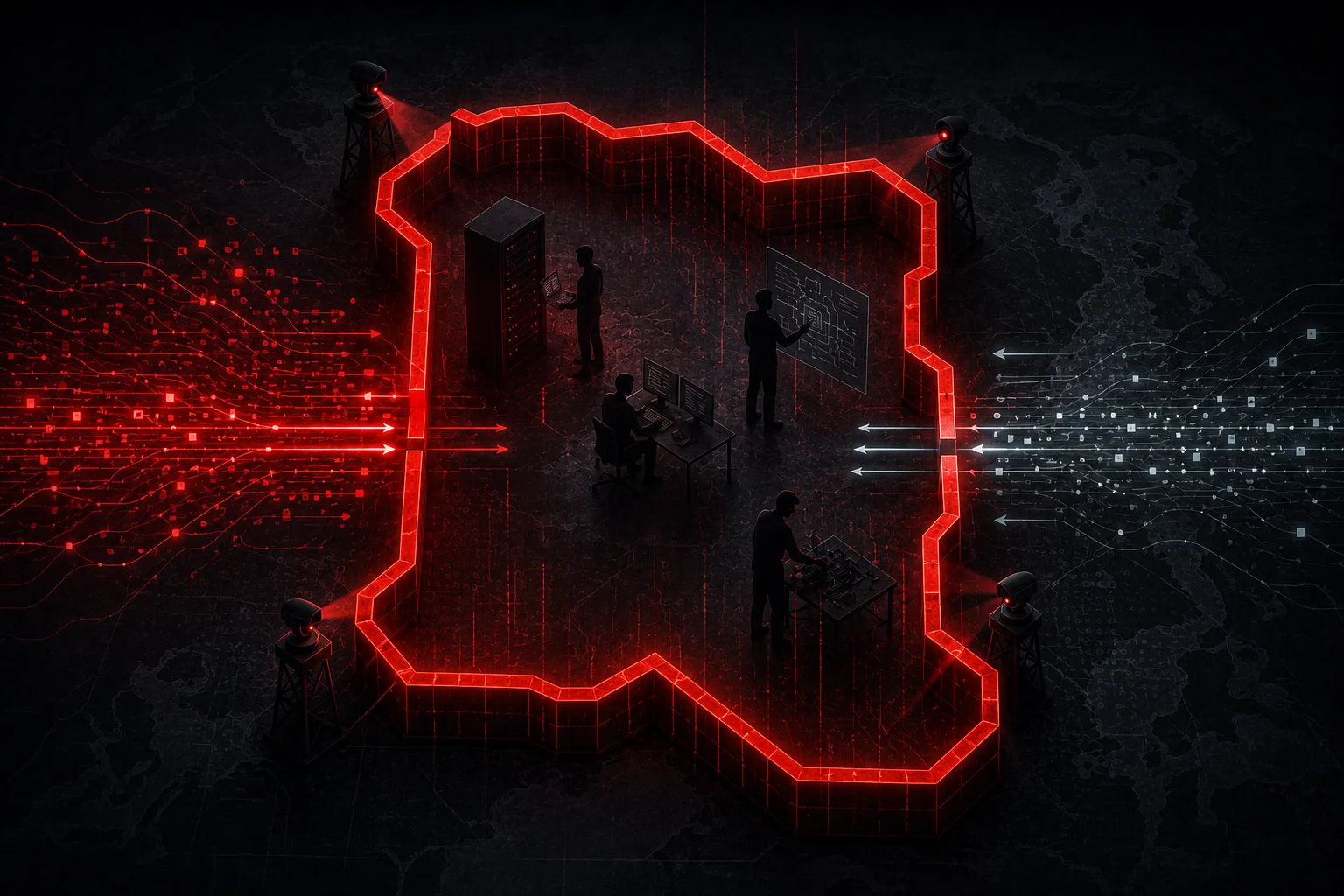
Bloomberg reported this week, citing sources familiar with the policy, that China has extended those travel controls to a new category: senior AI researchers, startup founders, and executives at private AI companies including DeepSeek and Alibaba. The practical change is significant. Previously, prominent AI figures had been “advised” to avoid traveling to the United States — soft guidance that carried social and professional weight but not legal enforcement. The new policy requires mandatory pre-travel government approval. Proceeding without approval is no longer a social compliance question. It is a legal one.
The decision to apply state-sector travel restriction frameworks to private sector AI workers is the clearest signal yet that Beijing has reclassified AI talent from “valuable commercial asset” to “national security asset” — the same category as nuclear scientists. The implications of that reclassification extend beyond travel logistics.
Why This Moment, Why Private Sector
The extension to private sector AI workers reflects two converging pressures that have reached an inflection point in 2026. The first is the acceleration of the US-China AI competition to a level that Beijing has concluded requires treating AI capability the same way it treats military technology. DeepSeek‘s R1 model, released in early 2025, demonstrated that Chinese AI organizations could produce frontier-class models at dramatically lower cost than US labs — a finding that accelerated US government anxiety about the technology gap and simultaneously elevated DeepSeek in Beijing’s strategic calculus from “impressive commercial achievement” to “national strategic capability.”
The second pressure is the demonstrated vulnerability of talent as a vector for technology transfer. US semiconductor export controls, compute restrictions, and AI chip embargo policies have had measurable impact on the hardware inputs available to Chinese AI development. The software layer — model architectures, training methodologies, research directions, safety alignment techniques — has proven far harder to restrict through export controls because it travels in human minds rather than in physical goods. A senior DeepSeek researcher who joins a US AI lab carries knowledge about DeepSeek’s training approaches and efficiency techniques that is strategically valuable in ways that no export control on chips can address.
The travel restriction policy is, in effect, a human capital export control. Where hardware export controls restrict the physical inputs to AI development, travel restrictions restrict the movement of the cognitive inputs — the researchers and engineers whose accumulated expertise represents years of investment in building competitive AI capability. Beijing is betting that the strategic value of keeping that expertise within China’s ecosystem outweighs the costs imposed on private sector companies that compete globally for talent and need their researchers to travel for conferences, partnerships, and recruitment.
The Scope Question
The policy as reported does not apply to all AI workers at Chinese technology companies — it targets specifically those involved in “advanced AI work” at private firms. The practical implementation of that definition is unclear and creates significant uncertainty for the companies and individuals affected. Does “advanced AI work” mean frontier model development? AI safety research? Applied AI engineering? The ambiguity is typical of Chinese regulatory frameworks that define scope broadly and implement it through administrative discretion rather than bright-line rules.
The companies most immediately affected are the ones whose researchers represent the highest strategic value: DeepSeek, whose low-cost frontier model development has become a point of national pride; Alibaba’s DAMO Academy and AI research division, which has published extensively and whose researchers have cross-institutional relationships with international academic institutions; Baidu’s AI division; and the cohort of well-funded AI startups that emerged from the 2023-2025 Chinese AI investment wave. Each of these organizations has senior researchers with international reputations who regularly travel for academic conferences, investor meetings, and industry events.
The international conference circuit — NeurIPS, ICML, ICLR, and similar venues where the global AI research community convenes — is a primary mechanism through which researchers build cross-institutional relationships, present findings, and develop collaborative work. Chinese AI researchers have been significant contributors to these venues, and the restriction on travel for senior figures will reduce Chinese participation in ways that create reciprocal isolation: Chinese researchers will have less exposure to international research directions, and international researchers will lose the direct interactions with Chinese counterparts that conferences provide.
The Talent Competition Implications
For Chinese AI companies competing with US counterparts for global talent, the travel restrictions create a structural disadvantage that goes beyond the inconvenience to existing employees. The global AI talent market is highly competitive, and the researchers whose expertise makes them subject to travel restrictions are exactly the researchers that every AI lab in every country is trying to recruit. A senior researcher weighing an offer from a Chinese AI company against an offer from a US lab now has to factor in that accepting the Chinese offer means operating under travel restrictions that the US offer doesn’t impose.
The companies affected can offer compensation to offset this friction, but compensation doesn’t fully substitute for the professional autonomy that unrestricted travel represents. Academic researchers in particular value the ability to present their work, attend conferences, and maintain the international collaborations that their careers depend on. Chinese AI companies that have attracted international talent with academic backgrounds — the profile most likely to be affected by travel restrictions — will find it harder to retain and recruit those individuals under the new framework.
The countervailing consideration is that China’s AI talent pipeline is enormous, and the researchers affected by travel restrictions are a small fraction of the total workforce. Chinese universities are producing AI engineers and researchers at a scale that US institutions cannot match, and the domestic talent pool is deep enough that travel restrictions on senior figures don’t constrain the companies’ overall capacity in the near term. The strategic concern is the medium-term: whether isolation from international research networks produces capability gaps that compound over years, and whether the talent competition disadvantage accumulates into something that affects the quality of the output from China’s leading AI organizations.
The Reciprocal Escalation Dynamic
China’s AI travel restrictions don’t exist in isolation — they are part of a reciprocal escalation pattern between the US and China in which each country’s defensive measures create conditions that justify the other’s further restrictions. US export controls on AI chips restricted Chinese access to hardware, prompting Chinese investment in domestic semiconductor development and efficiency-focused AI research. The resulting capability demonstrations (DeepSeek R1) elevated the perceived threat level in Washington, prompting further export control tightening and consideration of additional technology restrictions. China’s travel restrictions are the human capital analog to hardware export controls — a defensive measure that reflects the elevated threat assessment on both sides.
The practical consequence of the escalation dynamic is that the global AI research ecosystem is becoming less global. The free flow of researchers, ideas, and collaborative relationships that has characterized AI development — a field that grew in large part through international academic collaboration — is being constricted by state intervention on both sides of the US-China divide. The conferences that remain fully international are becoming the sites of increasingly careful conversations between researchers who are aware that their institutional affiliations carry political weight that scientific collaboration didn’t previously require.
Beijing’s decision to classify its AI engineers as national security assets is a statement about what AI has become: not a commercial technology sector where international competition produces innovation that benefits everyone, but a strategic domain where capability is a form of power and controlling its diffusion is a national priority. The field that was built on open research and international collaboration is being nationalized, incrementally, by both sides simultaneously. This week’s travel restriction policy is the latest visible step in that process.
What the Reclassification Actually Reveals
The decision to classify China’s AI engineers as national security assets isn’t primarily a labor policy. It’s a strategic statement about what AI actually is and what the competition over it means. Reading it as a restriction on worker movement misses the signal that matters.
Beijing has run the calculation that Western tech executives are still debating: is AI a commercial product with national security implications, or is it a national security capability with commercial applications? The travel restriction policy is a revealed preference answer. When governments treat something the way they treat nuclear scientists, they are communicating that the capability is considered civilizationally significant in a way that transcends commercial competition. China has concluded that AI is in that category. The policy follows from the conclusion.
The contrarian reading of the restriction — the one the Western tech commentary largely misses — is that it reflects confidence in what China has built, not insecurity about losing it. You don’t protect a secret you don’t have. DeepSeek’s low-cost frontier model development became a point of national pride in Beijing because Chinese AI organizations have developed methodologies Beijing believes are strategically worth protecting, the way nuclear weapons research was worth protecting. The export control logic applies to human knowledge when human knowledge is the scarce strategic input.
China’s semiconductor self-sufficiency push was the hardware layer of this strategy — reducing dependence on foreign chips to reduce the leverage that US export controls provide. The AI talent restriction is the software layer: reducing the diffusion of Chinese AI methodologies through researcher mobility. Both policies reflect the same underlying theory of the competition. In a technology contest where capability is the relevant variable, controlling the inputs to capability is the national security imperative. The week’s travel restriction is not the endpoint of that dynamic. It is a step in a longer escalation that, absent a negotiated framework neither side has pursued, has no obvious stopping condition.
The symmetric question — whether the US should apply analogous restrictions to researchers at US AI labs traveling to or collaborating with Chinese institutions — is not hypothetical. It is actively being debated in Washington. The answer Washington gives to that question will determine whether the global AI research community fragments into parallel national ecosystems or finds a way to preserve the collaborative structure that built the field in the first place.
The Probability the Talent Restriction Works Is Lower Than the Policy Implies
The travel restriction rests on a specific causal model: that unrestricted mobility would allow Chinese AI expertise to transfer to US institutions in ways that would meaningfully reduce China’s competitive position. That model is plausible but poorly supported by what we know about how knowledge transfer actually works at the research frontier.
The historical base rate for travel restrictions as knowledge-containment tools is poor. The Soviet Union restricted scientist mobility throughout the Cold War; the primary effect was to slow the Soviet research establishment’s access to international developments while providing negligible containment of knowledge that had already circulated through publications and conference proceedings. The information a researcher carries about their own lab’s methodologies depends on the infrastructure, the team, and the data environment — all of which the restriction is designed to preserve, but none of which travel transfers in a meaningful form.
A more calibrated read of the policy’s likely effects: it will have meaningful impact on the small number of researchers genuinely considering moving to US institutions — perhaps 2–5% of the targeted workforce — and moderate impact on conference participation and collaborative publishing. The direct containment effect on Chinese AI capability development is probably minimal, because that development is primarily constrained by compute access and domestic talent pipeline rather than by knowledge leakage to foreign institutions. What the restriction does accomplish is signaling: it tells the international research community how Beijing has classified AI talent, and it tells DeepSeek and Alibaba researchers how Beijing views their work. That reclassification has consequences for recruitment and retention that a technical probability estimate alone doesn’t capture.