WTI$79.75▲ 0.52%BTC$64,734.00▲ 3.30%BRENT$85.48▲ 0.89%SOL$78.02▲ 3.98%XLM$0.1832▲ 2.44%ZEC$552.79▲ 9.50%HYPE$66.79▲ 5.45%DOGE$0.0741▲ 2.91%FIGR_HELOC$1.04▲ 0.37%TRX$0.3264▲ 0.55%XAG$58.81▲ 0.06%BNB$579.18▲ 1.57%LEO$9.80▲ 2.76%XAU$4,040.30▼ 0.51%NATGAS$2.92▲ 0.52%XRP$1.10▲ 3.40%ETH$1,875.59▲ 5.14%WBT$56.54▲ 2.83%USDS$0.9998▲ 0.00%RAIN$0.0147▲ 2.99%WTI$79.75▲ 0.52%BTC$64,734.00▲ 3.30%BRENT$85.48▲ 0.89%SOL$78.02▲ 3.98%XLM$0.1832▲ 2.44%ZEC$552.79▲ 9.50%HYPE$66.79▲ 5.45%DOGE$0.0741▲ 2.91%FIGR_HELOC$1.04▲ 0.37%TRX$0.3264▲ 0.55%XAG$58.81▲ 0.06%BNB$579.18▲ 1.57%LEO$9.80▲ 2.76%XAU$4,040.30▼ 0.51%NATGAS$2.92▲ 0.52%XRP$1.10▲ 3.40%ETH$1,875.59▲ 5.14%WBT$56.54▲ 2.83%USDS$0.9998▲ 0.00%RAIN$0.0147▲ 2.99%
Prices as of 04:57 UTC

Author: Alani Tahir

  • TSMC N2 Ramp and the AI Chip Supply Chain in 2026

    TSMC N2 Ramp and the AI Chip Supply Chain in 2026

    TSMC 2nm N2 AI chip supply chain CoWoS packaging bottleneck 2026

    TSMC’s N2 Ramp and the AI Chip Supply Chain: Why the Foundry That Makes Everything Has More Pricing Power Than Ever

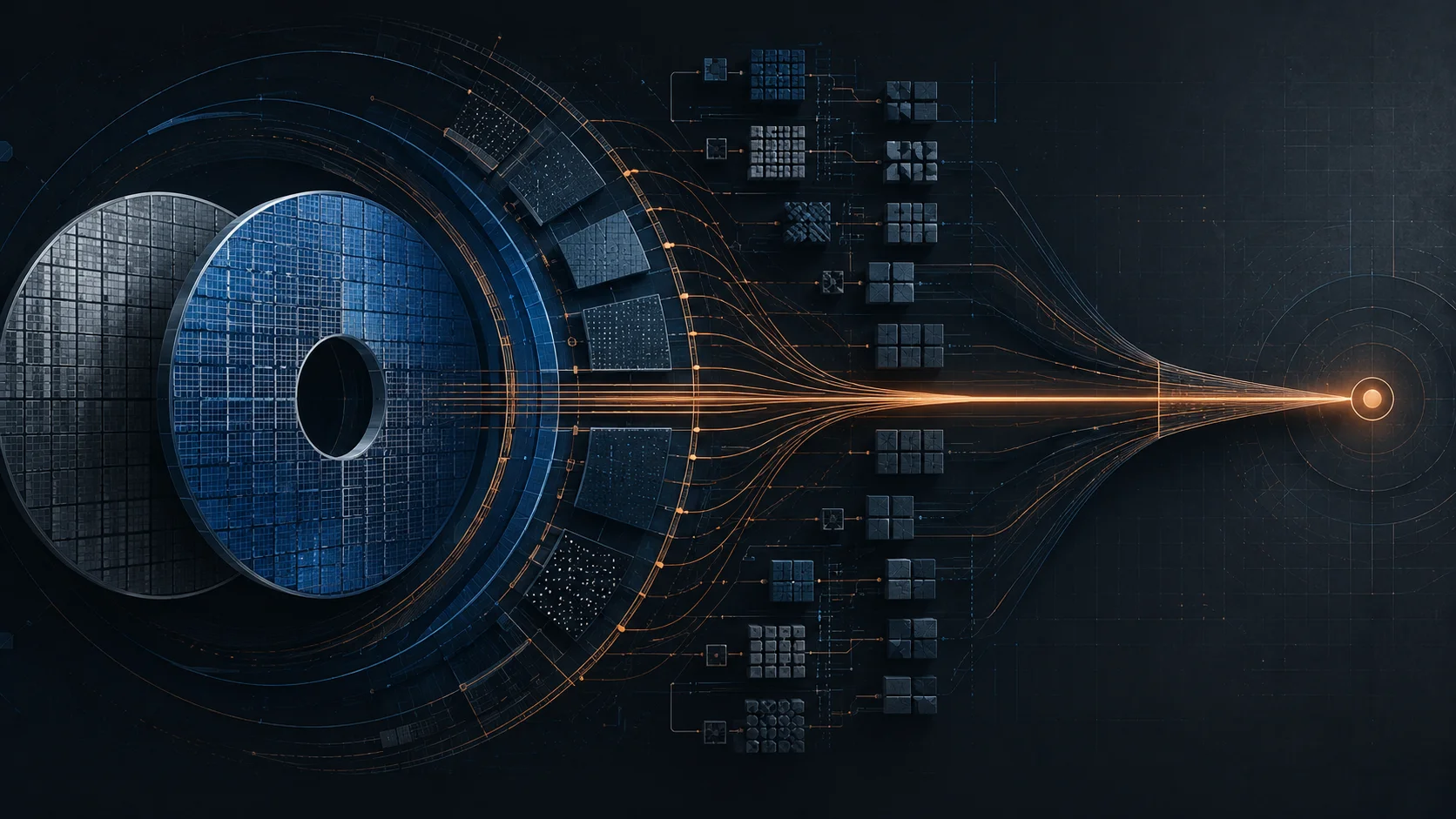
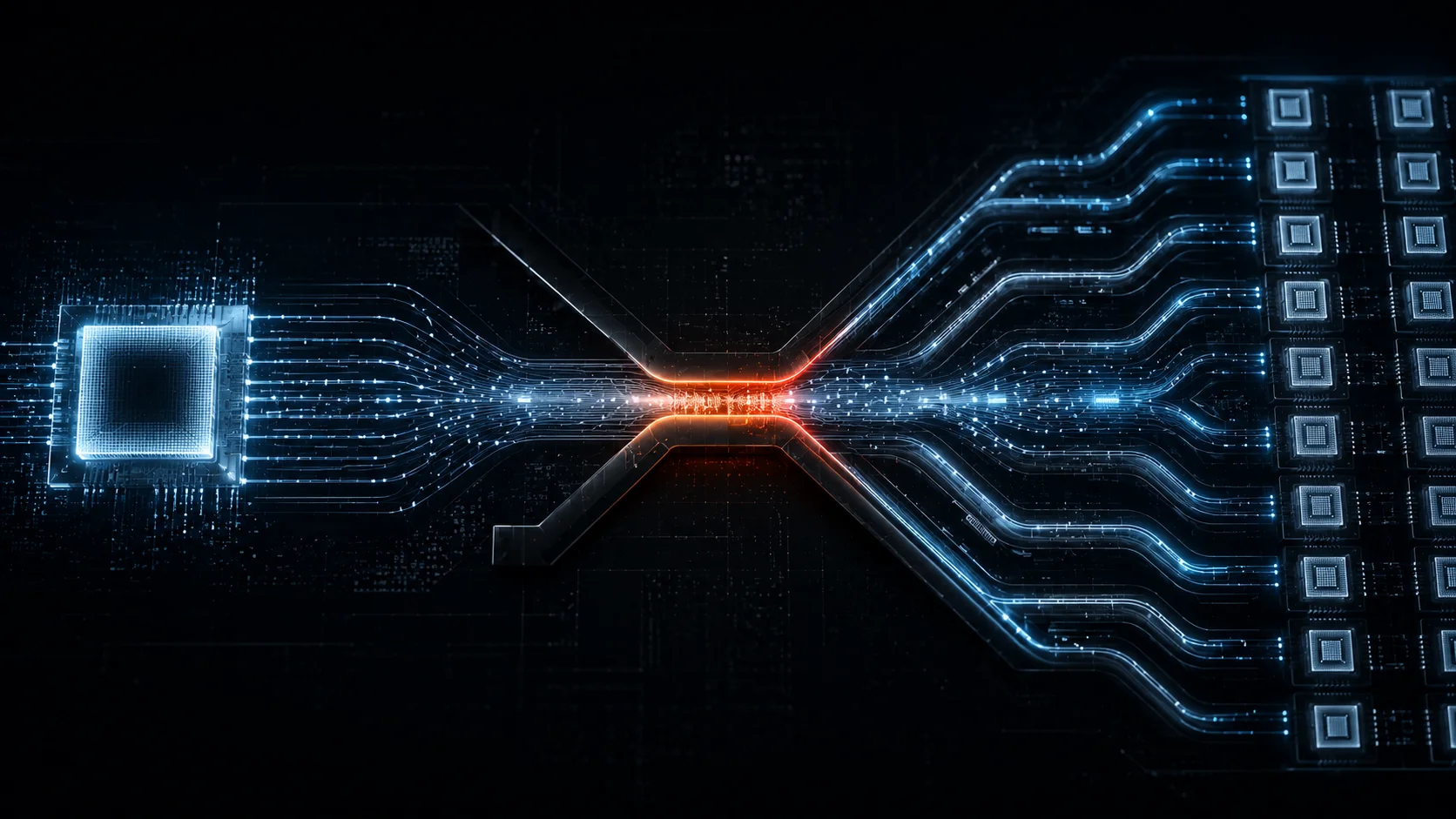
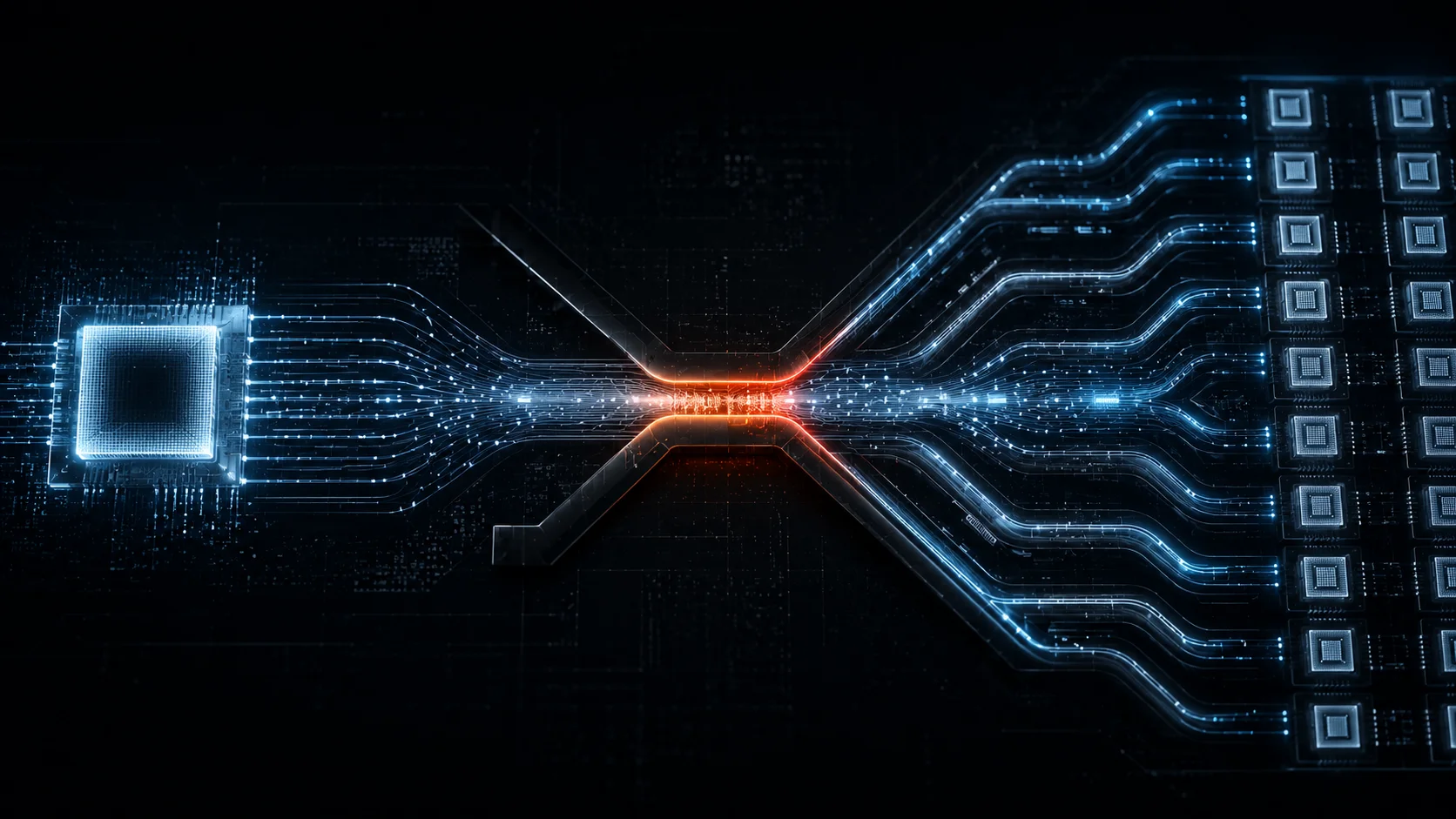
    TSMC began risk production of its N2 (2-nanometre class) process node in late 2025 and entered volume production in Q1 2026 — a milestone that TSMC management characterised in its Q1 2026 earnings call as on schedule against a demand profile “well in excess of our initial capacity ramp plan.” The qualification matters: TSMC’s customers have pre-committed N2 wafer allocations so aggressively that the first 18 months of production are allocated before the production line reached its current output level. The foundry that makes the chips that run the AI that is reshaping every industry has never been in a stronger commercial position — and the structural reasons for that position are not going away.

    N2 Performance: What the Process Advance Delivers

    TSMC’s N2 process delivers approximately 10-15% performance improvement and 25-30% power efficiency improvement relative to N3E (the previous generation) at comparable transistor density. For AI accelerator manufacturers — Nvidia, AMD, Google (TPU), and Amazon (Trainium) — the power efficiency improvement is the commercially decisive specification, not raw performance. A training or inference chip that consumes 25-30% less power per FLOP means data centers can deploy 25-30% more compute within fixed power envelopes, directly addressing the energy bottleneck constraining AI infrastructure buildout.

    N2 also introduces gate-all-around (GAA) transistor architecture, replacing the FinFET design that TSMC has used since the 16nm node. GAA transistors provide tighter process control and better performance-per-watt at sub-3nm dimensions — a technical improvement that enables the continued scaling on which Moore’s Law’s commercial benefits depend. The transition to GAA is a design and manufacturing challenge: chip designers must account for the different performance characteristics of GAA devices in their place-and-route flows, adding complexity to first-generation N2 tape-outs that may extend design-to-tape-out timelines.

    Nvidia’s Rubin architecture — the GPU generation succeeding Blackwell — is scheduled for N2 production, with initial samples expected in late 2026 and volume production in 2027. Apple’s A20 chip (for iPhone 18, September 2026) is the first mass-market consumer silicon on N2. The Apple allocation alone consumes a substantial portion of TSMC’s N2 capacity during the iPhone production window (typically June-August for launch inventory), which compresses the available AI chip allocation in that period and contributes to the tight supply environment for AI accelerators in H2 2026.

    TSMC’s Pricing Power and Gross Margin

    TSMC’s gross margin reached 53.1% in Q1 2026, with management guiding for 53-55% through the year as N2 volume ramps and advanced packaging (CoWoS, SoIC) revenues grow. For context, TSMC’s gross margin in 2019 was approximately 46%. The 7-percentage-point improvement over seven years reflects the consistent pricing power that comes from being the only foundry capable of producing leading-edge logic chips at volume scale.

    TSMC raised N3 wafer pricing by approximately 5-7% at its 2026 annual pricing negotiations, following a 3-4% increase the prior year. N2 wafers are priced at a premium to N3 — estimated at $20,000-25,000 per wafer versus $16,000-18,000 for N3E — reflecting the capital investment required to build out N2 capacity and the limited competitive alternatives for customers who need leading-edge node performance.

    Intel Foundry Services and Samsung Foundry are the only other facilities attempting leading-edge logic production, and neither has established the customer confidence at N2-equivalent processes that would allow them to credibly compete for the hyperscaler AI chip allocations. Samsung’s HBM supply chain challenges — distinct from its logic foundry business but illustrative of execution risk — have reinforced TSMC’s position as the default choice for production-critical semiconductor manufacturing.

    Advanced Packaging: CoWoS and the AI Chip Supply Constraint

    The most acute near-term constraint on AI chip supply is not the N2 or N3 logic process itself — it is TSMC’s CoWoS (Chip-on-Wafer-on-Substrate) advanced packaging capacity. CoWoS is the packaging technology that connects logic chips and HBM memory on the same silicon interposer, achieving the memory bandwidth that AI accelerators require for training and inference workloads. Nvidia’s H100, H200, and Blackwell GPUs all require CoWoS; AMD’s MI300X and MI350 similarly depend on advanced packaging to deliver their HBM3E integration.

    TSMC’s CoWoS capacity expansion has been the primary production bottleneck for AI chip supply for two consecutive years. The company invested approximately $2.9 billion in CoWoS capacity additions in 2025 and has guided for a further $3.4 billion in 2026, with the current expansion expected to roughly double total CoWoS throughput by end of 2026. Even at the doubled capacity level, demand — driven by the Magnificent Seven’s $700 billion AI infrastructure commitment — exceeds available supply at current pricing.

    The CoWoS constraint has a downstream implication for AI chip pricing and availability that does not always appear in foundry-level supply chain analysis. A GPU that is fully designed and verified on N3E or N2 logic cannot reach a customer until it has also cleared CoWoS packaging capacity. Nvidia’s Blackwell allocation through H1 2026 was constrained more by CoWoS throughput than by logic wafer availability — which is why the company’s H200 SKUs (requiring less CoWoS density than Blackwell’s GB200 form factor) have been more readily available than Blackwell’s flagship configurations.

    Geopolitical Risk and the Arizona and Japan Fab Buildout

    TSMC’s geopolitical exposure — the concentration of leading-edge logic production in Taiwan — remains the most significant systemic risk in the global semiconductor supply chain. The Semiconductor Industry Association’s 2025 factbook estimates that Taiwan accounts for approximately 92% of global leading-edge logic production (sub-5nm). A Taiwan Strait disruption that interrupted TSMC production for six months would leave the global AI buildout without its primary chip supply for the duration — a scenario that has moved from geopolitical hypothetical to active enterprise risk planning consideration for hyperscalers and AI hardware companies.

    TSMC’s Arizona fab program — currently running N4P (4-nanometre class) in volume production at Fab 21 Phase 1 — represents the most significant non-Taiwan advanced logic capacity in development. Phase 2 of Fab 21, targeting N2 production, received accelerated investment approval in late 2025 following sustained US government pressure and CHIPS Act incentive structures. Full N2 volume production at Fab 21 Phase 2 is scheduled for 2028 — a timeline that does not close the near-term supply gap but provides a meaningful geographic diversification of at least 10-15% of total N2 capacity by end of the decade.

    Japan’s Kumamoto fab (JASM, with Sony and Toyota as minority shareholders) reached N6 volume production in 2024 and has broken ground on an N2-adjacent (N2-derived) facility scheduled for 2027. The Japan investment is driven by specific customer requirements — Sony for CIS image sensor chips, Toyota for automotive-grade logic — rather than AI accelerator production, and it does not materially change the AI supply chain concentration risk. But it adds further geographic credibility to TSMC’s claim that production diversification is a genuine strategic priority rather than a political accommodation.

    What N2 Ramp Means for AI Model Economics

    The practical implication of TSMC’s N2 production volume expanding through 2026 is a gradual improvement in the economics of AI training and inference at the model level. A training cluster built on Rubin (N2-based) GPUs in 2027 will complete equivalent training runs with 25-30% less power consumption than the same cluster built on Blackwell (N3E-based) GPUs today. For hyperscalers running continuous inference at scale, the power cost reduction from N2 migration compounds into hundreds of millions in annual energy savings per data center at current electricity prices.

    The timing of these savings matters for the AI infrastructure investment thesis. Amazon, Microsoft, and Google’s $250 billion 2026 capital commitment is being deployed into current-generation Blackwell and MI350 hardware, with the expectation that N2-based successors will improve the cost-per-FLOP by the time data centers built in 2026 reach their peak utilisation in 2028-2029. This hardware upgrade cadence is the mechanism through which the hyperscalers’ capex commitments generate compounding returns — each generation of silicon improving efficiency enough to justify the next round of infrastructure investment.

    TSMC’s N2 ramp is therefore not just a semiconductor industry milestone. It is a critical input to the unit economics of AI at scale — and the pace at which its capacity expands will determine whether the AI infrastructure buildout of 2026-2028 delivers the efficiency improvements that the industry’s financial models require to generate acceptable returns on its historic capital commitment.

    N2 Is the Bet You Can Only Evaluate After You’ve Taken It

    You can’t connect the dots looking forward. You can only connect them looking backward. TSMC’s N2 process node is a bet being made now whose payoff will be visible only in 2027 and 2028, when the products built on it reach the market at scale. Every major process transition in TSMC’s history has looked, at the point of commitment, like an enormous capital expenditure for an uncertain return. Every one has, eventually, defined the device generation that followed.

    The N2 transition is technically the most significant in TSMC’s recent history because it marks the shift from FinFET to Gate-All-Around transistor architecture — a structural change that the prior three node generations (5nm, 4nm, 3nm) did not require. FinFET geometry has been scaling progressively since the early 2010s. At 2nm class dimensions, the physics of gate control no longer work adequately with the existing architecture; Gate-All-Around wraps the gate material around all four sides of the channel, recovering the electrostatic control that FinFET loses at sub-3nm scales. This is not an incremental process improvement. It is a new transistor design that TSMC’s engineers, equipment suppliers, and design tool vendors have all had to adapt to simultaneously.

    Apple’s next-generation M5 and A19 chips will use N2. Nvidia’s next GPU generation is expected to move to N2 for at least some components. AMD’s roadmap has N2-class parts indicated for 2027. The companies that can successfully design for N2 will have hardware with meaningfully better performance-per-watt than anything on 3nm today. The companies that struggle with N2’s design rules will lose ground for a full product cycle — eighteen months to two years in which their competitors are shipping products they cannot match.

    The competitive stakes are downstream all the way to AI inference. A GPU on N2 running a large language model inference workload consumes meaningfully less power per token generated than the same GPU on 3nm. At the scale of a hyperscaler data centre running millions of inference calls per hour, that efficiency difference translates directly into operating cost. The competition between AMD’s MI350 and Nvidia’s Blackwell is ultimately also a competition between their respective node generations and TSMC’s capacity allocation decisions.

    The people making the N2 bet today — TSMC’s capital allocation committee, the design teams at Apple and Nvidia committing their next silicon generation to the new architecture — cannot know whether the transition will be smooth. What they can know is that the companies that don’t make the bet will not be positioned to use the technology when it matters. The N2 risk is not whether the architecture works; TSMC has demonstrated the physics. The risk is yield ramp timing, equipment availability, and the design ecosystem’s readiness to tape out complex products on a new transistor structure without the years of accumulated process knowledge that made 3nm reliable.

    You have to trust that the dots will connect. The companies that make that bet today will be the ones that can tell the connecting-the-dots story in 2028. The ones that wait for certainty will have missed the window.

  • Microsoft Build 2026 Launched Copilot Studio and Azure AI Foundry

    Microsoft Build 2026 Launched Copilot Studio and Azure AI Foundry

    Microsoft Build 2026 — Copilot Studio agent builder and Azure AI Foundry enterprise platform

    Microsoft Build 2026: Copilot Studio, Azure AI Foundry, and the Architecture of the Enterprise AI Platform War

    Microsoft Build 2026, which concluded its main sessions in late May, was the most consequential developer conference Microsoft has held since the Azure pivot in 2014. The announcements were individually significant — a rebuilt Copilot Studio, the general availability of Azure AI Foundry, expanded Phi-4 model releases, and deep GitHub Copilot integrations across the development lifecycle — but the cumulative picture is more important than any single feature. Microsoft is not building AI products. It is building an AI platform, and it is doing so by weaponising a distribution advantage that no competitor can replicate.

    The Distribution Advantage That Shapes Everything

    Microsoft has approximately 400 million commercial Microsoft 365 seats globally. Every one of those seats is a potential Copilot deployment point. Azure has more than 60% enterprise cloud market penetration in Fortune 500 companies. GitHub has approximately 100 million developer accounts. Teams has 320 million monthly active users.

    None of OpenAI’s, Anthropic’s, or Google’s AI products touch more than a fraction of those numbers. When Microsoft ships a new AI feature in Copilot, it ships into an existing enterprise relationship with existing authentication, existing data governance, and existing procurement approval. The friction to expand AI capability within the Microsoft ecosystem is a configuration change. The friction to switch to a competing AI platform is a multi-year enterprise transformation project.

    Build 2026 was built around deepening this distribution advantage. Every major announcement either extends existing Microsoft enterprise products with AI capability (Teams, Outlook, SharePoint, Dynamics) or adds new platform services that draw independent software vendors and enterprises deeper into the Azure AI ecosystem (AI Foundry, Copilot Studio, the expanded Model Catalogue).

    Azure AI Foundry: The Platform Bet

    Azure AI Foundry — available in preview since late 2025 and reaching general availability at Build 2026 — is Microsoft’s answer to the fragmentation problem in enterprise AI development. Enterprises building AI applications face a proliferation of choices: which foundation model, which fine-tuning approach, which evaluation framework, which deployment infrastructure, which observability tooling. Foundry provides a unified development platform that spans the full lifecycle from model selection through production monitoring.

    The model catalogue inside Foundry is the competitive differentiator. It includes OpenAI’s GPT-4.5 and o-series models (via Microsoft’s exclusive partnership), Meta’s Llama 4 family, Mistral, Phi-4, and more than 1,800 community models sourced from Hugging Face. An enterprise developer working in Foundry can benchmark multiple models against their specific task requirements, fine-tune using their proprietary data, evaluate outputs using standardised metrics, and deploy to Azure endpoints — all within a single interface with unified billing, compliance logging, and access control.

    The business model implication is significant. By aggregating model access under Azure billing, Microsoft captures value from every model a customer uses — not just its own. An enterprise that chooses Llama 4 Maverick through Azure Foundry pays Azure for the compute and the platform; Meta earns nothing directly. Microsoft’s incentive to make open-weight models easily accessible on its platform is therefore structurally different from its competitors’ incentives: Azure wins regardless of which model wins.

    Google’s Vertex AI offers a comparable multi-model platform, and the competitive dynamics between Azure AI Foundry and Vertex AI are likely to define the enterprise AI infrastructure market for the next several years. The differentiating factors are ecosystem fit (Azure for Microsoft-stack enterprises, GCP for Google Workspace and cloud-native enterprises), model quality at the frontier tier (where both maintain proprietary advantages), and toolchain integration depth for specific development workflows.

    Copilot Studio: Enterprise AI Without Engineering

    The rebuilt Copilot Studio, announced at Build 2026, extends the previous low-code Copilot customisation tool into a full enterprise AI agent builder. The new version allows non-technical users to create AI agents that can: access SharePoint data, query SQL databases, call external APIs, trigger Power Automate workflows, and operate autonomously across multi-step processes — all through a visual interface that requires no coding.

    The target audience is the enterprise line-of-business buyer: finance teams, HR departments, procurement, legal. These departments have AI use cases that are well-defined and high-value but do not have dedicated engineering resources to build and maintain custom applications. Copilot Studio’s drag-and-drop agent builder is designed to let a finance analyst build an accounts payable automation workflow without filing a development ticket.

    The competitive positioning here is against Salesforce’s AI Agentforce platform, ServiceNow’s Now Assist, and the broader category of no-code AI tools. Microsoft’s advantage is that Copilot Studio agents operate natively on top of Microsoft 365 data — SharePoint, OneDrive, Teams — which is where most enterprise knowledge already lives. Competitors require data connectors and synchronisation infrastructure that adds implementation complexity and latency.

    The Build 2026 demo showed a Copilot Studio agent built by a hypothetical HR manager that: monitored a SharePoint leave calendar, cross-referenced payroll data in Dynamics 365, flagged anomalies, drafted a summary email in Outlook, and sent it to the department head — all triggered by a single natural language instruction. The demo was polished, and the pipeline it showed (calendar → payroll → alert → email) is a realistic representation of a workflow that currently requires either a developer-built automation or manual human coordination.

    GitHub Copilot and the Developer Workflow Expansion

    GitHub Copilot’s evolution from code autocomplete to full development workflow assistant was the most technically detailed thread at Build 2026. Three specific expansions are material for the enterprise developer audience.

    First, Copilot Workspace now supports multi-file, multi-repository planning. A developer can describe a feature requirement in natural language; Copilot generates a plan spanning all affected files and repositories, shows the planned changes in a diff view, and executes the implementation on request. The plan-before-execute architecture addresses the trust problem that made earlier autonomous coding tools unreliable — engineers can review the plan before any code is written, maintaining oversight without managing every line.

    Second, Copilot Code Review is now integrated into GitHub pull request workflows, offering automated review comments that flag logic errors, security vulnerabilities, and style inconsistencies before human reviewers see the PR. The system is fine-tunable by organisation: teams can configure review strictness, specify compliance rules, and connect to internal security policy databases. For organisations with large engineering teams and lengthy code review queues, this reduces review cycle time and catches categories of error that human reviewers consistently miss.

    Third, GitHub Models — first announced in 2025 — reached its full feature set, allowing developers to test, compare, and access foundation models directly within GitHub’s interface without leaving their development environment. The integration with Codespaces and VS Code means a developer evaluating whether to use GPT-4.5 or Llama 4 Maverick for a specific task can benchmark both in the same environment where they write code, with results persisting to their repository. The workflow friction reduction is substantial.

    The Phi-4 Small Model Strategy

    Microsoft’s Phi model family — small language models trained with a focus on data quality over data volume — received significant attention at Build 2026. Phi-4 Mini (3.8B parameters) and Phi-4 Multimodal (image, audio, and text inputs in a compact model) were released to general availability, with performance benchmarks that outperform models several times larger on reasoning and instruction-following tasks.

    The Phi family represents Microsoft Research’s core bet on the training efficiency frontier: that a sufficiently curated training dataset can produce a small model that reasons better than a large model trained on noisy web data. For edge deployment — AI running on-device, in IoT hardware, or in latency-constrained environments — small models with strong reasoning capability are the enabling technology.

    The commercial angle for Phi-4 is Azure IoT and edge computing integration. Microsoft has approximately 2 billion managed IoT and edge devices under its Azure IoT stack. Running a Phi-4 Mini model on-device for sensor data analysis, anomaly detection, and local decision support — without cloud round-trips — reduces latency and infrastructure cost for manufacturing, logistics, and retail deployments. The Build 2026 sessions specifically highlighted Phi-4 deployments in factory floor automation and smart retail applications, signalling that Microsoft’s edge AI strategy is moving from pilot to production deployment at scale.

    What Build 2026 Means for the Enterprise AI Platform War

    The enterprise AI platform market is converging around three genuine competitors: Microsoft Azure (with OpenAI partnership and Microsoft 365 integration depth), Google Cloud (with Gemini native integration and Google Workspace ecosystem), and AWS Bedrock (with model-agnostic positioning and deepest cloud infrastructure market share).

    Microsoft’s position after Build 2026 is the strongest of the three in the enterprise segment specifically. The combination of Microsoft 365 distribution, Teams communication infrastructure, and the unified Azure AI Foundry + Copilot Studio platform creates a switching cost architecture that enterprise customers will take years to evaluate and longer to exit. Google is competitive for cloud-native organisations already on GCP. AWS is competitive for infrastructure-first buyers who want model optionality without platform lock-in.

    Pure-play AI companies — OpenAI, Anthropic — are competing in this environment as model providers rather than platform providers. OpenAI’s enterprise product team is building toward a platform (the ChatGPT Enterprise and Operator products), but the distribution gap versus Microsoft’s installed base is measured in decades of relationship rather than product features. Anthropic has explicitly chosen not to build a competing enterprise platform, instead partnering with AWS, Google Cloud, and Salesforce — a bet that the model quality advantage sustains a supplier relationship even as the platform layer commoditises.

    Build 2026 confirmed that Microsoft is not waiting to find out. The AI platform war is being fought for the right to be the operating system layer of enterprise AI — the layer through which all AI interactions flow, from which all AI data is accessible, and against which all AI spending is billed. Microsoft is building that layer methodically, using every existing enterprise relationship it has. The question is not whether Microsoft can win this market. It is whether Google or AWS can prevent it from becoming a monopoly.

    Copilot Studio’s Product Team Problem

    MartyCagan’s core distinction: product teams discover solutions to problems customers didn’t know they had; feature teams deliver solutions to problems customers already articulated. The difference is where the insight originates. Build from discovery, and you ship things that surprise users. Build from delivery, and you ship the roadmap your sales team promised last quarter.

    Microsoft Build 2026 announced Copilot Studio as a no-code agent builder for enterprise teams — the pitch being that an IT department can assemble a customer-service agent or a procurement workflow without writing code. That is a coherent product concept. The question is whether Copilot Studio was built through discovery or delivery. Based on the announcement structure — demos, SKU announcements, connector catalogues — it reads as delivery. Every feature shown at Build was something a Microsoft enterprise account team had been promising in customer conversations for six months.

    Discovery-led product development would look different. It would start with two or three people embedded in an enterprise IT department, watching how teams actually build workflow automations, what breaks, what gets abandoned halfway through. It would identify the specific moment where no-code tooling fails — which is usually not the drag-and-drop UI, but the data-connection and permission architecture that makes enterprise context-injection harder than a polished demo suggests. The product that emerges from that process would not necessarily look like what Microsoft showed on stage.

    This is not a critique of Copilot Studio specifically. It’s an observation about the structural difficulty of doing product discovery inside a company as large as Microsoft. Discovery requires risk tolerance that is misaligned with how enterprise account teams make promises. A salesperson who has told a CIO that a capability is coming in Q2 has already created a delivery commitment. The product team inherits the spec.

    The signal to watch: what percentage of Copilot Studio’s roadmap comes from announced integrations versus from behaviours the team observes in early enterprise pilots. MartyCagan’s prediction would be that the genuinely differentiated features — the ones that actually solve the problems enterprise IT teams didn’t know they had — will be the ones that weren’t in the Build 2026 demos. They’ll be the ones Microsoft announces at Ignite in November after three months of watching how the first enterprise cohort uses and breaks what was shown in June.

    Microsoft’s position in the $250B hyperscaler CapEx race gives Copilot Studio a credibility floor that smaller AI-tooling competitors cannot match — the underlying infrastructure is real and its scale is not in question. Whether the product is discovery-led or delivery-led is a separate question, and it matters more at the margin. The enterprises that adopt Copilot Studio in the next six months will tell Microsoft what the product actually needs to be. The question is whether the team is set up to hear them.

  • Nvidia Q1 FY27: $81.6B Revenue, $75.2B Data Center, $91B Q2 Guidance

    Nvidia Q1 FY27: $81.6B Revenue, $75.2B Data Center, $91B Q2 Guidance

    Nvidia Q1 FY27: $81.6B Revenue, $75.2B Data Center, $91B Q2 Guidance

    The Numbers That Define an Era

    Nvidia reported Q1 FY2027 earnings on May 21 with results that have become difficult to contextualize through normal financial language. Revenue of $81.6 billion for a single quarter — up 85% year over year, up 20% from the prior quarter — representing more revenue in three months than Nvidia’s total annual revenue as recently as 2022. Data Center revenue of $75.2 billion, up 92% year over year, representing the infrastructure spend of every hyperscaler, every cloud provider, and every frontier AI lab simultaneously upgrading to Blackwell architecture. An $80 billion stock buyback authorization. And guidance for Q2 FY2027 of $91 billion in revenue, with the acknowledgment that the guidance explicitly excludes any Data Center compute revenue from China, which export controls have effectively removed from Nvidia’s addressable market.

    The stock fell modestly after the report because Wall Street had expected $91.6 billion in Q2 guidance against the $91 billion Nvidia provided. The 0.6% guidance miss is the narrowest margin by which a company reporting 85% revenue growth has disappointed a market in recent memory. The broader significance of Nvidia’s Q1 results is not the gap between guidance and expectation — it’s what the numbers say about the state of AI infrastructure investment at scale.

    Blackwell Is Everywhere

    Nvidia CEO Jensen Huang’s characterization of Blackwell demand — “off the charts, sold out” — has been consistent across every public communication since the architecture launched. The Q1 numbers provide the financial validation of that characterization: $75.2 billion in Data Center revenue in a single quarter represents a scale of infrastructure investment that was not reliably forecastable eighteen months ago, when analysts were modeling Data Center revenue trajectories based on the historical growth rates of enterprise technology adoption rather than the accelerated timelines of AI infrastructure build-out.

    The Blackwell architecture — Nvidia’s current-generation GPU platform, succeeding Hopper — addresses the compute requirements of frontier model training at scales that previous architectures struggled with. Blackwell GPUs are the primary training and inference hardware for GPT-5.5, Claude Opus, Gemini Ultra, and every other frontier model that the major AI labs have deployed in 2025 and 2026. The $75.2 billion in Data Center revenue is the financial measure of how deeply Nvidia hardware has been embedded in every major AI workflow in the market.

    The “adopted by every major hyperscaler, every cloud provider, and every major model maker” framing that CFO Colette Kress used in the earnings commentary is not marketing language — it’s an accurate description of Nvidia’s customer base at this scale. Amazon Web Services, Microsoft Azure, Google Cloud, and Oracle Cloud are all Blackwell customers. OpenAI, Anthropic, Google DeepMind, xAI, and Meta AI are all Blackwell customers. The concentration of AI infrastructure investment in Nvidia’s hardware has not been dislodged by AMD’s Instinct series, Intel’s Gaudi, or Google’s TPUs — each of which has found specific workload niches but has not materially threatened Nvidia’s dominant share of frontier model training and inference infrastructure.

    The China Exclusion and Its Implications

    The Q2 guidance of $91 billion explicitly excludes Data Center compute revenue from China — a deliberate signal that Nvidia is not expecting meaningful China revenue to return in the near term. The US export controls that restrict Nvidia’s ability to sell its most advanced chips to Chinese customers have been progressively tightened since 2022, and the current framework effectively prohibits the sale of Blackwell GPUs to Chinese entities. The chips that Nvidia was able to sell in China under earlier export control frameworks — H20 and its predecessors, designed to comply with then-current restrictions — were themselves subjected to additional export controls in 2025, further limiting Nvidia’s China addressable market.

    The China exclusion from guidance is both a financial statement and a strategic one. Nvidia is saying it has constructed its business outlook without relying on a China revenue recovery, which means any China revenue that does materialize under a potential export control relaxation would be upside rather than baseline. It also signals that the company has accepted the current export control framework as durable rather than temporary — that the business model Nvidia is building for the next several years does not include China as a significant Data Center customer.

    The financial scale of what Nvidia has lost from China access is substantial — analysts estimate China represented roughly 15-20% of Data Center revenue at peak — but the growth in non-China markets has been large enough to more than offset it. The 85% year-over-year growth Nvidia reported includes the China headwind. The counterfactual without export controls is a number that makes the reported figures look conservative.

    The $80 Billion Buyback as Capital Allocation Signal

    The $80 billion stock buyback authorization — the largest in Nvidia’s history — signals how Nvidia’s leadership views its cash position and growth trajectory. Companies authorize buybacks at this scale when free cash flow exceeds productive deployment options and when they believe the stock is undervalued against their internal earnings forecast.

    For Nvidia, the buyback authorization reflects several converging factors. The company generated roughly $45 billion in free cash flow in fiscal 2026 and is on track to generate substantially more in fiscal 2027 given the revenue trajectory. The capital expenditure requirements of a fabless semiconductor company like Nvidia are lower than the capital expenditure requirements of the hyperscalers that are its primary customers — Nvidia designs chips, TSMC fabricates them, and the capital intensity of the manufacturing is on TSMC’s balance sheet rather than Nvidia’s. The result is a company generating tens of billions in free cash flow annually with limited productive deployment alternatives beyond research and development, acquisitions, and returning capital to shareholders.

    The buyback signal also reflects Jensen Huang’s confidence in the durability of Nvidia’s competitive position — confidence that the $91 billion Q2 forecast represents a floor rather than a ceiling, that Blackwell demand will continue to compound as AI infrastructure build-out extends through the next two to three years, and that Rubin, the next architecture after Blackwell that Nvidia has already begun previewing, will maintain the architectural lead that has been Nvidia’s competitive moat since the CUDA software ecosystem locked in the developer community more than a decade ago.

    What $91 Billion a Quarter Means for AI Infrastructure

    The $91 billion Q2 guidance is a data point about AI infrastructure investment that deserves attention independently of what it means for Nvidia’s stock price. Ninety-one billion dollars in a single quarter from a single company that is primarily selling computing infrastructure to train and run AI models is a measure of the scale at which the technology industry is betting on AI as the primary technology platform of the next decade.

    The hyperscalers that are Nvidia’s primary customers — Amazon, Microsoft, Google, Oracle — are each committing capital expenditures in the hundreds of billions annually to build the data centers that house these GPUs. Microsoft has committed $80 billion in data center spending for fiscal 2026. Amazon has guided to over $100 billion in capital expenditure. Google’s Q1 2026 capital expenditure was $17.2 billion, annualizing to roughly $70 billion. The aggregate AI infrastructure investment across just these three companies exceeds $250 billion annually — and it is flowing disproportionately through Nvidia’s hardware.

    The question that Nvidia’s numbers raise is not whether AI infrastructure investment at this scale is rational — the answer depends on whether the AI applications being built on this infrastructure generate returns that justify the investment, a question that will be answered by the enterprise AI adoption data that accumulates over the next three to five years. The question the numbers answer definitively is whether the bet is being made: it is, at a scale and speed that has few precedents in the history of technology infrastructure investment. Nvidia reported $81.6 billion in Q1. It guided to $91 billion in Q2. At some point between now and the end of fiscal 2027, the company will report a quarterly revenue number that exceeds $100 billion. The infrastructure era of AI is happening, and Nvidia’s quarterly reports are its financial ledger.

    Which Powers Are Actually Running Here

    The Seven Powers framework asks which specific structural advantages explain a business’s persistent excess returns. For Nvidia at $81.6 billion in quarterly revenue, the honest answer is that multiple powers are operating simultaneously — which is unusual, and which explains why the consensus estimate for when the revenue growth moderates has been wrong every quarter for two years running.

    The most durable is switching cost, built on fifteen years of CUDA investment by the developer ecosystem. Every AI research team, every enterprise ML platform, every hyperscaler’s training infrastructure is staffed by engineers whose expertise is CUDA-native. Moving to an alternative accelerator architecture means not just replacing hardware but rebuilding workflows, retraining teams, and accepting an unknown performance regression on the models already in production. The CUDA switching cost doesn’t appear on any balance sheet, but it is the reason AMD’s technically competitive hardware has not translated into market share at the rate the specifications would predict.

    Counter-positioning is the second power: AMD and Intel cannot credibly replicate the CUDA software ecosystem without years of investment that would simultaneously damage their existing customer relationships and require them to acknowledge that Nvidia’s architecture approach was correct when they publicly argued otherwise. The counter-position trap is that matching the incumbent’s strategy requires admitting the incumbent was right — politically and commercially difficult for publicly traded companies with established narratives.

    The risk question that the $91 billion Q2 guidance does not resolve is whether these powers survive the shift from training-dominant to inference-dominant AI workloads. Training compute requires the highest-performance hardware at the frontier. Inference at scale has different optimization targets — cost per token, latency consistency, deployment density — where the switching cost of CUDA is lower because inference infrastructure changes more frequently than training infrastructure. The $700 billion AI capital commitment from the hyperscalers is currently training-weighted, which is why Nvidia’s Blackwell numbers look the way they do. The question for the next three years is whether the inference transition happens fast enough to change the competitive dynamics before Nvidia extends its software moat into inference as well.

  • Amazon, Microsoft, and Google Are Committing $250 Billion in Cloud CapEx This Year. The Economics Behind the Bet — and the Risk If It Doesn’t Pay Off.

    Amazon, Microsoft, and Google Are Committing $250 Billion in Cloud CapEx This Year. The Economics Behind the Bet — and the Risk If It Doesn’t Pay Off.

    Amazon Microsoft Google combined 250 billion cloud CapEx — hyperscaler AI infrastructure bet

    The Largest Infrastructure Bet in Commercial History

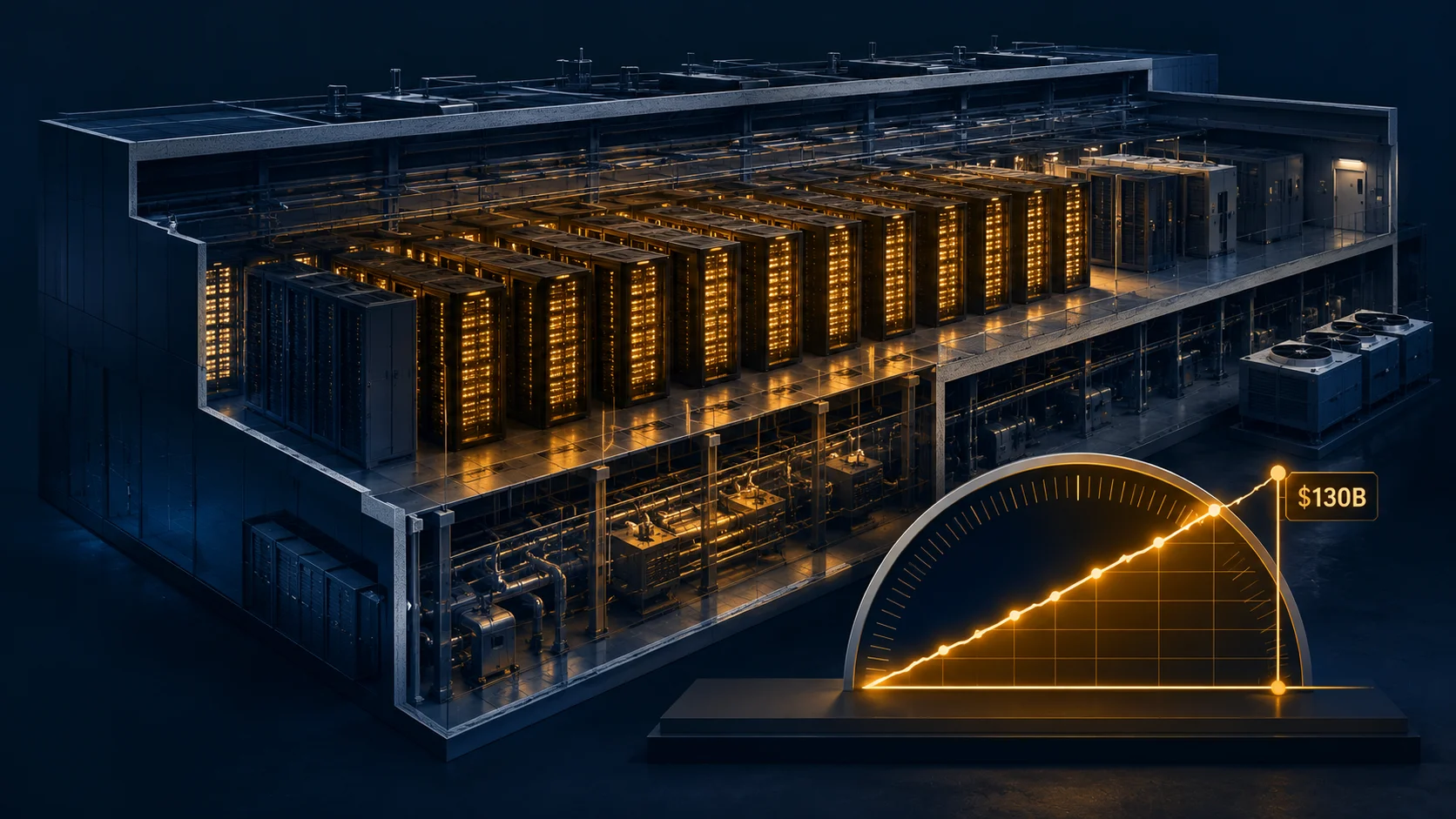
    The combined capital expenditure commitments of the three dominant hyperscale cloud providers in fiscal 2026 represent the largest peacetime infrastructure investment by commercial entities in recorded history. Amazon Web Services has guided to over $100 billion in CapEx for the fiscal year. Microsoft committed to $80 billion in data center investments in its fiscal year, which ends in June 2026. Google’s Q1 2026 capital expenditure alone was $17.2 billion, annualizing to approximately $70 billion. The combined number — roughly $250 billion in a single year, from three companies, directed primarily at the compute infrastructure needed to train and serve AI models — exceeds the annual infrastructure investment of most national governments.

    The scale creates a context problem for anyone trying to evaluate it: there is no historical precedent for this level of private sector infrastructure investment in a single technology category over a single year. The nearest analogs are the telecom buildout of the 1990s, the early internet backbone construction, and the electricity grid expansion of the mid-20th century — each of which represented multi-year, multi-decade commitments that produced infrastructure bottlenecks, significant overcapacity in some segments, and ultimately transformative economic value. The question the hyperscaler CapEx raises is not whether the AI infrastructure is being built — it clearly is — but whether the economics of the applications that will run on it justify the investment being made on the timelines the hyperscalers are committing to.

    What the Money Is Buying

    The $250 billion in annual CapEx is purchasing several distinct categories of infrastructure. The largest component is GPU servers — specifically Nvidia Blackwell GPUs at roughly $30,000-40,000 per unit, deployed in clusters of thousands for AI training workloads and in smaller configurations for inference serving. Each hyperscaler is building GPU capacity that serves both internal AI development (training the models they use for their own products) and external AI-as-a-service customers (providing GPU compute on demand through cloud APIs). Nvidia’s $75.2 billion in Q1 Data Center revenue is the single-company financial expression of this procurement wave.

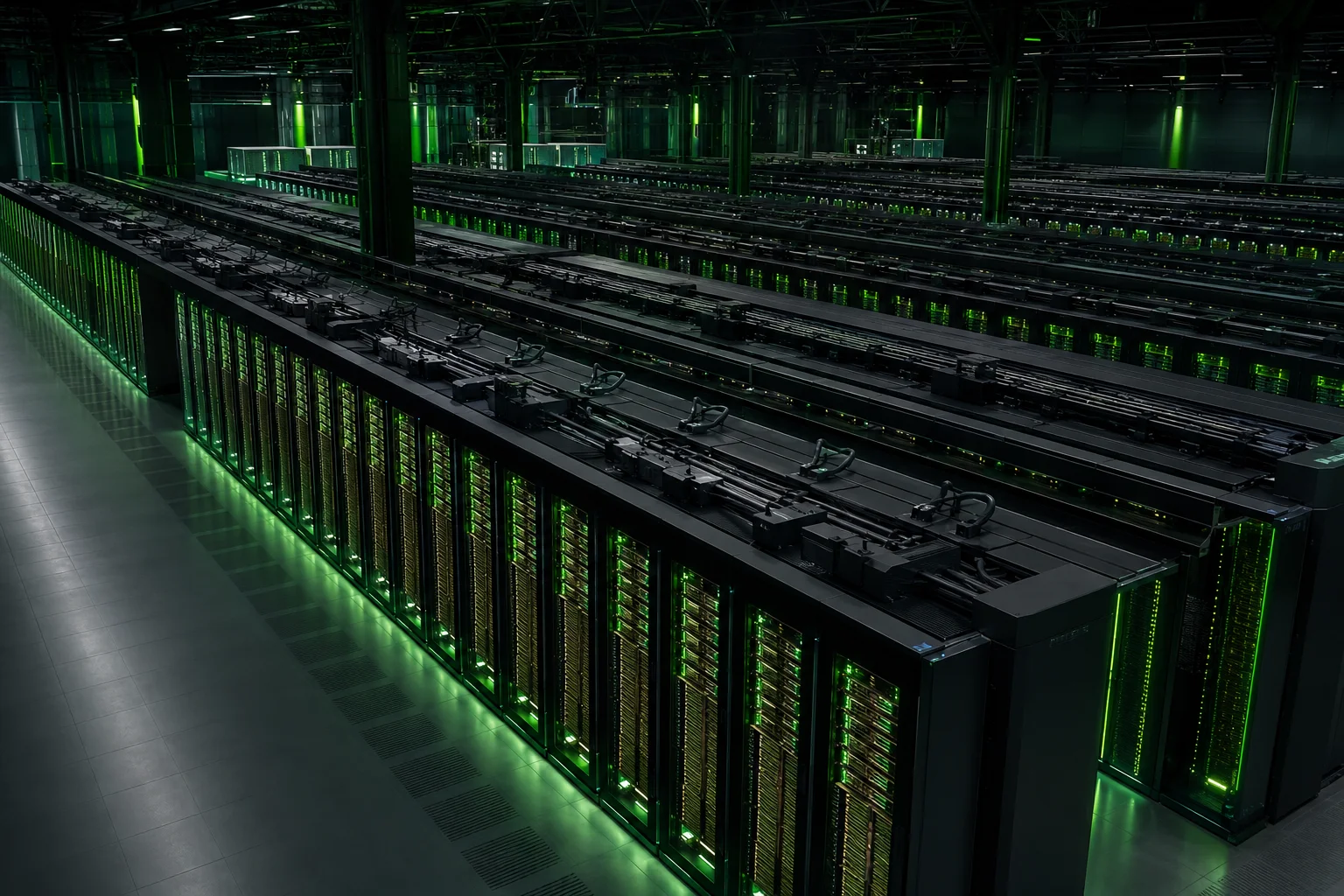
    The second component is data center construction — the physical buildings, power distribution, cooling systems, and networking infrastructure that houses the GPU servers. AI workloads are substantially more power-intensive than traditional cloud workloads: a rack of Blackwell GPUs consumes 20-30 kilowatts of power, versus 5-10 kilowatts for a comparable rack of CPU servers. The data center footprint required to deploy AI compute at hyperscale is larger and more power-hungry than the footprint of traditional cloud infrastructure, which is driving construction timelines, electricity procurement strategies, and in several cases, direct power generation investments by the hyperscalers.

    The third component is networking — the high-speed interconnects between GPUs, between servers, and between data centers that determine training efficiency for large models. GPU compute is only as useful as the bandwidth available to move data between GPUs during training, and the networking investments the hyperscalers are making — custom silicon, proprietary interconnect fabrics, fiber infrastructure between data centers — are as important as the GPU investments themselves for training performance at the scales required for frontier models.

    The Demand-Side Validation Required

    The financial logic of the $250 billion bet is straightforward: if AI applications generate enough enterprise value to drive cloud revenue growth that exceeds the cost of the infrastructure supporting it, the investment is rational. The hyperscalers are each projecting that AI-driven cloud revenue will grow at rates that justify the CapEx commitments, and the early evidence is consistent with that projection. Microsoft’s Azure revenue growth has accelerated alongside its Copilot AI product adoption. AWS’s AI services have become the fastest-growing segment of Amazon’s cloud business. Google Cloud’s AI products are driving customer acquisition and expansion. The demand-side data, through Q1 2026, supports the investment thesis.

    The risk scenario is one in which enterprise AI adoption, while real, proceeds more slowly than the hyperscalers’ planning models assumed. If the transition from “we are piloting AI” to “AI is embedded in our production workflows and we are scaling it” takes three years rather than one, the revenue that justifies the CapEx is deferred. Deferred revenue against committed capital expenditure means lower returns on the investment in the near term and the possibility of overcapacity in specific GPU generations if the next generation’s capabilities make current-generation infrastructure less competitive before current-generation demand has fully materialized.

    The Power Constraint That Nobody Solved

    The power requirement for the AI infrastructure buildout has emerged as the binding constraint that the industry underestimated. The data centers required to house the compute that Amazon, Microsoft, and Google are procuring need power at a scale that the electrical grid in most locations cannot immediately provide. This constraint is producing a set of behaviors that would have seemed unusual in any other infrastructure buildout context: hyperscalers are building their own power generation capacity (Microsoft and Google both have nuclear power agreements, Amazon has acquired wind and solar capacity), entering into long-term power purchase agreements that lock up available renewable capacity in priority markets, and in some cases selecting data center locations based primarily on available power rather than network latency or proximity to customers.

    The power constraint is the factor most likely to cause the $250 billion CapEx commitment to miss its theoretical potential. If the GPU servers are purchased but the power and cooling infrastructure to operate them at full utilization cannot be constructed fast enough, the effective compute capacity available is lower than the hardware investment suggests. The hyperscalers’ data center construction timelines — 18-36 months from site selection to full operation for large facilities — mean that the compute capacity being planned today will come online in 2027-2028. The timing mismatch between GPU procurement and data center readiness is one reason why hyperscaler CapEx numbers don’t translate directly into immediately available compute capacity.

    The Returns Question

    The fundamental returns question for the $250 billion AI infrastructure bet is one that won’t be answerable with confidence until 2028-2030. The AI applications being built on this infrastructure need to generate economic value — in productivity improvement, in revenue generation, in cost reduction — that justifies the capital costs of the infrastructure at reasonable discount rates. The enterprise AI adoption data through early 2026 is encouraging but not conclusive: KPMG deploying Claude to 276,000 employees, Goldman Sachs and JPMorgan integrating AI into investment banking workflows, and thousands of enterprise AI deployments suggest that the demand exists. Whether it exists at the scale and pace required to justify the infrastructure investment is the question that the next three years of enterprise adoption data will answer.

    The hyperscalers have made the bet. The infrastructure is being built. The $250 billion is committed or committing. Whether it was the right bet at the right time and scale is a question that will be answered by the enterprise applications that run on it, and by whether those applications generate the economic value that the investment requires. The largest infrastructure bet in commercial history is in progress. We’ll know whether it paid off by the end of the decade.

    The Clarity $250 Billion Demands

    William Zinsser’s central argument in “On Writing Well” is that clutter is the disease of American writing, and that every word should be doing work. The same principle applies to capital allocation. Every dollar should be doing work. And the $250 billion that Amazon, Microsoft, and Google are committing to AI infrastructure in 2026 is, at minimum, a test of whether the people spending it can explain — in clear, unhedged sentences — what they expect it to return.

    The clutter version appears in most earnings calls: “We continue to see strong signals of customer demand across our AI portfolio and remain committed to investing at the levels necessary to capture the secular growth opportunity in cloud and AI infrastructure.” That sentence says nothing. It contains no predicate that could be proven wrong.

    The numbers say something. Amazon is spending $100 billion. Microsoft is spending $80 billion. Google is spending $70 billion. Together they are building more data center capacity and buying more GPU servers than any commercial enterprise has committed to in a single year in history. The return on that investment depends entirely on whether enterprise customers use the compute they’re being offered at a price above the cost of providing it. That hasn’t been proven yet.

    The GPU server buildout is real. The data center construction is real. Nvidia’s $75.2 billion in data center revenue in Q1 FY2027 alone confirms that the hardware spending is genuine, not a paper commitment. But hardware deployment and economic return are different measurements. The hyperscalers are building ahead of demonstrated demand — which is correct strategy if demand materializes and catastrophic capital misallocation if it doesn’t.

    Zinsser would apply a simple editing rule: if you can’t write a clean sentence explaining what you expect to get back, you may not have thought it through clearly enough. The sentence the hyperscalers need to be able to write is something like: “We believe enterprise AI workloads will consume X exaflops of compute by Y year, generating Z in revenue at a W percent margin, producing a return above our cost of capital in N years.” Any version of that sentence is worth scrutinizing. The consistent absence of that sentence is the most important disclosure in every AI infrastructure earnings call this year.

    The largest infrastructure bet in commercial history has been made. The clutter will clear when the returns either justify it or don’t. Until then, read every investor day presentation the same way you’d edit a first draft: cut the adjectives, find the verb, and ask what the sentence actually commits to.