A Week That Changed the Story About Licensed IP
The conventional wisdom about licensed IP adaptations — franchises, comic book characters, legacy film properties turned into games or streaming series — has been running in one direction for several years. Too safe. Too reverent. Too reliant on brand recognition to substitute for creative ambition. The Marvel fatigue discourse, the video game movie graveyard, the gaming franchise that coasts on nostalgia: the cultural conversation has built a persuasive case that licensed IP produces mediocrity by design, because the people controlling the license optimize for not breaking the franchise rather than making something genuinely good.
The week of May 27, 2026 provided two simultaneous counterexamples substantial enough to reopen the argument. 007 First Light launched Wednesday to critical reception that includes a 10/10 from Newsweek and the “best Bond since GoldenEye” framing from IGN — reviews that describe not just a good licensed game but a genuine game of the year candidate. Spider-Noir launched today on Prime Video, the first live-action interpretation of the fan-favorite noir Spider-Man variant from Into the Spider-Verse, starring Nicolas Cage reprising the character he voiced in that film. Both properties arrived in the same week. Both appear to have delivered at the highest level. The question worth asking is why these worked when so many similar projects don’t.
Spider-Noir: What Prime Video Built
Spider-Noir arrives on Prime Video having generated significant anticipation since the series was announced — the combination of the beloved character from Into the Spider-Verse, Nicolas Cage bringing a performance that was already beloved in animated form into live action, and the Depression-era noir aesthetic that made the character memorable enough to anchor a spinoff are individually compelling, and collectively unusual. The decision to set the series in 1933 New York, with Ben Reilly as a Depression-era private detective who is also Spider-Man, commits to the noir genre in a way that most superhero properties treat as flavoring rather than foundation.
The creative logic of Spider-Noir is the reverse of most superhero adaptations. Most superhero properties start with the IP — the character, the powers, the iconography — and construct a story around it. Spider-Noir starts with a genre — hardboiled noir detective fiction — and embeds a superhero character inside it. The difference in creative approach is the difference between using IP as an aesthetic and using IP as a character: Ben Reilly is functioning as a noir detective protagonist who happens to have spider powers, rather than a superhero who is currently doing detective work in a period setting. The genre commitment gives the series its identity independently of the franchise association.
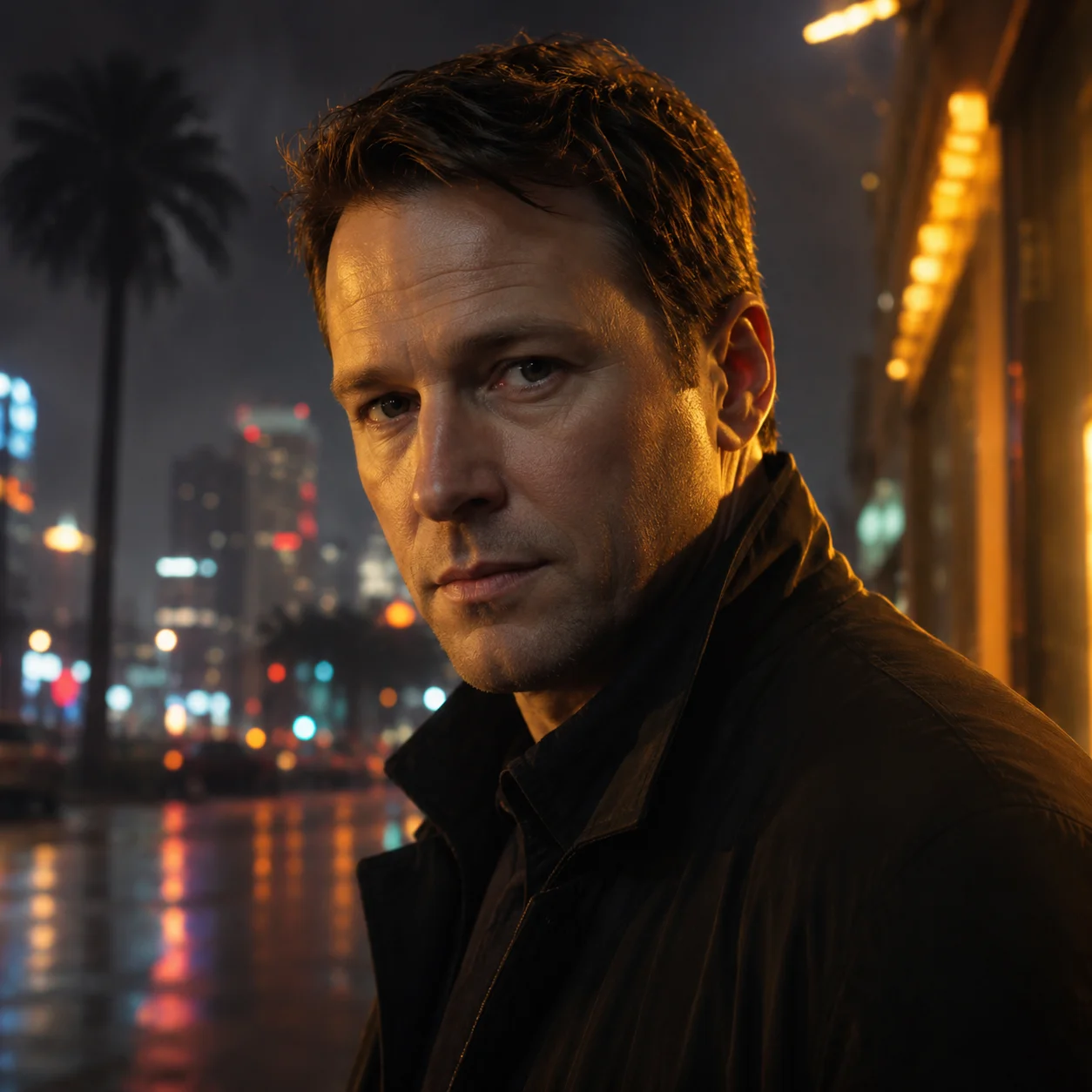
Nicolas Cage’s presence is doing specific work beyond fan service. Cage’s willingness to commit fully to stylized, heightened performances — his career is defined by the choice to play everything at maximum intensity rather than walking back into naturalistic restraint — suits the noir register better than the measured, grounded performances that MCU-adjacent superhero projects have normalized. A hardboiled 1930s Spider-Man narrating his own story in third person over a rain-slicked New York street scene needs an actor who will do that with full conviction. Cage does it with full conviction. The result is, by early viewer response, something that feels like a genuine noir film that happens to feature a superhero, rather than a superhero film that has borrowed noir’s production design.
007 First Light: What IO Interactive Delivered
007 First Light launched Wednesday to the reception the pre-release review embargo had signaled: a best-in-franchise achievement that competes with the year’s best releases rather than against the limited comparison set of Bond games. IO Interactive — the studio behind the Hitman World of Assassination trilogy — built a game around a young Bond before he became 007, set in 1960s London and the global locations that define the franchise’s aesthetic, with sandbox mission design that carries the Hitman DNA into a Bond context.
The creative decision that defines 007 First Light is the same decision that defines Spider-Noir: the creators treated the IP as the premise for a complete creative vision rather than as the product itself. IO Interactive didn’t make a Hitman game with a Bond skin. They asked what a Bond game built by IO Interactive with full creative commitment would be — what the Hitman tools (social infiltration, multi-approach sandbox design, studied patience over direct confrontation) express differently in the Bond context, how Patrick Gibson’s performance as a young James Bond becoming who he eventually becomes differs from the established Bond persona, and how David Arnold’s score serves this version of Bond rather than referencing the established franchise sound.
The GoldenEye comparison that IGN offered is specific in what it’s claiming: not that 007 First Light is similar to GoldenEye, but that it’s the first Bond game in 29 years to deserve evaluation alongside gaming’s best rather than within the limited field of licensed games. GoldenEye worked in 1997 because Rare built a genuinely groundbreaking shooter that happened to be a Bond game. 007 First Light works in 2026 because IO Interactive built a genuinely excellent stealth-action game that happens to be a Bond game. The IP is the frame, not the content.
The Shared Method
The creative principle that Spider-Noir and 007 First Light share is deceptively simple to state and apparently difficult to execute: treat the IP as a character and a context, not as a substitute for creative vision. The properties that fail under licensed IP tend to fail in one of two ways. Either they are so reverent to the source material that every creative decision is made in service of not alienating existing fans — a process that systematically eliminates the risk-taking that produces anything distinctive. Or they treat the IP as a marketing vehicle — recognizable enough to generate opening weekend interest — and invest minimally in the creative quality that would produce long-term audience retention.
Both approaches produce properties that the people controlling the license can rationalize as responsible stewardship. The reverent approach doesn’t damage the IP’s reputation with existing fans; the marketing approach generates short-term return. What both approaches consistently fail to do is attract the kind of critical and cultural attention that expands the audience rather than depleting it. The properties that grow a franchise’s cultural footprint are the ones that justify themselves on creative merit independently of the franchise association — the ones that would be good even if you’d never heard of Bond or Spider-Man.
IO Interactive’s track record with Hitman — a franchise they revived through creative ambition when it had been left for dead by publishers who treated it as a declining IP — is the most direct evidence that their approach to 007 First Light wasn’t accidental. They know what it takes to make a great game in their genre. They applied that knowledge to a Bond IP they spent years pursuing. The result is a Bond game that doesn’t need the Bond license to justify its existence as a piece of creative work — the license is what made it financially viable; the creative work is what made it worth experiencing.
What a Good Week for Licensed IP Actually Means
One week of strong launches doesn’t disprove the general case for licensed IP mediocrity — the sample is too small and the conditions too specific to the studios involved. IO Interactive is not a representative licensed IP holder. Prime Video’s willingness to commit to a Depression-era noir Spider-Man series is not representative of how most franchise IP owners make creative decisions. The structural incentives that produce safe, mediocre licensed IP adaptations haven’t changed because two good ones launched in the same week.
What the week does provide is evidence against the deterministic version of the argument — the claim that licensed IP is inherently incapable of producing excellent creative work because the constraints of the license are incompatible with the creative freedom required for excellence. Spider-Noir and 007 First Light suggest the constraints are real but navigable, that the IP owner’s creative disposition matters more than the inherent difficulty of working with pre-existing material, and that genre commitment and character-first storytelling can produce something distinctive even within the commercial framework of a franchise.
Both are now available: Spider-Noir on Prime Video as of today, 007 First Light on PlayStation 5, Xbox Series X/S, and PC as of Wednesday. The week that gave licensed IP one of its better arguments in years is now complete. The audience reaction over the next thirty days will determine whether the critical consensus translates into the cultural footprint that actually changes how studios and publishers think about the next round of franchise decisions.
The Decision Both Teams Made That Mattered
Behind any franchise project that actually works, there is a specific decision that separates it from the majority of licensed IP that doesn’t land: the decision about what the work is fundamentally for. When the production team is working primarily to satisfy the IP holder’s requirements — preserve the brand, don’t alienate existing fans, don’t take risks that might damage licensing value — every creative decision gets filtered through a lens of defensiveness. The result is content that is hard to criticize on brand-fidelity grounds and impossible to love on artistic ones.
IO Interactive’s track record with Hitman is the most legible evidence that their approach to 007 First Light was structural rather than accidental. They spent a decade on a franchise that publishers had left for dead, investing in creative ambition when the commercial case wasn’t obvious, building a game that earned its reputation through gameplay quality rather than franchise recognition. When they acquired the Bond license, they brought that disposition with them. The reviews calling 007 First Light the best Bond since GoldenEye are not describing a game that satisfied Bond IP requirements — they’re describing a game that would be excellent whether or not the Bond license was attached. The license is what made it financially viable. The creative work is what made it worth experiencing.
Nicolas Cage’s choice to take the Spider-Noir role in live action reflects the same creative logic in a different medium. Cage is an actor whose career has been defined by choosing full commitment over calculated restraint, and the hardboiled 1930s register of Spider-Noir rewards exactly the quality that makes his performances distinctive. He didn’t play down to the genre. He played into it. The result is a performance that critics describe not as competent franchise extension but as the natural culmination of a character he has been inhabiting since 2018 — a character who needed an actor willing to narrate his own existence in third person while standing in rain-slicked Depression-era New York without ironic distance.
The structural principle that both properties share is worth stating plainly. The franchise work that earns lasting cultural attention is the work where the creators are more afraid of making something mediocre than of failing to honor the source material. That fear — of wasting the opportunity, of producing something forgettable when the material and budget allow for something exceptional — is what produces the creative tension that audiences can feel in the finished product. When it’s absent, the work is safe. When it’s present, the IP holder gets something worth having.