Two Versions, One Show, One Decision That Actually Matters
Most streaming decisions in 2026 are about money — what to greenlight, what to cancel, what to license, what to drop. Spider-Noir, which premieres on Prime Video on May 27, is about something else. It’s about a creative decision so specific that it either proves the show understood exactly what it was building or reveals that the style was covering for a weaker story underneath. The show will be released in two simultaneous formats: “Authentic Black and White” and “True-Hue Full Color.” Not a filter. Not a post-production color grade toggle. Two distinct presentations, delivered at the same time, for the same show.
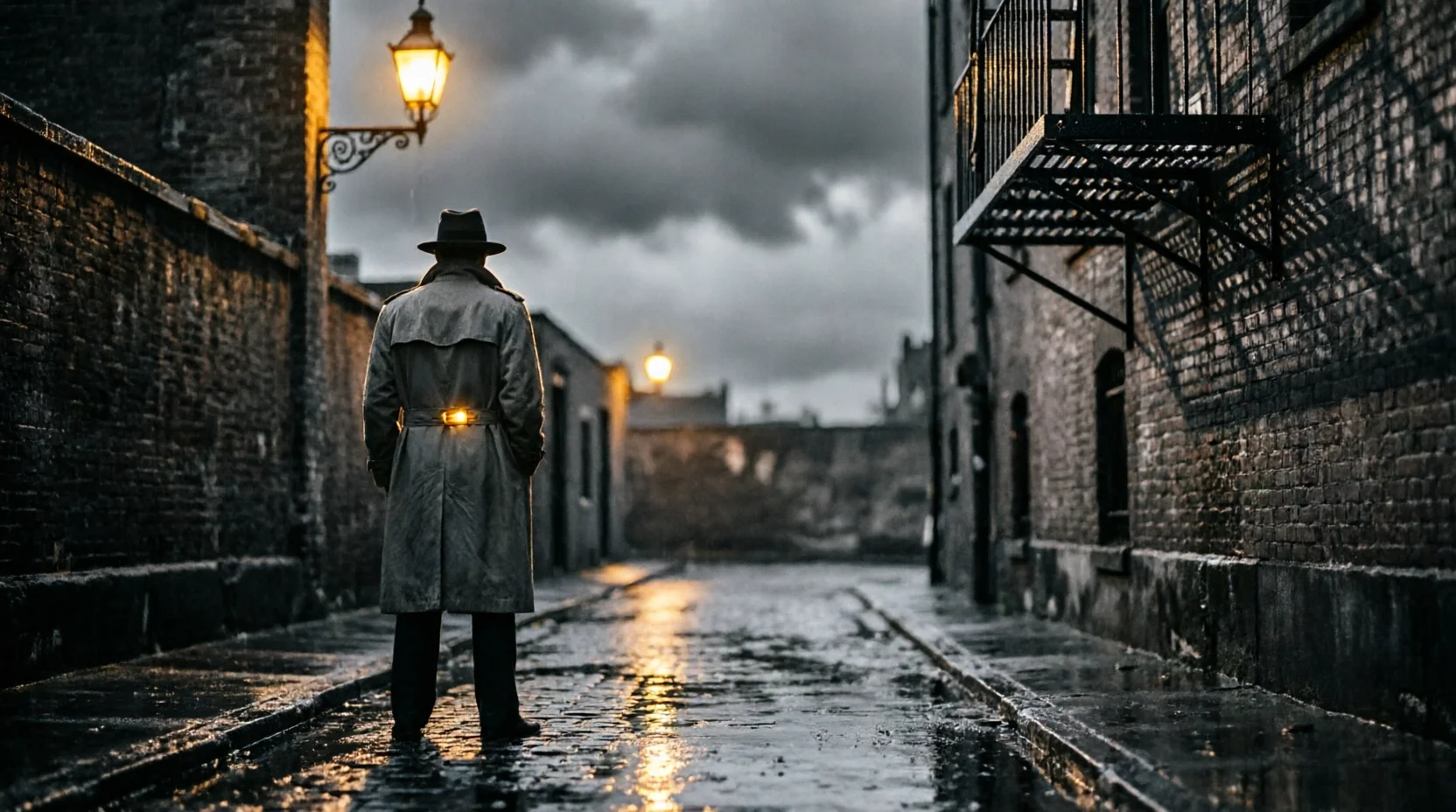
That choice is the most interesting creative statement a streaming show has made in several years. The question worth asking before next Tuesday isn’t whether Nicolas Cage as a 1930s Spider-Man variant makes commercial sense — it clearly does, or Amazon wouldn’t have made it. The question is whether the dual-format decision is an aesthetic commitment or a marketing gimmick. By next Wednesday, we’ll know.
What Spider-Noir Actually Is
The character originates in Marvel’s 2009 Spider-Man Noir limited series — Peter Parker in an alternate Depression-era 1933 New York, where the spider that bites him carries the essence of a spider-deity worshipped by a crime gang. It’s a darker, more explicitly violent Spider-Man, operating in a world built from hardboiled crime fiction rather than silver age superheroics. The comics leaned fully into the noir visual grammar: high contrast, shadow-heavy, morally weighted. The animated version in Spider-Man: Into the Spider-Verse is where most audiences first met the character — voiced by Cage, appearing only in black and white even when surrounded by color, the running gag being that he’s confused by his own colorful surroundings.
The Prime Video series expands that concept into live-action serialized television. Cage returns to the character. But this version of Ben Reilly — the name they’ve given this iteration — isn’t the 1933 version from the comics. He’s a 1930s private investigator who is also The Spider, working cases in a world that has clearly seen better days. The show is structured as a noir mystery series that happens to have a superhero at its center, rather than a superhero show that occasionally uses noir aesthetics for visual texture. That’s a meaningful distinction in how the story is likely to be told.
The cast supports the register. Lamorne Morris, who has made a career of bringing genuine presence to ensemble work, is in a significant supporting role. Brendan Gleeson — who has spent decades making every project he joins more interesting — is here too. Jack Huston. Li Jun Li. This is not a cast assembled to fill out a superhero spectacle. It’s a cast assembled for a show that expects to live in dialogue and character rather than action sequences.
The Dual-Format Question
The black and white version of a noir show is obvious. What makes the dual-format decision unusual is that the color version isn’t a concession to audiences who don’t want monochrome — it’s described as “True-Hue Full Color,” which implies it was designed as a distinct visual experience, not a colorized fallback. If that’s true, then the creative team produced the show with both presentations in mind simultaneously. That’s a different undertaking than shooting in color and desaturating for a black and white cut.
What does that mean in practice? It means the production design, costume choices, lighting setups, and color grading have to work in two different registers at once. A costume that reads well in black and white — where it’s defined by contrast and texture — might look wrong in color. A set built for noir shadows might feel flat in full color. Or it might not — maybe the design actually works in both, which would itself be a remarkable technical and artistic achievement.
The world premiere was May 13 at Regal Times Square. Reviews from that screening have been careful about spoilers but generally warm about the visual execution. That suggests the dual-format gamble holds up in at least one of its presentations. Which one works better — or whether both do equally — is the conversation that will drive the discourse when it drops on the 27th.
For the broader streaming industry, the dual-format strategy is worth watching regardless of how the show itself lands. Prime Video has been looking for differentiation — reasons to subscribe that aren’t just “we have a lot of content.” A show that offers genuinely different viewing experiences based on format preference is a small but real example of using the medium in a way that broadcast television couldn’t. If it works, expect imitations.
Nicolas Cage and the Rehabilitation Narrative
Nicolas Cage has been the subject of a quiet critical rehabilitation for about a decade. The years of career debt and the DTV output that followed are now mostly understood as a period rather than a permanent condition. Mandy (2018) started the re-evaluation. Pig (2021) completed it for anyone who doubted. The Unbearable Weight of Massive Talent (2022) made the meta-narrative explicit: Cage playing Cage, acknowledging the mythology directly, and doing it with enough craft to justify the full-circle treatment.
Playing Spider-Noir for Amazon isn’t a departure from that rehabilitation — it’s the logical continuation. The character is built for Cage specifically in ways that almost no superhero role would be. It demands the kind of weathered intensity he does well. It’s set in a world where his particular energy — not quite normal, not quite unhinged, operating at a register slightly outside the expected range — fits the material rather than fighting it. The voice role in Spider-Verse worked because it leaned into the strangeness. The live-action version has the same opportunity.
The risk is that the character works as a cameo — a brief, memorable guest in someone else’s story — and doesn’t have the architecture to sustain a full series. A grizzled private eye who happens to be a Spider-Man variant is a strong premise for a pilot. Whether the writers have figured out what seasons of that look like is what the show has to prove.
Linear First, Global Second
The release structure is worth noting: Spider-Noir premieres on MGM+ linear television on May 25, two days before the Prime Video global launch on May 27. The linear-first window is a legacy licensing structure from when MGM was its own entity and Amazon was acquiring its library. It creates a brief moment where the show exists somewhere most audiences can’t access it before it hits the platform they’re actually on.
The practical effect is that the cultural conversation starts on May 27. Whatever reviews come out before then will be based on screener access. The real discourse — the social media response, the format comparison discussions, the takes about whether Cage works in live action versus voice — begins next Tuesday when every Prime subscriber can watch it simultaneously.
Globally, that’s a large simultaneous release. Amazon has invested heavily in regional production, but its biggest swings tend to be English-language titles with global IP. Spider-Noir has the IP recognition that crosses regions — Spider-Verse has a genuinely global audience — and the character is distinct enough from the main Spider-Man mythology that it doesn’t require deep Marvel knowledge to engage with. A 1930s noir detective who happens to have spider powers is a self-contained premise.
The Streaming Moment for Superhero Television
The context for Spider-Noir arriving now is a superhero television landscape that has been recalibrating since 2023. Marvel’s Disney+ output, which flooded the market with connected content, produced several genuine hits (Loki, Andor from the Star Wars adjacent universe) and a lot of content that didn’t justify its cost. Audience appetite for superhero TV exists — the viewership numbers support that — but the appetite for superhero TV that doesn’t do anything interesting with the genre has dropped significantly.
Spider-Noir is positioned outside the MCU, operating with a Sony license under Amazon’s production umbrella. It doesn’t need to service a larger continuity. It doesn’t need to set up a post-credits scene. It can just be a show about a spider-man in a 1930s city doing detective work. That freedom is either liberating or a limitation depending on how the writers used it. The early signs suggest they used it well.
The dual-format release, the cast choices, the noir-first framing — these are decisions that communicate creative confidence. Whether the writing delivers on the visual ambition is what the next seven days will reveal.
What Next Tuesday Looks Like
May 27 is when this becomes a real conversation. The black and white versus color debate will generate takes immediately. Cage’s performance will be the axis everyone evaluates the show against — he’s earned enough goodwill that the expectation is specific, and the audience will be quick to say whether he lived up to it. The supporting cast will get less initial attention and probably deserves more; Gleeson in particular tends to elevate whatever he’s in quietly enough that it’s easy to underreport how much he’s doing.
The format question is the one that will matter most for the show’s legacy. If the black and white presentation is the definitive version and the color presentation feels like a hedge, the dual-format strategy becomes a footnote. If both versions genuinely offer different experiences of the same material — not better and worse, but different — then Prime Video has done something meaningfully new.
That outcome would be rare enough to be worth paying attention to, regardless of whether you care about Spider-Man, noir fiction, or Nicolas Cage specifically. The medium argument is bigger than any single show. Spider-Noir is the test case for whether streaming platforms can use their distribution flexibility to do something actually new with presentation. May 27. Both formats. The answer arrives together.
The Design Decision Hidden In The Dual-Format Choice
Releasing the same show in both colour and black-and-white is a design decision in the way that most non-design people would not notice as a design decision at all. The studio could have shipped one version, picked the format that played best in test screenings, and saved the cost of maintaining two parallel cuts. They didn’t. The dual-format choice signals something specific about how the studio thinks the audience will experience the show.
The two formats are not the same product. The colour cut is the safer commercial bet — it sits inside the visual conventions the platform’s recommendation algorithms know how to surface. The black-and-white cut is the artistic-credibility bet — it signals to a different segment of viewer (and to a different segment of reviewer) that the show is doing something serious enough to justify the format choice.
The user benefit is real on both sides. The viewer who prefers colour gets a faithful version of the show. The viewer who prefers the noir aesthetic gets the version the source material implies. The platform’s data team is going to learn which segment is larger and how to route future projects accordingly, which is the actual business value of running two formats simultaneously. The dual-format decision is therefore both a creative gesture and a controlled experiment. Most viewers will only see the gesture. The platform sees the experiment.