Netflix has acquired InterPositive, Ben Affleck’s AI post-production company, in a deal valued at up to $600 million — one of the streaming giant’s largest acquisitions ever. InterPositive’s tools help filmmakers fix continuity errors, enhance scenes, and reduce post-production labor costs without generating new AI content or using footage without permission. The acquisition lands as Netflix reports $12.25 billion in Q1 2026 revenue — up 16.2% year-over-year — with its ad-supported tier now representing 60% of new sign-ups and a $3 billion full-year ad revenue target. Netflix isn’t buying InterPositive because the company is large. It’s buying proof of concept: that AI can meaningfully reduce the $200-plus million budgets that make tentpole streaming content a financial bet that even Netflix has to lose sleep over.
What InterPositive Actually Does
InterPositive is not a generative AI content company. This distinction matters. The concern about AI in Hollywood — and the one that drove the Writers Guild and SAC-AFTRA strikes of 2023 — centers on AI generating performances, rewriting scripts, or cloning actors’ likenesses without consent. InterPositive does none of that.
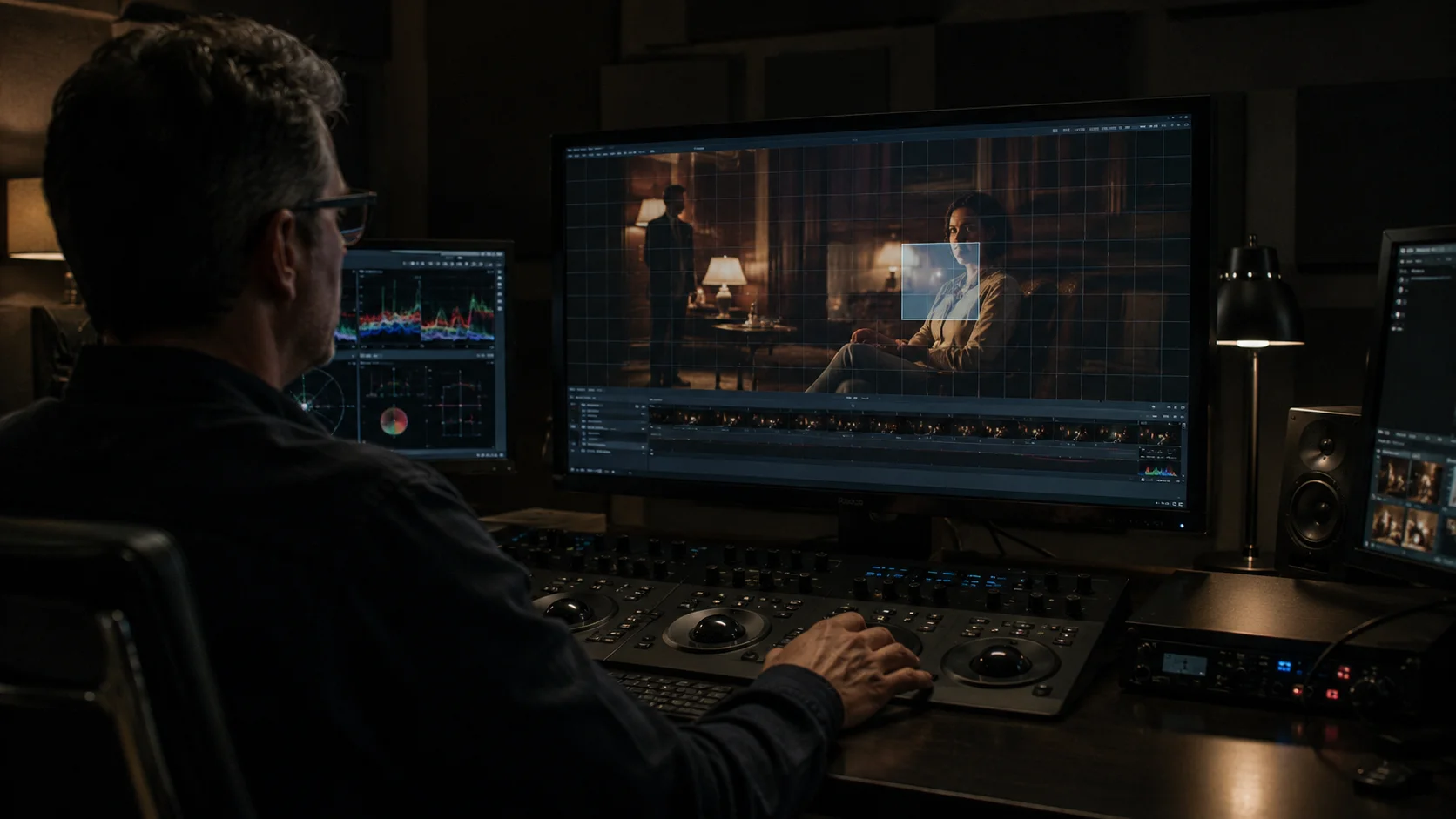
The company’s tools operate in post-production — specifically in the editing, color, and visual effects pipeline that happens after principal photography is complete. According to TechCrunch’s reporting, InterPositive’s AI addresses continuity issues (a prop in the wrong position between shots, inconsistent lighting across a scene), enhances existing footage quality, and automates elements of the VFX cleanup process that currently require hours of manual labor from visual effects artists. The system works on footage that already exists — it improves what’s there, not what isn’t.
Variety reported that Netflix will offer InterPositive’s technology to its creative partners rather than sell it commercially, and that the entire 16-person team of engineers, researchers, and creatives will join Netflix. Affleck will serve as a senior adviser. The deal includes performance-based earnout provisions, which explains the “up to $600 million” framing — the actual cash payment is lower, with additional payouts tied to specific deployment milestones.
Why $600 Million for 16 People
The valuation needs context. Netflix spent approximately $17 billion on content in 2025. A single prestige drama series runs $10–20 million per episode. A top-tier action film can cost $200–250 million before marketing. Post-production typically accounts for 20–30% of a production budget — meaning $40–60 million on a $200 million film. If InterPositive’s tools reduce post-production costs by even 20%, the savings per major production run into the tens of millions.
At Netflix’s content volume — over 100 original films and hundreds of series episodes per year — a consistent 15-20% reduction in post-production costs across its top-tier slate generates annual savings that could approach $500 million. Deadline reported that InterPositive had set “aggressive production cost-cutting targets” before the Netflix deal, and that internal models projected meaningful budget reductions at scale. Against those projections, $600 million is less a technology acquisition and more a cost-structure transformation bet.
The 16-person team is also part of the calculus. InterPositive’s engineers and researchers are among the most specialized AI practitioners in Hollywood — people who understand both the technical architecture of AI systems and the craft requirements of film production well enough to build tools that filmmakers will actually use. That combination is genuinely rare and doesn’t come cheap in 2026, when Big Tech is simultaneously bidding for every available AI research talent.
Netflix Q1 2026: The Business That Makes the Acquisition Make Sense
The InterPositive acquisition sits inside a Netflix that is performing exceptionally well by its own historical standards. Q1 2026 revenue came in at $12.25 billion, up 16.2% year-over-year, with the company targeting $11 billion in free cash flow for the full year. That free cash flow figure is the critical number — it’s what makes content investment at scale sustainable without the debt-driven content spending that nearly broke Netflix’s model in 2020–2022.
The ad-supported tier is the structural driver. With 60% of new sign-ups choosing the ad-supported plan, Netflix has effectively completed its transition from a pure subscription company to a hybrid subscription-advertising business. The $3 billion full-year ad revenue target — roughly double 2025’s advertising revenue — reflects the maturing of that transition. Advertiser count growing 70% to over 4,000 clients in Q1 alone shows that brands are following the audience shift to streaming with genuine conviction, not reluctant experimentation.
The ad-supported tier also changes the economics of content investment. Higher content volume serves the advertising business by giving subscribers more reasons to stream more hours — which improves ad impression inventory. InterPositive’s post-production AI tools reduce the cost of generating that volume, creating a direct connection between the technology acquisition and the advertising revenue strategy.
The Spotify Partnership and the Platform Expansion Thesis
The Netflix-Spotify video podcast partnership — bringing Spotify Studios and The Ringer content to Netflix starting in 2026 — is a separate signal about where Netflix thinks its platform is heading. Video podcasts grew 20 times faster than audio-only podcasts since 2024, and 72% of listeners now prefer video content over audio-only formats. Netflix is adding that inventory to its platform without producing it.
The partnership model is instructive. Rather than building a podcast platform from scratch, Netflix licenses Spotify’s existing video podcast library and distribution relationship. This mirrors how Netflix has approached licensed content alongside originals — maintaining a mix of owned IP (where InterPositive’s cost reduction tools matter most) and licensed content (where the marginal cost is low and the audience benefit is immediate).
Together, the InterPositive acquisition and the Spotify deal define a Netflix that is pursuing two parallel strategies: using AI to make original content production cheaper, and using partnerships to expand the platform’s total content surface without proportional cost increases. Both strategies serve the same goal — maximizing the hours-per-subscriber-per-month that makes the ad-supported tier’s inventory valuable to brands.
Crypto and Web3 Implications for Streaming
Netflix’s AI production investment and the broader streaming industry’s adoption of AI post-production tools raise questions about content ownership, rights attribution, and creator compensation that the blockchain and tokenization ecosystem is positioned to address — even if the industry hasn’t moved there yet.
When AI tools augment or modify film footage in post-production, the chain of creative attribution becomes more complex. InterPositive explicitly processes existing footage without generating new content, but as AI post-production tools become more capable, distinguishing between “fixing” a shot and “creating” a new version of it becomes harder. Story Protocol, an on-chain IP management layer, and Royal, which tokenizes music royalties, are examples of blockchain infrastructure designed to handle exactly these attribution and revenue-sharing questions at scale.
The tokenized content rights thesis is also relevant to the creator economy side of streaming. As Netflix moves deeper into video podcasts via the Spotify partnership, the question of how creators participate in the value of their content becoming a Netflix inventory asset — rather than just a Spotify one — will require new royalty structures. The creator economy’s relationship with crypto-native monetization is evolving precisely because existing royalty infrastructure wasn’t built for multi-platform distribution at the speed streaming platforms can now move.
More immediately, Theta Network, which built a decentralized video delivery network, and emerging tokenized streaming infrastructure projects see Netflix’s AI-driven cost reduction as both competitive pressure and a proof point: if AI can reduce content production costs enough to generate $500 million annually in savings, the economics of decentralized streaming become more viable in contrast to the centralized infrastructure Netflix is building.
What the Hollywood Labor Unions Will Say
The InterPositive acquisition will face scrutiny from the Writers Guild of America and SAC-AFTRA, even though the technology doesn’t generate content or use performers’ likenesses without consent. The concern is about precedent: a $600 million commitment by Netflix to AI post-production tools signals the direction of travel, and unions that negotiated AI guardrails in 2023 under contract provisions expiring in 2026 will read the acquisition as evidence that they need stronger restrictions in the next round of bargaining.
Inc.’s reporting on the deal noted that Netflix has no plans to sell InterPositive’s technology commercially, which limits immediate union exposure — it’s internal tooling, not a product any production company can license. But internal Netflix tooling becomes external industry practice when Netflix-produced content is financed, co-produced, or distributed alongside union signatory productions. The practical containment is smaller than the stated scope.
The more durable question is compensation. When AI tools reduce post-production labor costs by cutting the hours required from VFX artists, colorists, and editors, the savings accrue to Netflix’s balance sheet. The labor contract question — whether workers whose roles are made more efficient by AI share in the productivity gains — is unresolved and will be central to the next cycle of Hollywood labor negotiations.
Inside The InterPositive Office The Week Before The Acquisition
The InterPositive offices in Santa Monica — the specific building the Netflix conversation centred on — have a layout that suggests, when you walk through them, what the acquisition was actually paying for. The room labelled “model training” holds two GPU racks that the company’s own technical team built and maintained, mounted in cabinets the same engineering team rewired the building’s electrical service to accommodate. The room labelled “creative pipeline” sits adjacent, walled with whiteboard, the work-in-progress notes left from a recent series-development meeting still legible in the corner. The two rooms are next to each other for a reason. The company’s actual value sits in the workflow that walks the corridor between them.
You can see why Netflix paid $600 million for sixteen people. It was not the people. It was the workflow — the specific, hard-won practice of getting model output into a creative pipeline without breaking the creative pipeline, and getting creative direction into the model without breaking the model. Studios that have tried to build this capability from scratch in the past three years have routinely failed because the two rooms in their building were too far apart in the org chart. At InterPositive the two rooms shared a corridor. The acquisition bought the corridor.
What happens next is the test most acquisitions of this shape fail. The new parent has to keep the corridor intact while integrating the company. Netflix has a better record at this than most. The corridor either survives the integration or it does not. The acquisition’s value, in five years, will be entirely a function of which.
FAQ
What did Netflix acquire with the InterPositive deal?
Netflix acquired InterPositive, an AI post-production company co-founded by Ben Affleck, in a deal valued at up to $600 million. InterPositive makes AI tools that help filmmakers address continuity issues, enhance existing footage quality, and reduce the labor-intensive manual work in the VFX and editing pipeline. The tools do not generate new content or use actors’ likenesses without permission — they process footage that already exists. The entire 16-person team joins Netflix, and Affleck will serve as a senior adviser. Netflix plans to offer InterPositive’s technology to its creative partners rather than sell it commercially. The deal includes performance-based earnout provisions tied to deployment milestones.
How does the acquisition connect to Netflix’s Q1 2026 financial performance?
Netflix reported $12.25 billion in Q1 2026 revenue, up 16.2% year-over-year, with a $11 billion free cash flow target for the full year. The company’s ad-supported tier now represents 60% of new sign-ups, and Netflix is targeting $3 billion in full-year advertising revenue — roughly double 2025’s figure. The InterPositive acquisition directly supports this model: AI post-production tools that reduce per-title costs allow Netflix to maintain content volume (which drives ad impression inventory) without proportional budget increases. Even a 15-20% reduction in post-production costs across Netflix’s top-tier slate could generate hundreds of millions in annual savings — making the $600 million acquisition price rational at scale.
What is the Netflix-Spotify video podcast partnership about?
Netflix and Spotify have partnered to bring Spotify’s video podcast library — including content from Spotify Studios and The Ringer — to Netflix’s platform. Video podcasts have grown 20 times faster than audio-only podcasts since 2024, with 72% of listeners now preferring video format. By adding Spotify’s video podcast catalog without producing original content, Netflix expands its total content surface and streaming hours without proportional cost increases. The partnership is consistent with Netflix’s strategy of combining high-cost original content (where AI tools like InterPositive reduce production costs) with lower-cost licensed content (where partnerships provide inventory at marginal cost).
How will Hollywood unions respond to Netflix’s AI production investment?
The Writers Guild of America and SAC-AFTRA will scrutinize the acquisition even though InterPositive’s technology doesn’t generate content or use performers’ likenesses — both concerns central to the 2023 strikes. The concern for unions is precedent: a $600 million commitment to AI post-production signals Netflix’s direction of travel, and union contracts negotiated in 2023 with AI provisions expiring in 2026 need renewal. The immediate exposure is limited because Netflix has no plans to license InterPositive’s tools commercially. The longer-term question is whether workers whose roles are made more efficient by AI tools share in the productivity gains — a question unresolved in current contracts and certain to be central to the next Hollywood labor negotiations.
What are the crypto and blockchain implications for streaming content rights?
As AI post-production tools become more capable, content attribution becomes more complex. Blockchain-based IP management infrastructure, including Story Protocol’s on-chain rights layer and tokenized royalty structures like Royal, is designed to handle attribution and revenue-sharing at the scale and speed that multi-platform streaming distribution requires. The Netflix-Spotify partnership also raises questions about how creators whose podcast content becomes Netflix inventory are compensated across platforms — a problem that blockchain royalty infrastructure can address more efficiently than legacy rights management systems. These aren’t immediate Netflix use cases, but they represent the infrastructure trajectory the industry is heading toward as AI production tools accelerate content volume and complicate ownership chains.
Sources
- Variety — Netflix acquires InterPositive, Ben Affleck as senior adviser
- TechCrunch — Netflix $600M InterPositive acquisition report
- Deadline — InterPositive production cost-cutting targets and Netflix integration plans
- Inc. — What InterPositive actually does and deal scope
- Dealroom — Netflix Q1 2026 revenue and $11B free cash flow target
- Bloomberg — Netflix to pay up to $600M for Ben Affleck’s AI firm
- NPR — Netflix acquires Ben Affleck’s AI company