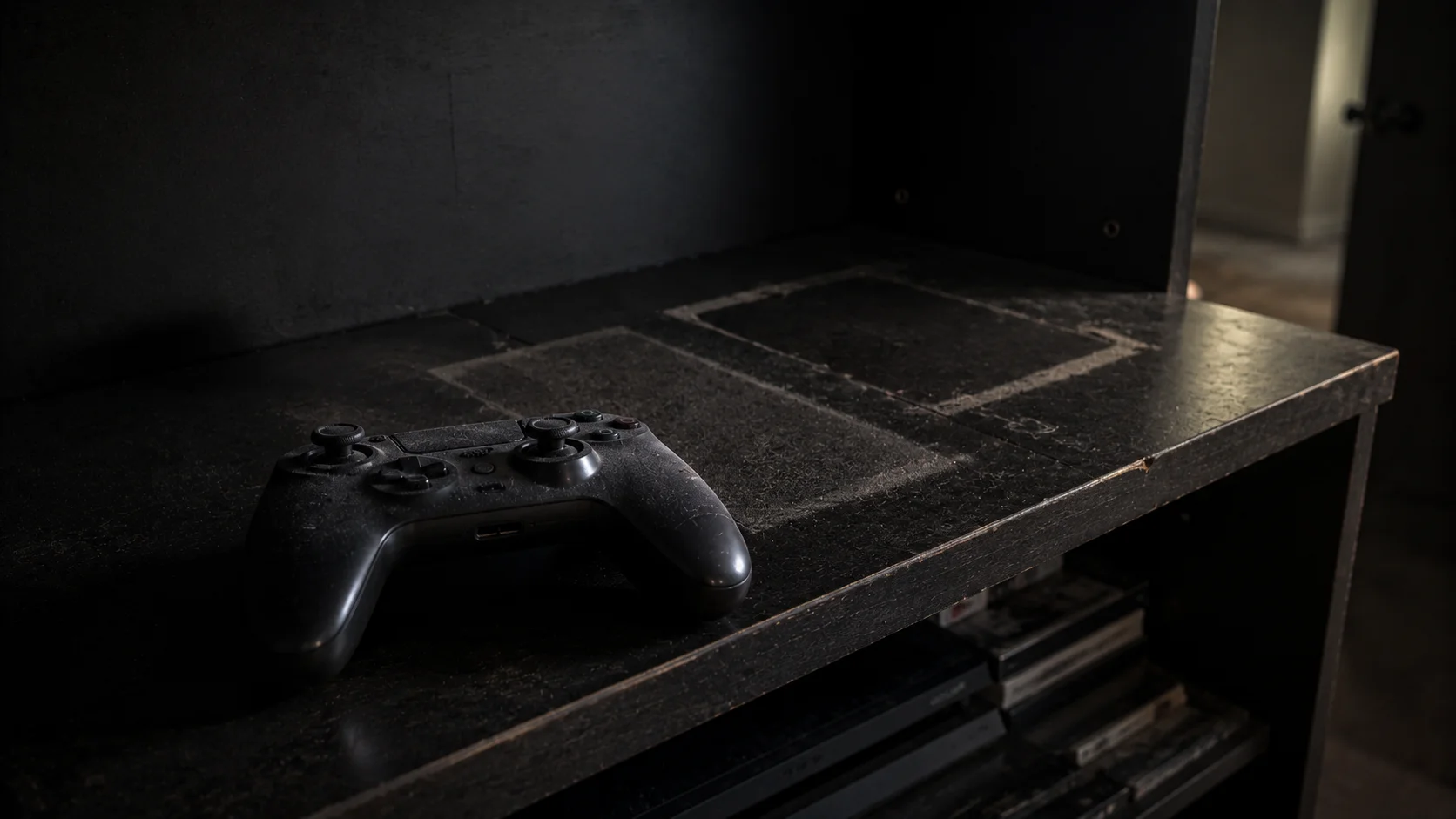
Xbox Just Fell 33%. Two Quarters In a Row. Microsoft Needs to Decide What It Actually Is.
Microsoft reported Xbox hardware revenue down 33% year-over-year in Q3 FY2026. Gaming revenue fell 7%. Total gaming revenue came in $380 million below the same quarter last year. The quarter before that, hardware was down 32%.
Two consecutive quarters of 30%+ hardware declines. That is not a cycle. That is not a current-generation maturity curve. That is not a temporary effect of price increases or reduced marketing. It is a verdict.
Xbox is losing the hardware generation. The question Microsoft needs to answer — clearly, publicly, and soon — is whether it is a console company that is struggling, or a gaming software and services company that has been carrying an expensive hardware division it can no longer justify. Those are very different strategies, and pretending the answer is somewhere in the middle is exactly how companies spend billions deferring the obvious.
The Numbers That Don’t Leave Room for Spin
Xbox hardware revenue fell 33% in Q3 FY2026. The same metric fell 32% in Q2 FY2026. The combined two-quarter hardware revenue decline represents hundreds of millions of dollars in lost revenue against a business that was already the third-place console platform globally.
Total gaming revenue was down 7% year-over-year, representing a $380 million shortfall against the prior year quarter. Xbox content and services revenue — which includes Game Pass subscriptions, digital game sales, and first-party titles — fell 5%. This matters because it shows the decline is not limited to hardware. The software and services layer, which Microsoft has consistently pointed to as the future of its gaming strategy, is also contracting.
The contributing factors are well documented. Microsoft raised Xbox console prices in most major markets in May 2025 and raised them again in the US in October 2025. Two price increases in less than six months, on hardware that was already the more expensive option versus Sony’s PlayStation 5 at comparable tiers, predictably compressed consumer demand. Marketing investment was simultaneously reduced. The combination of higher prices and lower visibility is a formula for accelerated market share loss.
Competition from Sony and Nintendo intensified during this period. Sony’s PlayStation 5 continued its installed base growth. Nintendo’s successor hardware has driven renewed consumer interest in that platform. Xbox entered this environment with a hardware lineup that hasn’t been refreshed in the current generation, a game release cadence that disappointed relative to expectations set by the Activision Blizzard acquisition, and a new CEO who inherited a business already in structural decline.
Asha Sharma Inherited a Problem Phil Spencer Created
Phil Spencer retired in February 2026 after nearly a decade as the face of Xbox. His legacy is genuinely complicated. He rescued the Xbox brand from the Xbox One disaster, established Game Pass as a credible subscription model, and engineered the largest acquisition in gaming history with the $68.7 billion purchase of Activision Blizzard.
He also presided over a hardware strategy that never solved the fundamental challenge: Xbox has never had a console generation where it outsold PlayStation in any major global market. The gap has been partially disguised by reframing Xbox as a platform rather than a console — “play anywhere,” PC Game Pass, cloud gaming, Xbox app on Samsung TVs. These are real products that real people use. But they are not a substitute for hardware market share, which determines installed base, which determines the size of the audience for first-party titles and the leverage in platform economics.
Asha Sharma, who took over as Xbox CEO in February, has begun repositioning with a different tone. She has lowered Game Pass prices in some tiers, ended certain marketing campaigns that weren’t converting, and signalled a return to exclusives — acknowledging implicitly that the “games everywhere, on everything” strategy has not produced the installed base growth it was supposed to generate.
These are sensible corrective moves. They are also moves being made from a position of weakness, two quarters into 30%+ hardware declines, against a Sony that is executing its hardware roadmap with relative consistency and a Nintendo that just launched a new platform cycle.
The Activision Bet Hasn’t Paid Off in Hardware
The core strategic logic of the Activision Blizzard acquisition — beyond the obvious content library value — was that Call of Duty, Diablo, World of Warcraft, and Candy Crush would become system-sellers that drove console adoption and Game Pass subscriptions simultaneously. Three years after the deal closed, that thesis has not produced the hardware results it was supposed to.
Call of Duty remains one of the best-selling franchises in gaming. Microsoft has kept it on PlayStation, both because the acquisition approval required it and because the revenue from PlayStation sales is substantial. That decision is commercially rational. It is also a tacit acknowledgment that Xbox-exclusive Call of Duty was never a realistic option, which removes the most compelling potential hardware differentiator the acquisition offered.
The Activision catalogue has strengthened Game Pass and driven subscriber value. It has not moved hardware units in a way that shows up in the quarterly data. Two consecutive 30%+ hardware declines since the acquisition’s full integration into Xbox strategy suggest the content library alone is insufficient to close the hardware gap against a PlayStation ecosystem that has a larger installed base and more consistent first-party execution.
The Strategic Choice Microsoft Is Avoiding
There are two honest strategic positions available to Microsoft in gaming.
The first is to compete seriously in hardware. This means a next-generation Xbox announcement with a clear launch window, aggressive pricing designed to regain installed base share, a committed exclusive title pipeline for the first 18 months of the new platform, and marketing investment at the scale the PlayStation launch cycle receives. It means treating hardware as the foundation rather than one optional access point among many. It is expensive, risky, and requires sustained commitment through a full console generation.
The second is to acknowledge that Microsoft is a gaming software and services company that distributes through multiple platforms including PlayStation, Nintendo, PC, mobile, and cloud. This means treating Xbox hardware as a premium PC-adjacent device for the enthusiast market rather than a mass-market console, investing the freed capital into Game Pass content and cross-platform distribution, and competing on the software layer where Microsoft has genuine strengths. It is strategically coherent and commercially defensible. It also requires saying publicly that Xbox lost the console generation — which Microsoft has been unwilling to do.
The current position — not fully committed to either strategy, spending on hardware without a clear next-generation plan, reducing marketing while raising prices, signalling exclusives without announcing a new platform — produces exactly the results showing up in the data: 33% hardware declines and 7% total gaming revenue contraction.
The longer Microsoft occupies this middle ground, the more expensive the eventual choice becomes. Hardware development cycles are long. If a next-generation Xbox is going to compete in the next console generation, the engineering and manufacturing decisions are being made now, whether Microsoft is prepared to announce them or not. Delay doesn’t preserve optionality — it eliminates it.
What This Means for Game Pass and the Services Model
The 5% decline in Xbox content and services revenue is the more concerning data point for Microsoft’s stated strategic direction. Game Pass was supposed to be the hedge against hardware underperformance — a subscription model that monetized engagement across platforms regardless of which hardware a user owned.
A services revenue decline while hardware is collapsing suggests one of two things: either Game Pass subscriber growth has stalled, or the average revenue per subscriber is declining due to the tier pricing changes Sharma has made. Either reading weakens the narrative that the services strategy insulates Microsoft from hardware volatility.
Game Pass at its best is a genuine value proposition: a large library of games including day-one first-party releases for a fixed monthly fee. The problem is that the library depth depends on first-party release cadence, which has been inconsistent, and on third-party partnerships, which are under constant renegotiation as publishers assess whether Game Pass inclusion helps or hurts their per-unit economics. As AI-driven game development reduces production costs but increases the volume of titles competing for player attention, the value of curation within Game Pass becomes more important — and Microsoft’s track record on curation is mixed.
The Crypto and Web3 Gaming Parallel
Xbox’s decline is a useful test case for the persistent Web3 gaming thesis — that blockchain-based ownership, play-to-earn economies, and NFT asset interoperability will drive the next platform cycle. The Xbox data says something specific and uncomfortable about that thesis.
Axie Infinity is the cleanest comparison. At its 2021 peak, Axie had over 2.7 million daily active users, a market cap above $10 billion, and media coverage calling it the future of gaming. The ownership and economic participation model was the entire platform differentiator. By 2023, daily active users had collapsed below 100,000 and the SLP earn token had lost more than 99% of its value. The structural failure was not technical — the blockchain ownership was real, the asset transfers worked as designed. The failure was that the economic model required constant new player inflow to sustain token value, and when growth stalled, there was no content depth, no community formed around genuine enjoyment, and no reason to stay. The platform differentiator couldn’t compensate for the absence of everything that makes a game worth playing.
Microsoft made the equivalent bet with Activision: that a $68.7 billion content library would be a platform differentiator strong enough to close the hardware gap with PlayStation. It hasn’t. The library strengthened Game Pass, but it couldn’t substitute for the installed base, the exclusive release cadence, or the social network effects that keep PlayStation users on PlayStation. A structural advantage at the platform level does not automatically convert into consumer adoption decisions — in gaming, it never has.
Web3 gaming projects still pitching their asset ownership layer as the primary reason players will switch platforms are running the same experiment Axie already ran to conclusion. The result is in the data.
The Growth-Loop Diagnosis Underneath The Xbox Numbers
Every console business is, in growth-loop terms, a marketplace where one side (players) sustains the other (developers). The loop has a specific shape: a console attracts players because of exclusive content, those players attract developers because the install base is there, those developers ship more exclusive content, that exclusive content attracts more players, and the cycle compounds for a decade.
The Xbox loop, looking at the hardware numbers, has not been compounding for six years. The Activision acquisition was structured to fix this — bring the exclusive content in-house, restart the player-attraction side of the loop, restart the developer-attraction side as a downstream effect. The hardware data suggests the player-attraction side has not yet responded. That is not unusual for a recent acquisition; the integration timelines are long and the effect of new exclusives takes 18-24 months to compound. But it does mean the patient-capital phase is now, not later.
What changes the trajectory is the same thing that changes any stalled growth loop: a specific exclusive that genuinely moves the console attach-rate, not just the games-sold number. That exclusive has not shipped yet. Whether it ships in 2026 or 2027 will largely determine whether the Activision bet works at the hardware layer. Microsoft’s broader monetisation cycle pressure compounds the urgency — the company cannot run a multi-year patient-capital phase on Xbox at the same time it is squeezing customers elsewhere without the optics catching up. The next two earnings cycles are when this becomes legible.
Frequently Asked Questions
How much did Xbox hardware revenue fall in Q3 2026?
Xbox hardware revenue fell 33% year-over-year in Microsoft’s Q3 FY2026 earnings. This follows a 32% decline in Q2 FY2026, making it two consecutive quarters of 30%+ hardware revenue contraction. Total gaming revenue fell 7%, representing approximately $380 million below the same period in the prior year.
Why is Xbox hardware declining so sharply?
Contributing factors include two console price increases in 2025 (May and October), reduced marketing investment, intensifying competition from PlayStation and Nintendo, and the absence of a new hardware generation announcement. The current Xbox Series X and Series S hardware is aging in a market where consumer purchasing decisions are influenced by platform refresh cycles.
Who is the new Xbox CEO?
Asha Sharma became Xbox CEO in February 2026 following Phil Spencer’s retirement. She has begun repositioning the brand by lowering some Game Pass tier prices, restructuring marketing, and signalling a return to exclusives strategy. This is the second consecutive quarter of 30%+ declines she has inherited.
Did the Activision Blizzard acquisition help Xbox?
The acquisition strengthened Game Pass content depth and maintained Call of Duty revenues across platforms. However, it has not produced the hardware unit growth its strategic logic implied. Call of Duty remains available on PlayStation, removing its potential as an exclusive system-seller, and hardware declines have continued through the period of Activision integration.
Is Microsoft going to release a new Xbox console?
Microsoft has not announced a next-generation Xbox platform. The absence of an announcement while hardware declines accelerate is itself a strategic signal — either the timeline is further out than competitors, or Microsoft has not resolved its internal debate about whether to remain a hardware competitor at scale.
Sources
- Sherwood News: Xbox has work to do as console sales drop 33% in Q3
- VGChartz: Xbox Declines in March 2026 Quarter, Hardware Revenue Falls 33%
- TalkEsport: Xbox Revenue Falls Again in Microsoft FY26 Q3 Earnings
- Outlook Respawn: Xbox Revenue Slide Deepens in Q3 FY26
- DefiCryptoNews: Microsoft — Trouble Ahead
- VaaSBlock — Web3 risk and governance analysis