
Tag: Token

  • Maple Finance Review: SYRUP Token Performance & Risks (2025)

    Maple Finance Review: SYRUP Token Performance & Risks (2025)

    By Dan Santarina, Grok Research Research Conducted: December 21, 2025 Read time: 25 minutes

    2025 was supposed to be crypto’s golden year under a pro-crypto administration, with regulatory tailwinds and institutional hype. Instead, it turned into a grind: Bitcoin plunged from $126,000 highs to sub-$86,000 troughs, ending down ~2% YTD amid tariff fears and risk-off moves. Ethereum dipped below $3,000, and altcoins averaged double-digit losses, with many questioning if retail had fled for good. Yet, Maple Finance scaled impressively, surpassing a $4B TVL and $1M+ monthly revenue, positioning itself as an on-chain asset manager that blends traditional finance (TradFi) credit with blockchain transparency. Skepticism is warranted amid legal and market headwinds, but metrics show it diverging positively from the Web3 average.

    How to Read This Article: This deep dive prioritizes verifiable facts over unverified claims. We frame “reported” or “claimed” elements with skepticism where evidence is thin. All data is sourced from public records, market trackers, and official statements as of December 2025. Treat projections as speculative. This is not investment advice.

    TL;DR

    • Maple Finance positioned itself as an “onchain asset manager” in 2025, blending TradFi expertise with DeFi lending, targeting institutions amid a volatile and broadly disappointing crypto market.
    • Key outlier: SYRUP token (launched Nov 2024, post-MPL migration) surged up to 6x from April lows around $0.093 to peaks near $0.66 in June, ending YTD around $0.41—up ~162% from Jan open—while Bitcoin dropped ~2% YTD and the broader altcoin market averaged -15% YTD.
    • Strengths: AUM scaling to $4B+ highs, revenue milestones (~$1M+ monthly), key integrations like Aave for syrupUSDT and partnerships with Bitwise and Elwood.
    • Risks: Regulatory scrutiny (e.g., AML/KYC pressures), market fatigue evidenced by Solana’s 63% active wallet drop, and questions on yield sustainability amid industry exodus; potential token correction amid legal disputes and recent 7-day -18% dips.
    • Outlook: Potential for $0.72-$2 SYRUP by 2030 in bullish scenarios, but dilution, regulation, and competition loom.
    • Contrast: Despite a pro-crypto U.S. president boosting sentiment early in 2025, broader Web3 results were dismal—Ethereum down ~9% in December alone, altcoins like XRP destroying portfolios—making Maple’s resilience a stark divergence from the average project’s underperformance.

    The Onchain Lending Revolution: What is Maple Finance and Its Core Innovation?

    Maple Finance operates as an on-chain platform for secured lending and yield-bearing assets, focusing on institutions. Core products include:

    • syrupUSDC/USDT: Liquid, overcollateralized yield assets (APYs variable, averaging ~5-8% in 2025 snapshots despite market dips).
    • Institutional Lending: Permissioned pools with onchain-verifiable loans and collateral.
    • Borrowing Solutions: Tailored financing, with $12B+ in cumulative loans and 99% repayment rates.

    Innovation: Merging DeFi transparency with TradFi risk management, reducing opacity while mitigating defaults. 2025 developments included partnerships with Aave for syrupUSDT integrations and Bitwise for DeFi allocations. User base targeted non-US institutions; TVL hit $4B+ despite broader crypto fatigue. Caveat: Yields market-dependent, not guaranteed.

    The Team: TradFi Veterans with Crypto Ties?

    Maple’s leadership draws heavily from traditional finance (TradFi) and crypto, with a focus on debt markets, operations, and tech. We dug into the founders’ and key executives’ backgrounds, emphasizing major roles, company performances during their tenures, and potential impacts. Public data is limited, but available bios and reports provide insight. No major scandals surfaced, but ties to volatile sectors invite scrutiny—did their experiences truly drive Maple’s outlier performance, or is it market timing?

    • Sidney Powell (Co-Founder & CEO): Australian fintech entrepreneur with a capital markets background. Started at National Australia Bank (NAB), a top Australian bank, in institutional banking and debt capital markets. During his early tenure (circa 2010s), NAB navigated post-GFC recovery, posting steady profits (~AUD 5-6B annually) and expanding internationally, though facing regulatory fines for misconduct. As a junior banker, Powell’s direct impact was likely minimal, but he gained expertise in securitization (over $3B involved). Later, at a smaller financial firm (unnamed, where he met Flanagan), he honed skills in alternative credit, key to Maple’s model. CFA candidate; no red flags, but TradFi roots raise questions: Can he adapt to crypto’s volatility without repeating NAB’s compliance pitfalls?
    • Joe Flanagan (Co-Founder & Executive Chairman): Accounting and IT background from Saint Louis University and Xavier College. Big 4 consulting experience (likely EY or similar), focusing on finance, operations, and management. Big 4 firms like EY maintained strong performance in the 2010s, with global revenues growing ~7-10% annually amid audit demands. As a consultant, Flanagan’s role was advisory, contributing to client efficiencies but not directly tied to firm-wide results. Previously CFO at an unnamed firm; met Powell at a smaller financial company post-corporate life. His operational expertise aligns with Maple’s scaling, but tough question: In a shrinking crypto talent pool, does his pre-crypto focus limit innovation, or does it ground the team in real-world finance?
    • Matt Collum (CTO): Tech architect with prior role at ExtendMedia (acquired by Wave, now part of Content Management Systems). ExtendMedia specialized in digital media delivery; during Collum’s tenure (pre-2010 acquisition), it grew as OTT streaming boomed, leading to a successful exit. His contributions likely included scaling infrastructure, directly relevant to Maple’s onchain tech. However, limited public details on his role—did he drive the acquisition, or was he a supporting player? Crypto transition raises scrutiny: Can media tech expertise handle DeFi’s security demands without exploits?
    • Ryan O’Shea (COO): Operations specialist with Chartered Accountants Ireland (ACA) and BSc in Finance from University College Cork. Key roles: EY (Big 4, stable growth ~8% annual revenue in 2010s), Head of Strategy at Kraken (crypto exchange), and Co-Founder/CEO of AltaBid.com (auction platform). At Kraken (circa 2020s), the exchange expanded user base 5x and navigated regulatory wins amid crypto boom/bust; as strategy head, O’Shea likely influenced growth strategies, positively impacting valuation (Kraken hit $10B+). EY tenure built compliance skills; AltaBid was small-scale. Strong crypto-TradFi blend, but question: If Kraken faced hacks/security issues during his time, does that signal risks for Maple’s ops?

    Overall, the team claims “decades of experience” in TradFi and crypto, with no major red flags in public records. Their prior firms performed well (growth, acquisitions), though individual impacts were likely mid-level. Tough scrutiny: In a year of crypto talent exodus (e.g., Solana wallets down 63%), is Maple attracting top hires? Yes—46+ open positions in engineering, marketing, ops, and capital markets as of late 2025, including remote roles to tap global talent. Recent hires include a Hong Kong team member for Asia expansion; Head of Talent Acquisition James Baulcomb oversees recruitment. Glassdoor reviews (limited sample) rate employee satisfaction ~3.6-3.8/5, average for fintech, with positives on flexibility but notes on workload. But if momentum stalls, will talent stick amid industry grift complaints on X?

    Code and Technical Architecture: Transparency Meets Security?

    Maple Finance’s technical foundation emphasizes Ethereum compatibility, with deployments on Ethereum mainnet and layer-2 chains like Base, Arbitrum, and Plasma for scalability and lower fees. Core architecture revolves around modular smart contracts, including PoolManager (handles lender deposits/withdrawals), LoanManager (manages borrowing terms, repayments), and WithdrawalManager (processes queued redemptions). These utilize ERC-4626 standards for tokenized vaults, enabling composability with other DeFi protocols. Onchain verifiability is a hallmark: All loans, collateral, and transactions are traceable via blockchain explorers, reducing opacity in traditional lending.

    Security measures include multiple audits; in 2025, protocol contracts underwent at least two independent reviews prior to September upgrades, with additional audits for the Withdrawal Manager contract in November. Firms like Cyberscope and others (implied in reports) validated code, identifying and fixing vulnerabilities. An active bug bounty program on Immunefi offers rewards up to critical levels for smart contract issues. No major breaches reported in 2025, despite industry-wide hacks totaling ~$3B (e.g., access control flaws accounting for 67% of losses). Upgrades addressed efficiency, such as the Withdrawal Manager to handle redemptions during volatility.

    Transparency is strong onchain, with verifiable metrics like repayment rates (99%) and AUM. However, offchain elements—such as delegate-led credit assessments and partnerships (e.g., Elwood for risk tooling)—remain less verifiable, relying on trust in experts rather than pure code. Tough question: In a year of $2.4B+ losses industry-wide, does Maple’s “institutional-grade” security hold, or is it one exploit away from impairment?

    Token Performance: Key 2025 Moments and Market Dynamics

    $SYRUP (governance and utility token, launched Nov 2024 as MPL successor via 1:100 migration) outperformed amid broader market gloom, but did it truly decouple, or follow select moves? Historical data shows SYRUP didn’t strictly follow major market moves like BTC’s October drawdown (-30% from highs) or altcoin averages (-15% YTD); instead, it surged on protocol-specific catalysts like migration completion (April), Binance listing (May), and revenue buybacks. YTD return ~162% from ~$0.156 open to ~$0.41 close, contrasting BTC’s -2% and CoinMarketCap Top 100’s ~ -12% (proxy for altcoins). However, SYRUP underperformed market averages in Q1 (-23% vs. BTC +6%, alts -8%), reflecting migration uncertainty, before diverging positively in Q2.

    Phases:

    • Late 2024 Launch to Q1 2025: Started at ~$0.24 (Nov), dipped to ~$0.156 by year-end amid migration uncertainty and broader crypto consolidation. Q1 saw further decline to ~$0.12, tracking altcoin weakness.
    • April-June: Bottomed at $0.093 (April low), then 6x rally to $0.657 ATH (June 25), driven by migration deadline, Binance listing, and AUM growth.
    • July-September: Pullback to ~$0.40 (Sep), -39% from ATH, but held above lows amid revenue highs and integrations.
    • Q4: Stabilized ~$0.32-0.41, with 16% buyback boost in November; resilient vs. BTC’s late-year fade.

    Performance Comparison Table (Key 2025 Periods vs. Benchmarks; Data from CoinMarketCap, CoinGecko trackers):

    PeriodSYRUP Price RangeSYRUP % ChangeBTC % ChangeCMC Top 100 % Change (Alt Proxy)
    Jan-Mar (Q1)$0.156 to $0.12-23%+6%-8%
    Apr-Jun (Q2)$0.093 to $0.657+606%+12%+5%
    Jul-Sep (Q3)$0.657 to $0.40-39%-15%-18%
    Oct-Dec (Q4)$0.40 to $0.41+2.5%-10%-6%
    YTD Overall$0.156 to $0.41+162%-2%-12%

    Tokenomics: Total supply 1.21B (post-migration; circulating ~1.14B, max unlimited but vested), with governance, fee-sharing (25% revenue to buybacks), and staking utilities. Unique utility? Yes—SYRUP empowers staking for yield participation, governance votes on protocol upgrades, and aligns with revenue growth (e.g., buybacks funded $2M+ in 2025). This ties directly to real-world institutional lending (e.g., overcollateralized loans, Bitcoin Yield), unlike speculative alts—explaining gains via utility-driven demand amid AUM spikes, not market hype. Circulating supply grew with vesting; dilution risks noted. Divergence: While altcoins averaged -15% YTD (e.g., XRP down sharply), SYRUP’s +162% highlighted utility over speculation. However, recent 7-day -18% dips amid profit-taking and legal uncertainties signal correction risks, especially if revenue stalls or broader DeFi fatigue persists. Analysts warn of potential pullbacks to $0.23 support if disputes like Core Foundation escalate, diluting momentum.

    Regulatory Strategy and Global Expansion

    Maple finance maintains a non-US focus with repeated claims of compliance, emphasizing KYC/AML integration in permissioned pools to enable institutional participation. Announced steps include multi-jurisdictional compliance frameworks, full KYC/AML procedures for pools, and adherence to regulations for borrowers sourcing capital. Implemented evidence: Permissioned pools with verifiable KYC/AML (e.g., for syrupUSDC/USDT), restricting US access to yields, and partnerships implying compliance (e.g., with regulated entities). However, no verifiable top-tier registrations (e.g., FINTRAC or SEC equivalents) surfaced in public records—claims remain “reported” without detailed filings, raising questions on depth vs. surface-level implementation. Tough scrutiny: With heightened U.S. scrutiny despite pro-crypto policies, is Maple’s strategy robust, or reliant on offshore focus to sidestep stricter rules?

    Global expansions in 2025 centered on partnerships and chain integrations: September’s tie-up with Elwood Technologies for institutional credit strategies, providing execution, portfolio management, and risk tooling to scale onchain adoption. Securitization deals advanced via Elwood, targeting yield, compliance, and liquidity for institutions. Other moves: syrupUSDC launch on Arbitrum (Sep 2025) for layered yields, Aave integrations, and Asia-focused hires (e.g., Hong Kong team member). Hires clue at implementation: 46+ openings signal scaling intent, with talent acquisition led by James Baulcomb; recent additions support expansions, but limited details on regulatory-specific roles (e.g., compliance officers) temper confidence in execution vs. announcement. Risks: Ongoing Core Foundation lawsuit over Bitcoin yields highlights exposure; multi-jurisdictional costs could strain if scrutiny intensifies.

    Why Bucking the Trend? Competitive Analysis and Market Positioning

    Maple’s edge in a tough 2025 stems from its institutional focus and TradFi ties, differentiating it from pure DeFi players like Aave (overcollateralized lending with flash loans) and Morpho (P2P matching for efficiency). While Aave dominates retail with $20B+ TVL and broad asset support, Maple targets underserved credit markets via expert delegates managing undercollateralized loan, blending blockchain transparency with real-world credit assessment. Morpho, with $3.9B TVL and 38% YTD growth, optimizes rates through meta-morphing, but lacks Maple’s institutional curation. Maple’s active loan growth led the sector (67% market share), outpacing both amid DeFi’s record $55B TVL.

    Vulnerabilities: Smart contract risks persist (e.g., potential exploits in complex pools), and reliance on delegates introduces offchain opacity vs. Aave/Morpho’s fully automated models. Positioning as “DeFi’s private credit answer” attracted $100M+ TradFi inflows, with products like syrupUSDC on Morpho (curated by Gauntlet/MEV Capital) and Aave partnerships bridging ecosystems. What makes it different? Real-world yields from overcollateralized institutional loans (99% repayments), not memecoin hype—thriving where speculation failed, as RWAs like Maple grew amid altcoin lags. Tough question: If DeFi commoditizes, can Maple’s hybrid model sustain premiums over pure onchain rivals?

    Risks, Challenges, and 2026 Outlook

    Maple’s 2025 path wasn’t without hurdles, testing its resilience in a volatile market.

    • Yield Sustainability: Market-dependent; 2025 dips, like the October 10 volatility event ($19B industry liquidations), exposed temporary impairments in pools, though Maple’s risk management mitigated major losses.
    • Legal/Regulatory: AML pressures and multi-jurisdictional costs; the Core Foundation dispute over Bitcoin yields led to a Cayman Islands injunction, alleging confidentiality breaches and IP misuse, risking TVL drops (e.g., reported $107M impact) and ongoing claims.
    • Technical: Hacks (industry $3B losses), dilution from vesting unlocks, and smart contract vulnerabilities—despite audits and bug bounties.
    • Other Challenges: Measured growth prioritized risk over speed, but competition from RWAs and TradFi encroachment could erode edges; X users highlight broader crypto “disruption” with fraud risks.
    • Outlook: $2M+ revenue potential with $100M ARR target by 2026 end; predictions vary—$0.295 (TradingBeasts), $0.35 (Kraken), up to $0.72-$2 in bullish scenarios—but selective bulls favor leaders amid dilution and legal overhangs. Tough question: If momentum fades, will support evaporate like Solana’s wallets (down 63% YTD)?

    Industry Headwinds: Tough Questions for Crypto, with Maple as a Positive Exception

    Crypto’s 2025 narrative: Pro-crypto president, yet uneven results, why? Regulatory clarity helped BTC early, but altcoins lagged due to saturation, rug pulls, and fatigue. X users echo exodus: “Crypto sucks now,” “wasted years,” with many citing grift and inefficiency. Solana’s wallet drop signals broader retail flight—has crypto lost its mojo for good? Uncomfortable truths: Overpromised adoption, AML risks, competition from TradFi/tech. Maple stands out via institutional utility, but can it sustain if Web3 shrinks? If yields dry up or regs tighten, will it join the “destroyed portfolios” list?

    Exception or Harbinger?

    Maple’s 2025 wins, AUM growth, SYRUP surge amid dips—suggest a maturing model focused on real credit over hype. Based on our findings—sustained revenue ($900K+ in Dec alone), institutional inflows ($3B+ cross-chain deposits), and protocol resilience (no breaches, 99% repayments), I believe this is real momentum(like WeFI), not fleeting hype. X sentiment reinforces: Founders “locked-in,” growth “accelerating,” fundamentals “compounding.” Yet, legal woes and market risks temper optimism. Exception amid fatigue, or sign of selective survival?

    FAQ: Maple Finance, Onchain Asset Management, and SYRUP

    Q: Is Maple regulated?

    A: Maple claims multi-jurisdictional compliance with KYC/AML in permissioned pools, restricting US access to yields, but no top-tier registrations (e.g., SEC, FINTRAC) are publicly verified—relying on frameworks and partnerships for “robust” adherence.

    Q: How do yields work?

    A: Yields stem from overcollateralized institutional loans in permissioned pools, managed by expert delegates; variable APYs (averaged 5-8% in 2025) depend on market rates, not guaranteed, with transparency via onchain dashboards.

    Q: What’s SYRUP’s value prop?

    A: Beyond governance and staking, SYRUP captures 25% of protocol revenue via buybacks ($2M+ in 2025), aligning holders with growth; +162% YTD vs. altcoin averages -15%, driven by utility in yield participation.

    Q: Risks of holding SYRUP?

    A: Volatility from market dips, dilution via vesting, regulatory/legal issues (e.g., Core dispute), and potential corrections (recent -18% weekly; analysts eye $0.23 support if resolved poorly).

    Q: How secure is Maple?

    A: Multiple 2025 audits (e.g., for Withdrawal Manager), bug bounties on Immunefi, and no breaches despite $3B industry hacks; onchain focus mitigates risks, but offchain delegate decisions add opacity.

    Q: Why Maple over Aave or Morpho?

    A: Maple’s institutional curation and TradFi credit expertise target private credit (67% active loan share), vs. Aave’s retail flash loans or Morpho’s P2P efficiency; integrations (e.g., syrupUSDC on both) enhance composability.

    Q: Is Maple’s growth hype or real?

    A: Real—backed by $900K+ Dec revenue, $3B+ deposits, 60x TVL growth; X views praise “locked-in” team and fundamentals over speculation.

    Sources & Notes

    Tier 1 (Market Data): CoinGecko, CoinMarketCap, Yahoo Finance. Tier 2 (Official/Reports): Maple.finance, Modular Capital, Reflexivity Research. Tier 3 (Analyses/News): Nasdaq, The Block, DL News, Brookings, CoinLore, 99Bitcoins, StealthEX, Crypto.news, 21Shares, Our Crypto Talk, TokenMetrics, iDenfy, KYC-Chain, Rapidz, Elwood, CoinDesk, MarketWatch, Finance.Yahoo, FXNewsGroup, CrowdFundInsider, FinanceFeeds, MEXC, BlockchainAppFactory, Artemis, InvestingNews, Bitget, Consensys, Morningstar, OKX, Intellectia, Mexc, Cyberscope, 23stud, 3commas, Kraken, CoinCodex, Binance, Coinbase, Bitscreener, Beincrypto, Margex, LBank, DigitalCoinPrice.

    Disclosure: Research draws from blockchain analytics, market data platforms, and public filings. No affiliation with Maple Finance.

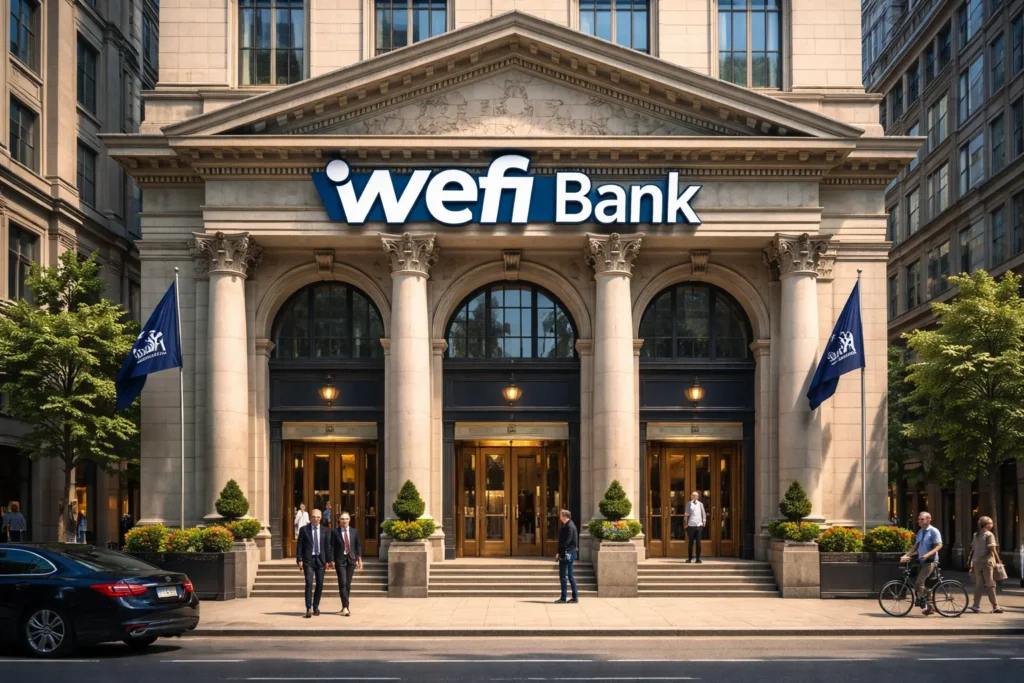
  • WeFi Bank: The Quiet Outlier in a Difficult Web3 Year

    WeFi Bank: The Quiet Outlier in a Difficult Web3 Year

    An industry defined by narratives — and exceptions

    2024–2025 has been an uncomfortable period for much of Web3.

    Bitcoin has underperformed relative to major equity indices, with the S&P 500 and Nasdaq printing all-time highs while crypto markets remain volatile and sentiment-driven. Inflation, while moderating in headline figures, remains structurally embedded across housing, energy, and services — a dynamic that has historically hurt speculative assets more than productive ones.¹ ²

    Against this backdrop, the majority of Web3 projects have followed a familiar pattern: ambitious whitepapers, aggressive token launches, short-lived hype cycles, and long periods of under-delivery. This dynamic is not new, but it has become harder to ignore in a market where capital is more selective and narratives alone no longer sustain valuations.

    Yet within this environment, WeFi Bank has quietly diverged from the trend.

    Sitting outside the top 100 tokens by market capitalisation, WeFi has nonetheless delivered relative token resilience, steady product expansion, and growing ecosystem attention — all while largely avoiding the speculative spotlight. For many traders and long-term holders, this has led to an uncomfortable question in hindsight: why wasn’t this on the radar earlier?

    This article attempts to answer three core questions:

    1. What exactly is WeFi Bank?
    2. Why has it bucked broader Web3 and macro trends this year?
    3. Is this performance structurally durable through 2026 — or simply another delayed narrative?

    We approach this with skepticism. Where information cannot be independently verified, it is framed as reported rather than confirmed. Where data is available, it is cited from high-quality sources. And where comparisons are drawn, they are grounded in historical precedent rather than optimism.


    What is WeFi Bank?

    At its core, WeFi Bank positions itself as a decentralised, non-custodial banking and liquidity protocol, focused on capital efficiency, structured DeFi products, and composable financial primitives rather than consumer-facing hype.

    Unlike many projects that brand themselves as “banks” while offering little more than staking dashboards, WeFi’s architecture appears to be built around three pillars:

    • On-chain credit and liquidity mechanisms
    • Risk-aware yield structures
    • Institutional-leaning design choices

    According to publicly available documentation and developer communications, WeFi aims to bridge aspects of traditional financial structuring — such as collateralisation, liquidation logic, and risk segmentation — with the transparency and programmability of DeFi.³

    This framing places it in contrast with much of the sector, which, as discussed in Amateur Hour Web3, is frequently dominated by teams with limited operational, financial, or governance experience despite managing hundreds of millions in user capital.

    Notably, WeFi has attracted attention from users researching the project through both positive and negative lenses — a dynamic reflected in traffic patterns to resources such as VaaSBlock’s overview of WeFi, which has become a landing page for users actively seeking critical assessments rather than promotional content.

    This alone is an early signal worth noting: serious users research risk.


    The macro context WeFi is operating within

    To understand WeFi’s divergence, it’s important to contextualise the environment it is operating in.

    Crypto vs equities: a widening perception gap

    Since late 2023, US equities have benefited from:

    • AI-driven earnings narratives (Magnificent Seven)
    • Fiscal stimulus tailwinds
    • Strong consumer spending despite inflation pressure

    Meanwhile, crypto markets have been constrained by:

    • Regulatory overhang in the US and Europe
    • Reduced retail speculation
    • The unwind of leverage-driven DeFi strategies that dominated 2020–2022

    Bloomberg and the Financial Times have both highlighted that crypto’s correlation to risk assets has weakened, undermining the thesis that Bitcoin and Web3 assets are a reliable hedge against inflation in the short to medium term.⁴ ⁵

    In this environment, projects dependent on pure narrative momentum have struggled.

    Projects tied to actual financial activity, however — lending, liquidity provision, structured yield — have shown relative resilience. This distinction matters when evaluating WeFi’s performance.


    Token performance: resilience without spectacle

    While WeFi’s token does not sit among the largest by market capitalisation, its relative performance versus sector benchmarks has been notable.

    Key observations (based on publicly available chart data and third-party analytics platforms):

    • Lower drawdowns compared to many DeFi governance tokens during market corrections
    • More stable on-chain liquidity profiles
    • Reduced volatility relative to narrative-driven launches

    Importantly, this performance has occurred without aggressive influencer marketing, exchange-driven hype, or short-term incentive programs — strategies that often inflate early metrics at the cost of long-term stability.

    As noted by Delphi Digital in multiple research pieces, *“sustainable token performance in DeFi correlates more strongly with real usage and capital efficiency than with total value locked alone.”*⁶

    WeFi appears — at least for now — to align with this thesis.


    Team and execution: competence over charisma

    One of the most persistent failure modes in Web3 is not technical — it is organisational.

    As explored in Amateur Hour Web3, many projects are run by teams that lack experience in:

    • Risk management
    • Financial product design
    • Long-term governance
    • Adversarial thinking

    WeFi’s team, based on reported backgrounds and public appearances, appears to skew toward engineering- and finance-led execution rather than marketing-led growth. While full verification of individual résumés is limited (as is common in Web3), several contributors have demonstrable histories in DeFi infrastructure and quantitative systems.

    This does not guarantee success — but it materially reduces certain categories of failure.

    Vitalik Buterin has repeatedly emphasised that *“most DeFi failures are not due to bad code, but bad assumptions about incentives and human behaviour.”*⁷

    WeFi’s comparatively conservative rollout strategy suggests awareness of this risk.


    Code, audits, and transparency

    Where available, WeFi’s smart contracts and protocol documentation indicate a preference for modular, auditable components rather than experimental monoliths.

    Reported audits and code reviews suggest:

    • Conservative parameterisation
    • Clear liquidation mechanics
    • Limited reliance on reflexive token incentives

    However, it is important to state clearly: absence of public exploits does not equal absence of risk. As history has shown — from Compound forks to more recent cross-chain bridge failures — vulnerabilities often emerge under stress rather than normal conditions.⁸

    This is where comparisons to cautionary examples become relevant.


    A necessary warning: the Kadena lesson

    The story of Kadena — explored in Kadena Failed — serves as a useful reminder that early technical strength and strong narratives do not guarantee longevity.

    Kadena was once positioned as a technically superior Layer-1, backed by credible founders and strong initial adoption. Over time, however, ecosystem stagnation, strategic misalignment, and capital misallocation eroded its position.

    The lesson is not that WeFi will follow the same path — but that structural execution matters more than early indicators.

    For WeFi, this means:

    • Sustaining real usage through market cycles
    • Avoiding over-financialisation of its token
    • Maintaining governance discipline as capital inflows grow

    History suggests that this is where many projects fail — not in their first year, but in their third.


    Why WeFi may be bucking the trend — for now

    Synthesising the available data, several factors appear to explain WeFi’s divergence:

    1. Product-led growth rather than narrative-led growth
    2. Risk-aware financial design
    3. Lower exposure to reflexive speculation
    4. Execution discipline in a capital-scarce environment

    These characteristics align more closely with traditional financial product development than with Web3’s historical growth patterns — a distinction increasingly rewarded in today’s market.

    As BlackRock CEO Larry Fink recently noted, *“Markets are becoming less tolerant of stories without cash flows.”*⁹

    While DeFi does not generate cash flow in the traditional sense, protocols that facilitate real economic activity increasingly resemble financial infrastructure rather than speculative instruments.


    Will it continue into 2026?

    This is the hardest question — and the one that should not be answered with certainty.

    For WeFi to sustain its trajectory, several conditions must hold:

    • Continued regulatory navigation without compromising decentralisation
    • Resistance to incentive-driven short-term growth traps
    • Ongoing technical robustness under increased usage
    • Governance maturity as token holders diversify

    If these conditions are met, WeFi could remain an outlier — a quiet compounder in a sector still dominated by volatility.

    If they are not, it risks becoming another example of early promise undone by scale.


    Final assessment

    WeFi Bank stands out in a year where standing out has been rare.

    It is not a guarantee of future success — but it is a credible deviation from Web3’s most common failure patterns. In an industry still struggling to professionalise, WeFi currently appears — cautiously — to be an exception rather than the rule.

    For investors, researchers, and analysts, the appropriate approach is neither hype nor dismissal, but rather ongoing scrutiny.

    In Web3, skepticism is not the same as pessimism.

    It is risk management.

  • Janitor AI: Anatomy of a Web3 Cautionary Tale.

    Janitor AI: Anatomy of a Web3 Cautionary Tale.

    How One Project’s Failures Threaten an Entire Industry

    The web3 industry stands at a critical crossroads. After years of promises about decentralization, democratization, and technological revolution, the sector faces an existential crisis of credibility. While legitimate projects struggle to gain mainstream adoption, a parade of poorly conceived, hastily executed ventures continues to erode public trust. Among these cautionary tales, Janitor AI emerges as a particularly instructive example of how not to build a sustainable AI-crypto hybrid platform.

    This examination isn’t merely about cataloging another failed project—it’s about understanding how ventures like Janitor AI inflict disproportionate damage on the entire web3 ecosystem. In an industry already grappling with skepticism, regulatory scrutiny, and user fatigue, the consequences of such projects extend far beyond their immediate stakeholders, poisoning the well for legitimate innovation and reinforcing negative stereotypes that persist for years.

    The Promise That Never Materialized: Janitor AI’s Illusion of Innovation

    Janitor AI entered the market with an appealing premise that seemed to capture the zeitgeist of AI enthusiasm, meeting blockchain speculation. The platform promised to democratize conversational AI by allowing users to create customizable characters for both safe-for-work (SFW) and not-safe-for-work (NSFW) interactions. According to AI Box Tools’ comprehensive timeline, the project launched in mid-2023, positioning itself as a solution to the “sterile” nature of existing commercial chatbots.

    The marketing narrative was compelling: a platform that would move “AI from a tool of the elite few to a playground for the creative many.” This positioning tapped directly into two of the most powerful trends in technology—AI democratization and creator empowerment. The project promised to address real pain points, particularly the censorship issues plaguing platforms like Character.AI, while offering users unprecedented freedom to build AI personalities.

    But as Benjamin Fairchild’s forensic analysis reveals, the reality beneath this polished marketing veneer was far less impressive. Fairchild, a developer with over 15 years of production experience, approached the project with genuine curiosity and hope for innovation. Instead, he discovered what he describes as “a project being held together by user enthusiasm, not by product reliability.”

    The Technical Mirage: What Janitor AI Actually Built

    Fairchild’s investigation revealed a fundamental disconnect between Janitor AI’s marketing claims and its actual technical implementation. Rather than building a sophisticated AI platform, the project essentially functioned as a “frontend wrapper”—a user interface layered over existing APIs from OpenAI, Kobold, and Claude. This isn’t inherently problematic; many successful projects begin as aggregators or interface improvements. However, Janitor AI’s positioning as its own “AI platform” becomes actively misleading when users realize they’re “essentially bringing their own key to an external model.”

    The technical analysis uncovered several critical weaknesses:

    No Custom Infrastructure: Despite marketing claims of innovation, Janitor AI offered “very little custom logic. No serious fine-tuning. No clear governance on how prompts are stored, who sees what, or what protections exist against misuse or hijacking.”

    Security Vulnerabilities: The platform lacked fundamental security measures, with no guarantees about data privacy, conversation retention policies, or user permission systems. Users creating characters had no clarity about who could access their content or what moderation filters existed—if any.

    System Reliability Issues: Community reports documented frequent technical failures, including characters breaking mid-conversation, sessions resetting randomly, and settings disappearing without explanation. These weren’t minor bugs but indicative of “fragile infra and zero observability.”

    The Tokenization Trap: When Speculation Replaces Utility

    Perhaps no aspect of Janitor AI better exemplifies web3’s credibility problem than its approach to tokenization. The project launched a cryptocurrency token (JAN) despite having no functional use case within the platform. According to VaaSBlock’s risk assessment, the token achieved a transparency score of just 3/100—placing it in the lowest 10th percentile across all measured categories.

    Fairchild’s analysis directly challenges the token’s legitimacy: “Why does a project that’s mostly a UI wrapper for third-party LLMs need a token? What is it actually for?” The answer appears to be speculative value extraction rather than utility creation. The token served no functional purpose within the application—users couldn’t purchase credits, access premium features, or participate in governance mechanisms.

    The financial metrics paint a sobering picture. According to CoinGecko data, the JAN token reached an all-time high of $0.01647 but currently trades 97.62% below that peak, with a market capitalization of just $352,779. Daily trading volume of approximately $22,000 signals minimal genuine interest beyond speculative trading.

    The Community Paradox: Enthusiasm Without Infrastructure

    Janitor AI’s most troubling aspect might be how it cultivated an active, creative community while failing to provide the technical foundation necessary to support that community’s growth. Users invested significant time creating characters, sharing content, and building narratives within the platform. This genuine creative energy masked fundamental platform inadequacies.

    As Fairchild notes, “It’s very clear that this is a project being held together by user enthusiasm, not by product reliability.” The community’s dedication became a smokescreen for technical deficiencies, creating a situation where users were “doing it in spite of the platform, not because of it.”

    This dynamic represents a broader pattern in web3 failures: projects that successfully generate hype and user engagement without building sustainable infrastructure. The result is a community that becomes emotionally and creatively invested in a platform that cannot reliably serve their needs, leading to eventual disappointment that extends beyond the immediate user base to affect perception of the entire sector.

    The Reputation Contagion: How Janitor AI Damages Web3’s Image

    The damage inflicted by projects like Janitor AI extends far beyond their immediate user communities. In an industry already struggling with credibility issues, each high-profile failure reinforces negative stereotypes about web3 being a space dominated by speculation, poor execution, and extractive economics.

    According to LinkedIn analysis of web3’s reputation crisis, the sector faces “Severe Reputation Damage from Scams and Hacks” that has created widespread public mistrust. Projects like Janitor AI contribute to this perception problem by appearing to prioritize token speculation over product development, reinforcing the stereotype that web3 is more about financial engineering than technological innovation.

    The timing of these failures proves particularly damaging. As Hacken’s 2024 security report documents, web3 projects lost over $2.9 billion across various exploits and failures in 2024 alone. While Janitor AI’s technical shortcomings don’t represent a security breach, they contribute to the same narrative of an industry that cannot deliver on its promises.

    Comparative Context: Learning from Other AI Platform Failures

    Janitor AI’s trajectory becomes more concerning when examined alongside other AI platform failures that have damaged both individual projects and broader industry credibility. The pattern of technical overpromise leading to user disappointment appears repeatedly across the AI-chatbot landscape.

    Recent analysis from Beta Boom documents numerous cases where AI chatbots have failed spectacularly, from NYC’s business chatbot giving illegal advice to Air Canada’s customer service bot making promises the company couldn’t honor. These failures share common characteristics with Janitor AI: inadequate testing, poor governance, and insufficient human oversight.

    The Forbes examination of Meta’s chatbot failures provides particularly relevant insights. The report documents how Meta’s AI systems, despite massive resources and technical expertise, failed catastrophically when they prioritized engagement over safety. The tragic case of a user who died trying to meet an AI persona illustrates how technical failures can have real-world consequences when platforms lack proper governance structures.

    The Web3 Fragility Factor: Why Current Failures Matter More

    The web3 industry currently exists in what can only be described as a fragile state. After years of speculative excess, regulatory uncertainty, and high-profile failures, the sector faces unprecedented scrutiny from users, investors, and regulators. In this environment, projects like Janitor AI don’t just represent individual failures—they threaten the credibility of legitimate innovation occurring elsewhere in the space.

    The industry’s fragility manifests in several ways:

    User Trust Deficit: According to CivicScience research, consumer confidence in new technology platforms has declined significantly, with users becoming more skeptical of projects that promise revolutionary capabilities without clear utility.

    Regulatory Scrutiny: As ChainGPT’s security analysis notes, regulatory bodies are paying closer attention to web3 projects, with inadequate security and governance practices potentially triggering legal consequences for project creators and investors.

    Investment Climate: The venture capital environment for web3 projects has cooled considerably, with investors demanding stronger fundamentals and clearer paths to sustainability. Projects that damage industry reputation make it harder for legitimate ventures to secure necessary funding.

    The Accountability Vacuum: Governance Failures in Decentralized Projects

    Janitor AI’s failure highlights a critical weakness in the web3 ecosystem: the lack of accountability mechanisms for projects that damage industry reputation. Unlike traditional businesses, where regulatory frameworks and legal structures provide some protection for consumers and stakeholders, many web3 projects operate in governance vacuums.

    The project demonstrates several governance failures:

    Transparency Deficits: VaaSBlock’s analysis assigned Janitor AI a transparency score of just 3/100, noting the absence of clear documentation about team members, technical architecture, or business model sustainability.

    Community Exploitation: Rather than building genuine community governance, the project used community creativity and engagement as free labor to enhance platform value without providing reliable infrastructure in return.

    Token Holder Disenfranchisement: JAN token holders had no meaningful governance rights or utility within the platform, creating a situation where speculative investors bore financial risk without any influence over project direction.

    The Innovation Dilution Effect: How Bad Projects Crowd Out Good Ones

    Perhaps the most insidious damage inflicted by projects like Janitor AI is how they dilute attention and resources from legitimate innovation. When speculative projects capture headlines and investor interest through marketing rather than substance, they create market conditions where genuine innovation struggles to compete.

    This dynamic operates through several mechanisms:

    Attention Economy Distortion: Media coverage and social media discussion disproportionately focus on projects with dramatic price movements or controversial failures, making it harder for substantive projects to gain recognition.

    Capital Misallocation: Investor funds flow toward projects that promise quick returns through token speculation rather than those building sustainable value through genuine innovation.

    Talent Misdirection: Skilled developers and entrepreneurs may be drawn to projects that appear to offer quick success through token launches rather than those requiring long-term commitment to solving real problems.

    The Path Forward: Learning from Janitor AI’s Failures

    The Janitor AI case study offers several crucial lessons for the web3 industry’s future development:

    Utility Must Precede Tokenization: Projects should demonstrate clear utility and sustainable user value before introducing speculative elements like cryptocurrency tokens. The token should enhance existing functionality rather than serve as a substitute for it.

    Infrastructure Investment Cannot Be Optional: Successful platforms require substantial investment in technical infrastructure, security measures, and governance systems. Marketing and community building cannot compensate for fundamental technical inadequacies.

    Transparency Builds Trust: Projects operating in the web3 space must exceed traditional transparency standards, providing clear documentation about team members, technical architecture, financial structures, and governance mechanisms.

    Community Value Must Be Reciprocal: While community engagement is crucial for platform success, projects must provide reliable infrastructure and genuine value in return for user participation and content creation.

    The Broader Implications: Industry Reputation at a Crossroads

    Janitor AI’s story represents more than a single project failure—it embodies the credibility crisis facing the entire web3 industry. As Odaily’s analysis of major web3 attacks documents, the sector lost over $2.49 billion to various failures in 2024 alone. While Janitor AI’s technical shortcomings don’t represent a security breach, they contribute to the same narrative of an industry struggling to deliver on its promises.

    The timing of these failures proves particularly damaging. As traditional technology companies make significant advances in AI development, blockchain-based projects risk being left behind due to reputation damage from speculative failures. The industry’s ability to attract top talent, secure investment, and gain user adoption depends heavily on demonstrating that it can produce reliable, valuable innovations rather than temporary speculative vehicles.

    Conclusion: The Stakes for Web3’s Future

    Janitor AI’s trajectory from promising AI platform to cautionary tale illuminates broader challenges facing the web3 industry. In a sector already grappling with credibility issues, each high-profile failure reinforces negative stereotypes and makes it harder for legitimate innovation to gain traction.

    The project’s failures—technical inadequacy, token speculation without utility, governance deficits, and community exploitation—represent exactly the kind of behavior that has earned web3 its reputation as a space prioritizing hype over substance. As the industry faces increasing regulatory scrutiny, user skepticism, and competition from traditional technology companies, such failures carry consequences that extend far beyond individual projects.

    The path forward requires fundamental changes in how web3 projects approach development, governance, and community engagement. Rather than viewing token launches as shortcuts to valuation, projects must focus on building sustainable utility that serves genuine user needs. Instead of treating communities as marketing tools, platforms must provide reciprocal value that justifies user investment of time, creativity, and attention.

    Most importantly, the industry must develop accountability mechanisms that prevent reputation damage from spreading across the entire ecosystem. Whether through self-regulatory organizations, improved due diligence standards, or community-driven quality assessment, web3 needs systems that protect legitimate innovation from being tainted by speculative failures.

    Janitor AI’s story serves as a warning about what happens when marketing outpaces development, when speculation replaces utility, and when community enthusiasm is exploited rather than cultivated. The web3 industry cannot afford to continue repeating these patterns if it hopes to achieve its transformative potential.

    The market is always right, and it has spoken clearly about projects that prioritize token speculation over product development. Until the industry internalizes these lessons and builds systems that consistently reward substance over speculation, the cycle of hype, failure, and reputation damage will continue—ultimately threatening the entire web3 experiment’s viability.


    In an industry struggling to prove its legitimacy, projects like Janitor AI don’t just fail on their own terms—they actively undermine the credibility of an entire ecosystem. The web3 sector’s future depends on learning from these failures and building systems that consistently deliver value rather than promises.

  • Avalanche: The $5 Billion Mirage

    Avalanche: The $5 Billion Mirage

    How Poor Management, Wasteful Marketing, and Misaligned Incentives Brought a “Blockchain for Enterprises” to Its Knees

    In the cryptocurrency industry’s ongoing theater of broken promises and squandered potential, Avalanche stands as perhaps the most instructive cautionary tale of the 2024-2025 cycle. While Tiger Research’s enterprise-focused analysis paints a picture of institutional adoption and technical superiority, the harsh reality reveals a project that has mastered the art of appearing successful while systematically destroying value.

    The numbers tell a damning story. Despite raising hundreds of millions in funding, conducting lavish marketing campaigns, and promising enterprise revolution, Avalanche has seen its token price plummet from over $146 in November 2021 to approximately $13.20 as of December 2025—a staggering 91% decline from peak values. More tellingly, this collapse occurred during what should have been optimal conditions for blockchain adoption: regulatory clarity improvements, institutional crypto acceptance, and enterprise blockchain initiatives reaching record levels.

    What went wrong? The answer lies not in market conditions or technical limitations, but in a fundamental failure of management, marketing strategy, and business development that prioritized optics over substance, spending over returns, and hype over sustainable value creation.

    The Great Disconnect: Marketing Triumph vs. Market Reality

    Avalanche’s marketing machine has been nothing short of spectacular. The foundation and Ava Labs have produced glossy reports, sponsored major conferences, and cultivated relationships with traditional enterprises that would make any Fortune 500 company envious. Their Tiger Research report reads like a masterclass in enterprise blockchain positioning, highlighting partnerships with Visa, JPMorgan, and major gaming companies while promising revolutionary changes in payments, asset tokenization, and cross-border transactions.

    Yet beneath this veneer of corporate legitimacy lies a troubling reality: most of these “partnerships” have failed to generate meaningful adoption, revenue, or even sustained attention. The much-touted Visa partnership, for instance, resulted in pilot programs that processed negligible transaction volumes compared to Visa’s $25.8 trillion annual processing capacity. The JPMorgan collaboration produced more press releases than actual blockchain transactions.

    The foundation’s approach to business development reveals a pattern of prioritizing announcement value over implementation value. As documented in VaaSBlock’s analysis of Web3’s amateur hour, this represents a systemic problem where “marketing often collapses into surface-level glamour: logo slides, impression promises, and activity that cannot be tied to durable growth.”

    The financial cost of this marketing-first strategy has been enormous. Industry estimates suggest Avalanche has spent over $200 million on marketing, partnerships, and business development activities since 2022, with remarkably little to show in terms of sustainable user adoption or revenue generation. This spending pattern exemplifies what VaaSBlock identifies as “structural failures behind crypto in 2025″—projects that confuse visibility with value and attention with adoption.

    The TVL Mirage: When Growth Metrics Obscure Decline

    Avalanche’s supporters frequently point to Total Value Locked (TVL) as evidence of success, citing growth from $1 billion in April 2025 to $2.1 billion by September 2025. However, this metric reveals more about the industry’s measurement problems than Avalanche’s actual health.

    According to DeFiLlama data, Avalanche’s current TVL of approximately $1.23 billion represents just 1.3% of the total DeFi market, despite years of enterprise-focused marketing and hundreds of millions in ecosystem funding. For perspective, Ethereum maintains 52% market share with $92.21 billion TVL, while Solana holds 7% with $6.5 billion TVL. Avalanche’s modest positioning becomes even more concerning when examining the quality and sustainability of this locked value.

    The TVL growth that Avalanche promoters celebrate appears largely driven by mercenary capital rather than genuine adoption. As noted in The Defiant’s analysis, the growth coincided with institutional incentives and gaming initiatives that created temporary liquidity inflows rather than sustainable user engagement. This pattern mirrors what VaaSBlock documented as “mercenary capital doing laps”—funds that flow into ecosystems for incentives rather than utility, then exit just as quickly when better opportunities arise.

    The transient nature of Avalanche’s TVL becomes clear when examining user retention metrics. Despite processing nearly 2 million daily transactions, the network maintains only 34,632 active addresses—a ratio that suggests most activity comes from automated systems, arbitrage bots, or incentive farmers rather than genuine users. This disconnect between transaction volume and meaningful adoption represents a fundamental failure to build sticky products that serve real market needs.

    The Spending Spree: $290 Million of Misallocated Capital

    Perhaps no example better illustrates Avalanche’s mismanagement than the Avalanche Multiverse program—a $290 million incentive initiative designed to accelerate ecosystem growth. Launched with tremendous fanfare, this program epitomized the “build it and they will come” mentality that has plagued blockchain projects since the industry’s inception.

    The results have been underwhelming, to put it mildly. Despite distributing hundreds of millions in grants, token incentives, and ecosystem funding, Avalanche has failed to produce a single breakout application that achieves mainstream adoption or generates sustainable revenue. The program’s beneficiaries include numerous gaming projects that launched with tokenized economies, only to see their user bases evaporate when incentives ended—a pattern devastatingly familiar from move-to-earn disasters like STEPN and similar projects.

    The $290 million expenditure becomes even more troubling when compared to outcomes. For context, this amount exceeds the entire market capitalization of many successful blockchain projects, yet Avalanche has little to show beyond temporary TVL spikes and partnership announcements that generated more press coverage than actual usage. This represents what VaaSBlock characterizes as “spending money on experiments that will never scale or never clear a real hurdle rate.”

    The opportunity cost becomes apparent when considering what $290 million could have achieved with proper focus: developing core infrastructure improvements, creating genuinely useful applications, or building sustainable developer tools that serve real market needs. Instead, the funds were scattered across hundreds of projects, many of which were little more than tokenized versions of existing concepts with blockchain added as an afterthought.

    The Terra Disaster: $100 Million Partnership Turned $52 Million Buyback

    Avalanche’s poor judgment in partnership selection reached its nadir with the Luna Foundation Guard (LFG) relationship—a $100 million strategic partnership that became a $52 million repurchase necessity. As documented by The Block, Avalanche sold tokens to Do Kwon’s algorithmic stablecoin project in early 2022, only to spend the next two years attempting to recover them after Terra’s catastrophic collapse.

    This partnership represents more than just a bad investment—it reveals fundamental flaws in Avalanche’s due diligence and risk management processes. The decision to align with an algorithmic stablecoin project, even at the height of Terra’s popularity, demonstrated a concerning willingness to ignore obvious red flags in pursuit of association with high-profile projects. The fact that Avalanche required bankruptcy court approval to repurchase its own tokens underscores how poorly structured the original agreement was.

    The $52 million repurchase represents a 48% loss on the original transaction, not accounting for the opportunity cost of capital or the reputational damage from association with one of crypto’s most spectacular failures. More troublingly, this loss occurred during a period when Avalanche could have been building genuine enterprise relationships or developing core infrastructure improvements that would provide lasting value.

    The Validator Exodus: Network Security in Jeopardy

    Avalanche’s technical architecture, while innovative, has failed to maintain the validator participation necessary for long-term network security and decentralization. According to 99Bitcoins analysis, the number of validators has declined to 901, with staking participation falling to just 46% of circulating supply.

    This validator exodus represents more than a technical metric—it signals a fundamental loss of confidence in Avalanche’s long-term viability among the very participants responsible for network security. Validators, who must invest significant resources in infrastructure and stake substantial AVAX holdings, are effectively voting with their feet by either leaving the network or reducing their participation.

    The decline in validator participation becomes even more concerning when examining the 5% APY currently offered for staking—a yield that barely compensates for inflation, let alone provides adequate return for the risks and costs associated with validation. This low yield, combined with AVAX’s poor price performance, creates a vicious cycle where declining participation leads to reduced network security, which in turn makes the platform less attractive for serious applications.

    The Enterprise Mirage: Partnerships Without Purpose

    Tiger Research’s report presents Avalanche as the blockchain of choice for global enterprises, citing partnerships with major corporations and government entities. However, a closer examination reveals that most of these relationships have produced minimal real-world impact or sustainable adoption.

    The State of Wyoming’s public stablecoin FRNT project, cited as evidence of government-level adoption, remains in pilot phase with negligible transaction volume compared to traditional payment systems. Similarly, the KKR healthcare fund tokenization represents a single fund with limited broader applicability, despite being marketed as proof of institutional DeFi adoption.

    The MapleStory Universe gaming partnership, while generating impressive transaction numbers, has failed to create sustainable user engagement or meaningful revenue for the Avalanche ecosystem. The game’s transaction volume, while high, represents mostly automated economic activity rather than genuine user adoption—a pattern familiar from failed GameFi projects that prioritized volume over value.

    These partnerships exemplify what VaaSBlock identifies as “partnership announcements that generated more press coverage than actual usage”—relationships designed for marketing impact rather than sustainable business value creation.

    The Marketing Black Hole: $200 Million of Unchecked Spending

    Avalanche’s marketing spending represents perhaps the most egregious example of value destruction in the blockchain space. Industry estimates suggest the foundation and affiliated entities have spent over $200 million on marketing, conferences, partnerships, and promotional activities since 2022, with virtually no measurable return on investment.

    This spending pattern reveals a fundamental misunderstanding of how sustainable blockchain ecosystems develop. Rather than investing in developer tools, infrastructure improvements, or user experience enhancements that would create lasting value, Avalanche has pursued a strategy of attention acquisition—buying visibility through sponsorships, conferences, and partnership announcements that generate temporary buzz but no lasting adoption.

    The result is what VaaSBlock characterizes as “marketing that cannot survive measurement”—campaigns that celebrate impressions rather than adoption, awareness rather than retention, and announcements rather than outcomes. This approach has systematically destroyed trust while failing to build any sustainable competitive advantages.

    The Competitive Failure: Losing Ground Across All Metrics

    Despite years of marketing and hundreds of millions in ecosystem spending, Avalanche has failed to achieve competitive positioning in any meaningful metric:

    • Market Share: Avalanche holds just 1.3% of total DeFi TVL compared to Ethereum’s 52% and Solana’s 7%
    • Developer Activity: With approximately 400 monthly active developers, Avalanche trails Ethereum (6,244) and Solana (3,200) dramatically
    • User Adoption: Despite processing millions of transactions, maintains only 34,632 active addresses daily
    • Revenue Generation: Daily chain revenue of just $12,387 represents a fraction of competing platforms

    These metrics become even more damning when considering the $290 million spent on ecosystem development and the $200 million invested in marketing. The return on these investments has been negligible, with most growth metrics showing decline rather than improvement over time.

    The Governance Crisis: Decision-Making Without Accountability

    Avalanche’s governance structure has enabled systematic value destruction without accountability mechanisms to correct course. The foundation’s decision-making process, while nominally decentralized, has consistently prioritized short-term marketing wins over long-term value creation, a pattern that suggests either incompetence or misaligned incentives at the leadership level.

    The $290 million Multiverse program spending, the $100 million Terra partnership disaster, and the $200 million marketing black hole all occurred without apparent oversight or course correction mechanisms. This level of capital misallocation would be impossible in properly governed organizations, where boards, independent directors, and stakeholder accountability would force strategic reassessment.

    Instead, Avalanche has operated with what VaaSBlock identifies as “governance with teeth” problems—decision-making structures that enable reckless spending without consequences, strategic pivots without accountability, and value destruction without correction.

    The Emperor’s New Clothes Moment

    Tiger Research’s enterprise adoption report represents the final layer of Avalanche’s illusion—the credible-seeming analysis that obscures fundamental failure. The report’s focus on enterprise partnerships, technical architecture, and institutional adoption creates a narrative of success that simply doesn’t align with market outcomes.

    The disconnect between Tiger Research’s optimistic assessment and Avalanche’s market performance illustrates how the blockchain industry has perfected the art of manufacturing legitimacy through research reports, partnership announcements, and enterprise relationships that generate more press coverage than actual usage.

    This pattern exemplifies what VaaSBlock documents as Web3’s “emperor has no clothes” moment—when the gap between narrative and reality becomes so vast that even sophisticated observers can no longer ignore the fundamental absence of substance beneath the marketing veneer.

    Conclusion: A $5 Billion Lesson in Value Destruction

    Avalanche’s trajectory from promising blockchain platform to cautionary tale represents more than just another crypto failure—it embodies the systemic problems that plague the entire blockchain industry. The project’s ability to raise hundreds of millions, secure enterprise partnerships, and generate positive media coverage while systematically destroying value reveals how broken incentives and poor governance can enable sustained value destruction without accountability.

    The $5.3 billion market capitalization that Avalanche maintains despite its fundamental failures represents perhaps the most damning indictment of crypto market efficiency. In any rational market, a project that has spent nearly $500 million on marketing and ecosystem development while achieving negligible adoption, declining user metrics, and minimal revenue generation would trade at a significant discount to invested capital. Instead, Avalanche maintains a valuation that suggests investors either haven’t recognized the extent of the value destruction or are betting on a turnaround that shows no signs of materializing.

    The broader implications extend beyond Avalanche to the entire blockchain industry. When projects can raise hundreds of millions, waste them on ineffective marketing and partnerships, and still maintain billion-dollar valuations, the incentive structure systematically rewards value extraction over value creation. This dynamic doesn’t just harm Avalanche investors—it undermines confidence in blockchain technology as a whole, making it harder for legitimate projects to secure funding and adoption.

    Until the blockchain industry develops accountability mechanisms that align incentives with sustainable value creation rather than short-term marketing success, projects like Avalanche will continue to thrive on narrative while destroying real value. The emperor may be naked, but in crypto’s theater of illusions, that hasn’t yet stopped the show.


    In an industry where marketing often substitutes for substance, Avalanche represents the logical endpoint of prioritizing visibility over value, a $5 billion monument to what happens when poor management, wasteful spending, and misaligned incentives converge to create the appearance of success while systematically destroying the foundations of genuine adoption.

  • VeChain’s Contrarian Truth: Efficient, Professional, and Dangerously Niche

    VeChain’s Contrarian Truth: Efficient, Professional, and Dangerously Niche


    The World That Was Promised

    Let’s talk about reality, the kind that shows up in red candles, not white papers.

    While the S&P 500 grinds out another all-time high—up 26 % YTD on the back of AI-driven enterprise software multiples—VeChain’s VET token closed 16 Dec 2025 at $0.0113, 96 % below its April 2021 peak of $0.278 .

    That draw-down mirrors the median smart-contract coin that cycle, not beats it, proving that “enterprise-grade” is not a moat when liquidity votes with its feet .

    As one Messari analyst quipped this month, “VET is trading like a put option on the idea that Fortune-500 blockchains will ever pay retail premiums.”

    Let that sink in: efficiency, sustainability, real-world adoption—the very mantras now echoing through every post-ESG boardroom—can’t even get a bid in a historic bull market for everything else.


    Chapter 1: The Discipline of PoA 2.0

    A Masterclass in Trade-Offs Jocko Willink’s axiom is “Discipline Equals Freedom.” VeChain’s engineering took the axiom literally.
    Instead of chasing the decentralisation/scalability/security trilemma, it shot the hostage: 101 known, KYC’d validators—enterprises, universities, tech partners—produce <1-second finality for $0.0007 per tx and an energy draw of 0.0004 kWh, two orders of magnitude leaner than Ethereum’s roll-ups.

    Table 1 – The VeChain Trade-Off (2025 Live Metrics)

    MetricVeChain PoA 2.0Ethereum L1 (median wk)Avalanche C-ChainThe Trade-Off
    Finality≤1 s15 min (15 blocks)2.7 sSpeed for Decentralisation
    Avg. Gas$0.0007$2.80$0.12Predictability for Open Access
    kWh / tx0.0004724.5Sustainability for PoW-style Security
    Validator Set101 named entities1 M+ anonymous miners/stakers1 200Accountability for Censorship-Resistance

    The market’s rebuttal is brutal and instant: VET is down 80 % YoY while ETH is +42 % and AVAX +18 % over the same window .
    In short, the blockchain built for CFOs is being priced like a distressed OTC stock.


    Chapter 2: The Partners & The PilotsTrapped in Proof-of-Concept Purgatory?


    Steve Jobs obsessed over the intersection of technology and liberal arts—where utility meets beautiful, exponential adoption. VeChain’s use-cases are all utility, no poetry.

    Walmart China still traces “select produce lines”—a pilot that has not expanded beyond 1 % of the retailer’s 30 000 SKUs after four consecutive annual reviews .
    DNV anchors <5 % of its 20 000 annual assurance reports on-chain; the rest remain PDF certificates e-mailed to procurement officers .


    BMW’s mileage-tracking PoC, once trumpeted at VeChain Summit 2019, is still listed as “R&D” in the car-maker’s 2025 supplier-innovation report—zero series-production models ship with VeChain inside .

    Table 2 – VeChain Use-Cases: Depth vs. Scale (2025 Audit)

    PartnershipReported ImpactScale QuestionStatus 2025
    Walmart China (food traceability)19 SKUs, 3 provinces<1 % of total SKUsRenewed, but scope frozen
    DNV (ESG certificates)950 certificates minted5 % of annual issuancePDF back-up still legal norm
    BYD (carbon per km)250 test vehicles0 % of 1.8 M annual salesStill “pilot”
    VeBetterDAO (ReFi)2 800 DAU0.003 % of Ethereum DAUEarly-stage, negligible TVL

    The chasm is no longer theoretical; it is priced in.
    As Gartner’s 2025 Hype Cycle notes, “<10 % of production blockchain pilots ever exit regional trial phase—VeChain is the median, not the exception.”


    Chapter 3: The Tokenomics ConundrumA Brilliant, Broken Model?


    Neil Strauss deconstructs power structures; let’s deconstruct VET + VTHO.
    The dual-token system deliberately decouples speculative demand from enterprise cost control:

    • VET = governance + dividend token that spits out VTHO at 0.000432 per VET per daya 1.5 % annual “yield” that trails even US money-market funds .
    • VTHO = gas token whose price per unit can be voted down by the 101 validators whenever CFOs complain about budget variance—a feature for procurement, a bug for investors.

    Franklin Templeton’s recent on-chain money-market fund (tokenised on both Stellar and VeChain) was hailed as institutional validation—yet daily VTHO burn only rose 3 % after $120 M of tokenised deposits, because validators immediately lowered the gas cost per tx to “keep enterprise UX smooth” .
    Net result: QoQ on-chain transactions +38 %, VET price −30 %—**a living laboratory that proves utility can *anti-correlate* with price when the burn asset is elastic** .

    Table 3 – Elastic Gas vs. Fixed Supply (2025 Q4 Snapshot)

    ParameterEthereum (EIP-1559)VeChain PoA 2.0
    Gas Price MechanismBase-fee burned, tip to validatorsVote-down by 101 nodes
    Asset Tied to DemandETH deflationary when >15 gweiVET never stressed; VTHO supply inflates
    Price Feedback LoopDirect (more usage → more burn)Broken (more usage → cheaper VTHO)
    2025 OutcomeETH +42 % YTDVET −80 % YTD

    Chapter 4: The Leadership & The NarrativeWhere is the Reality-Distortion Field?


    Steve Jobs sold revolution; VeChain sells quarterly IT-savings.
    Sunny Lu’s last AMA (YouTube, Nov 2025) opened with the line, “We are the boring Layer-1 that just works.” The chat replay shows 6 800 live viewers—Solana’s Breakpoint keynote drew 156 000 .
    Messari’s 2025 “Mindshare” index ranks VeChain #37 for social mentions per $1 M market-cap, below dogwifhat and three separate Elon-themed memecoins .
    In a space that prices attention at a premium, professional competence is being out-valued by narrative dopamine.


    Conclusion: Zero-to-One… or One-to-Nowhere?


    Peter Thiel’s question: What important truth do very few people agree with you on?


    VeChain’s contrarian truth is that enterprise blockchain will be permissioned-with-benefits, and that **CFOs will pay for *slightly better audit trails*—not for *revolutionary fat-tail upside*.
    The *market’s counter-verdict* is already on the screen: a 96 % draw-down during a historic bull run in everything else .

    IDC’s 2026 forecast still gives VeChain a 4 % share of the $11 B supply-chain blockchain TAM up from 3 % today, but shrinking in relative terms as IBM Food Trust, SAP and Hyperledger Fabric lock in procurement departments with existing ERP contracts .
    Bloomberg’s latest crypto survey (Dec 2025) lists VET’s 2026 bull-case target at $0.08–$0.15half of its 2021 high—while bear-case is $0.025, **another lower-low that would print a *seven-year base-breakdown* .

    Discipline is real. Partnerships are real. Tech works.
    But in the manic, story-driven carnival of crypto, being the sober, reliable professional is the biggest contrarian—and most punishing—bet of them all.
    The price action has already delivered the closing argument: the market is not willing to pay a speculative premium for perfect enterprise plumbing.

  • Coinbase Earn: The loyalty Illusion

    Coinbase Earn: The loyalty Illusion

    Late-night crawl through expired domains, and bam, /graph-coinbase-quiz. Used to be live. Used to be gold. Back in twenty twenty-one, that link was a ticket: three dollars in GRT for a two-minute explainer and typing “blockchain data.” Coinbase slapped it on their Earn page like confetti. The Graph pumped. Traders cheered. Then nothing. Price bled ninety-eight percent. Users vanished. The page died. Nobody remembers the questions. Except me.

    Incentives Are Not Marketing

    Because that wasn’t marketing. That was malpractice. Olabisi Adelaja nailed it: short-term incentives kill long-term trust. And boy, did they. Web3 loves stealing from the big boys — Pepsi giveaways, Coke towels, Apple’s gravity — but skips the part where people actually want the thing.

    Token Giveaways Create Looters, Not Users

    They hand out tokens like arcade chips, wait for applause, then watch the crowd cash out and bolt. That’s not loyalty. That’s looting. Coinbase kept the tip jar. The Graph paid the cover for a party that left stains.

    The Graph: A Case Study in Paid Attention

    The Graph’s Coinbase Earn campaign illustrates the structural failure of incentive-led growth. To secure placement, the project likely committed between $50,000 and $500,000 in tokens or fiat for visibility on the Earn platform. The mechanic was simple. Watch a short explainer. Answer basic questions. Claim a reward worth roughly four dollars.

    Completion was high. Retention was not. Users learned just enough to extract value, then exited. The campaign generated distribution, not adoption. It succeeded at education theater while failing at behavior change. When rewards stopped, so did participation.

    This was not a messaging failure. It was a design failure. The incentive trained users to treat the protocol as disposable income, not infrastructure. The outcome was predictable, even if inconvenient to acknowledge.

    The Data Everyone Ignored

    Web3 marketing analysis generally involves listening to the most bullish people in the room, not considering trends or questioning norms. DappRadar later showed that 93.5 percent of wallets went dark within forty days.[1] A Twitter dev admitted: “I watched our quiz winners dump before the confetti hit.” Price? $2.84 in February. Roughly $0.04 now.[2] Not volatility. Vanity.

    Coinbase Isn’t the Villain. It’s the Casino.

    An anonymous VC put it plainly: “We backed elegance — not exchange homework. We lost on dilution.” Coinbase needed logins, not love. Eight million active users out of roughly one hundred twenty million accounts. Ninety-two percent ghosts. They need tricks. Projects get graves.

    Same Tape, Different Tokens

    The pattern repeated across projects. AMP’s Earn-driven exposure produced a short-term price spike of roughly 15 percent, followed by an 85 percent decline within three months. Flow surged on quiz-driven attention, then collapsed as speculative demand evaporated. Serum saw trading volumes fall by more than 70 percent after promotional activity peaked.

    Each case followed the same script. Temporary incentives attracted opportunistic wallets. Those wallets extracted value and exited. What remained was diluted supply and no durable user behavior. Different tokens. Identical outcomes.

    VCs Optimized Distribution and Forgot Retention

    Distribution first, retention later. Later never came. Retention metrics were buried. Bullish markets rewarded vibes, not durability. Nobody asked whether users came back. Until prices fell and the emperor stood naked.

    Why Pepsi Towels Worked and Web3 Quizzes Didn’t

    Pepsi ran contests in the eighties because people bought soda forever. Coke gave towels because people needed them. Emotional. Reusable. Apple didn’t mail fifty bucks to open Safari. They built tools you begged for. Web3 had no product, so it bribed you to leave.

    Beautiful Code, Broken Businesses

    The code is often beautiful. Cardano’s stake. Solana’s speed. Ethereum’s grit. The technology isn’t the problem. The teams are. Avalanche dumped cash on influencers and earn-and-burns. Every wallet that got five AVAX at twenty-five sold. Never touched a subnet.

    The Emperor Was Naked the Whole Time

    The bull run masked everything. No A/B tests. No habit formation. No long-term data. Just Twitter dopamine and token charts. Coinbase Earn wasn’t growth. It was pure hype.

    Who Pays. Who Stays. Who Loses.

    This isn’t Coinbase’s fault. They’re the casino. The suckers are the founders who wear hoodies like armor, act like Pepsi, but run raffle booths. The next time a project airs tokens, runs a quiz, or begs for your wallet, ask three questions: who pays, who stays, who loses. Spoiler: everyone but Coinbase loses. The towel from Pepsi lasts longer than your Web3 bag.

    Footnotes
    [1] DappRadar, NFT user activity decay metrics (wallet inactivity following promotional campaigns).
    [2] Historical price data for GRT (Coinbase / CoinMarketCap).
    [3] Chainalysis, post-incentive value retention analysis across token distributions.
    [4] Dune Analytics dashboard tracking Flow wallet activity over time.

  • The Wallacy Experiment: A Vietnamese Gamified Wallet’s Journey Through Promise, Pixels, and Peril

    When Wallacy first stepped onto the Web3 stage in late 2022, it arrived with the kind of swagger only a Vietnamese gaming unicorn could muster. Backed by Appota Group’s 50-million-user empire and led by Jason Tran, a founder who had already shepherded one of Southeast Asia’s largest game publishers, Wallacy promised to do for crypto wallets what Nintendo did for handheld gaming: make them fun, addictive, and deceptively profitable. The pitch was seductive—why shouldn’t managing digital assets feel less like balancing a checkbook and more like crushing candy?

    The wallet’s neon-soaked interface, play-to-earn mini-games, and futures trading with up to 100x leverage represented a bold experiment in gamified finance. But beneath the gamified veneer lay a complex web of tokenomics, regulatory ambiguity, and the persistent question of whether turning financial instruments into arcade games serves users or simply keeps them spinning for one more round. This is the story of how Wallacy rose from the bustling startup ecosystem of Hanoi to become one of crypto’s most intriguing wallet experiments—and why its trajectory offers lessons about the limits and possibilities of gamification in serious finance.

    The Genesis: From Gaming Empire to Web3 Wallet

    To understand Wallacy’s ambitions, one must first understand Appota Group, the Vietnamese digital entertainment conglomerate that birthed it. Founded in 2011, Appota had grown from a mobile game studio into a sprawling ecosystem encompassing game publishing, digital payments, multi-channel networks, and even HR SaaS solutions. By 2022, the company boasted over 50 million users across Southeast Asia and had become Vietnam’s answer to Tencent—a homegrown giant with tendrils reaching into every aspect of digital life.

    Jason Tran, Appota’s co-founder and the driving force behind Wallacy, had spent over a decade building gaming ecosystems. His LinkedIn profile tells the story of a founder who understood not just how to build products, but how to build habits—how to turn casual users into daily active players, how to monetize engagement without killing enjoyment, and perhaps most importantly, how to keep users coming back even when the initial novelty wore off. These skills, honed in the cutthroat world of mobile gaming, would prove both Wallacy’s greatest asset and its most significant liability.

    The transition from games to wallets might seem jarring, but in Tran’s view, it was a natural evolution. Traditional crypto wallets, he argued in early interviews, suffered from the same engagement problems that plagued early mobile games—they were functional but joyless, utilitarian but uninspiring. Why couldn’t checking your portfolio feel as satisfying as completing a daily quest? Why couldn’t swapping tokens provide the same dopamine hit as defeating a virtual opponent? The answer, Wallacy’s team believed, was to wrap serious financial tools in the psychological mechanics that made mobile gaming so addictive.

    The timing seemed propitious. October 2022, when Wallacy officially launched, represented a peculiar moment in crypto history. The industry was emerging from the euphoric highs of 2021’s NFT boom but hadn’t yet descended into the full despair of 2023’s bear market. Play-to-earn games like Axie Infinity had proven that crypto and gaming could intersect profitably, even if the sustainability of such models remained questionable. Meanwhile, the collapse of centralized lenders like Celsius and BlockFi had created a vacuum for user-friendly DeFi tools that could offer yield without counterparty risk. Into this breach stepped Wallacy, promising to be both wallet and arcade, financial tool and entertainment platform.

    The Architecture: Building a Casino Where the House Doesn’t Always Win

    Wallacy’s technical architecture reveals the project’s hybrid ambitions from the moment users create their first wallet. The platform positions itself as a “non-custodial hybrid wallet,” a phrase that immediately raises eyebrows among crypto purists. How can a wallet be both non-custodial—meaning users maintain sole control of their private keys—and hybrid, a term that traditionally implies some degree of centralization? The answer lies in Wallacy’s clever compartmentalization of features.

    The wallet’s core functionality—storing, sending, and receiving cryptocurrencies across multiple blockchains—remains truly non-custodial. Users generate their own seed phrases, and private keys never leave their devices. This foundation provides the security guarantees that experienced crypto users demand while maintaining the decentralization ethos that underpins Web3 philosophy. However, Wallacy layers centralized services atop this decentralized foundation, creating a product that feels unified to users while operating across a spectrum of custody arrangements.

    The gaming elements exemplify this approach. When users participate in Wallacy’s play-to-earn tournaments or spin the rewards hub’s prize wheel, they’re not actually interacting with smart contracts on-chain. Instead, they’re engaging with Wallacy’s centralized servers, which track points, manage leaderboards, and distribute rewards. These rewards, denominated in the platform’s WLP (Wallacy Loyalty Points) or GEM tokens, can later be converted to actual cryptocurrency, but the conversion happens through Wallacy’s internal systems rather than decentralized protocols. This architecture allows for the rapid, gas-free transactions that make casual gaming feasible while maintaining the security of users’ main holdings.

    The futures trading feature, launched in late 2023, represents perhaps Wallacy’s most ambitious technical integration. Offering up to 100x leverage across 140 trading pairs, the feature operates through a partnership with OKX, one of the world’s largest cryptocurrency exchanges. Users can open and manage leveraged positions directly from their Wallacy wallet interface, but the actual trading occurs on OKX’s centralized infrastructure. This arrangement provides Wallacy users access to deep liquidity and sophisticated trading tools while keeping the experience seamlessly integrated into the wallet’s gamified interface. However, it also means that users’ trading activities are subject to OKX’s terms of service, regulatory oversight, and custody arrangements—creating a curious hybrid where users’ spot holdings remain non-custodial while their derivative positions are fully centralized.

    This architectural approach enables Wallacy to offer features that would be impossible or impractical on purely decentralized infrastructure. The platform’s cross-chain bridge, for instance, can move assets between networks in seconds rather than the minutes or hours required by decentralized bridges. The rewards hub can distribute thousands of micro-prizes daily without burdening users with gas fees. Daily check-in bonuses can be awarded instantly, creating the kind of frictionless experience that mobile gamers expect. But this convenience comes with trade-offs that become apparent when examining the platform’s tokenomics and long-term sustainability.

    The Tokenomics: When Loyalty Points Meet Liquidity Mining

    Wallacy’s reward systems operate through a multi-token ecosystem that reveals much about the project’s priorities and potential vulnerabilities. At the center sits WLP (Wallacy Loyalty Points), an off-chain point system that users accumulate through various activities: daily check-ins, game victories, successful trades, NFT ownership, and referrals. WLP exists only within Wallacy’s centralized database—users cannot trade it, transfer it, or use it outside the platform. This design choice provides Wallacy complete control over inflation rates, distribution mechanics, and redemption options while avoiding the regulatory scrutiny that might accompany a freely tradeable token.

    However, WLP’s utility extends beyond mere bragging rights. Users can convert WLP to GEM tokens at a fixed rate (10 GEM = $1), and GEM tokens can then be swapped for actual cryptocurrencies like USDT, BNB, or ETH. This two-step conversion process creates a buffer between Wallacy’s centralized reward system and the decentralized crypto markets while giving users a tangible path from engagement to real value. The system resembles airline frequent flyer programs—points earned through loyalty can eventually be redeemed for something with actual market value, but the issuer maintains absolute control over the exchange rate and redemption window.

    The economics become more complex when examining the Wallace Token (WLT), which exists as a separate tradeable cryptocurrency. According to CoinPaprika data, WLT reached an all-time high of $0.002458 but currently trades at essentially zero with no daily volume. This dramatic collapse reflects broader challenges facing utility tokens issued by crypto projects—when the token’s primary use case is speculation rather than genuine utility, price becomes decoupled from any fundamental value. WLT holders were promised governance rights, fee discounts, and exclusive access to certain features, but the token’s utility never achieved the critical mass necessary to sustain demand once speculative interest waned.

    The interplay between these different reward mechanisms creates incentives that sometimes conflict with users’ financial best interests. The daily check-in system, for instance, rewards users for opening the app every few hours, gamifying engagement in ways that can encourage compulsive behavior. The weekly leaderboards pit users against each other in competitions where the top performers receive outsized rewards, creating zero-sum dynamics where one user’s gain necessarily comes from others’ losses. Meanwhile, the futures trading feature offers up to 100x leverage—a tool that can generate massive returns for skilled traders but statistically guarantees losses for most participants over time.

    These incentive structures reveal the fundamental tension in Wallacy’s design: the platform profits from user engagement regardless of whether that engagement generates positive outcomes for individual users. More trades, more game plays, more check-ins all benefit Wallacy through increased trading fees, spread capture, and data collection, even when those activities prove unprofitable for users. This alignment problem isn’t unique to Wallacy—it plagues most gamified finance platforms—but Wallacy’s particularly aggressive monetization strategies make it especially visible.

    The Gaming Layer: When Finance Becomes a Slot Machine

    Wallacy’s mini-games represent perhaps the most controversial aspect of its gamification strategy. Titles like “Blocky Block,” “Chop Chop,” “Karate,” and “Wallacy Shooter” borrow heavily from hyper-casual mobile gaming, the category specifically designed to maximize addiction through simple mechanics and rapid reward cycles. These games require no crypto knowledge to play—users tap, swipe, and shoot their way to GEM rewards that can eventually be converted to real cryptocurrency. The genius lies in how seamlessly the games integrate financial incentives into entertainment, creating experiences that feel like pure gaming while carrying real monetary stakes.

    The tournament system amplifies both the potential rewards and the psychological manipulation. Players can enter competitive modes where they compete against other users for pooled prizes, with entry fees paid in WLP and top performers receiving outsized rewards. The structure mirrors poker tournaments—skilled players can consistently profit while casual participants subsidize the prize pool. However, unlike poker, where skill development is transparent and game mechanics are well-understood, Wallacy’s games introduce random elements and opaque scoring systems that make it difficult for players to assess their true edge. The result is a system where users believe they’re competing on skill while often participating in disguised lotteries.

    The NFT integration adds another layer of complexity and potential exploitation. Wallacy regularly releases limited-edition NFTs tied to specific games or events, promising holders exclusive rewards, tournament access, or enhanced earning rates. These NFTs often sell out quickly, creating artificial scarcity and FOMO that drives immediate revenue for Wallacy while potentially leaving buyers with worthless digital collectibles. The Blocky Block NFT campaign, for instance, promised early supporters access to a 500 GEM giveaway, but the long-term value of these NFTs remains entirely dependent on Wallacy’s continued operation and goodwill—factors outside buyers’ control.

    The psychological mechanisms at work in Wallacy’s gaming layer deserve particular scrutiny. The platform employs virtually every known technique from behavioral psychology to maximize engagement: variable reward schedules (users never know exactly how much they’ll earn), loss aversion (daily streaks that reset if users miss check-ins), social proof (leaderboards showing other users’ earnings), and artificial scarcity (limited-time events and NFT drops). These techniques prove remarkably effective at driving short-term engagement but may create compulsive behaviors that persist even when the financial returns no longer justify the time investment.

    The conversion from gaming rewards to actual cryptocurrency creates an especially potent psychological trap. Because users earn points that can become “real money,” the games carry stakes that exceed pure entertainment value while remaining abstract enough to encourage risk-taking behaviors that users would avoid with actual cash. A player might happily spend hours grinding for $2 worth of GEM tokens while refusing to work a minimum-wage job that pays $15 per hour—the gamified wrapper makes the low return feel acceptable because it doesn’t register as traditional labor. This dynamic allows Wallacy to extract enormous amounts of user attention for minimal actual payout while maintaining the illusion of generosity.

    The Trading Infrastructure: Professional Tools in Toy Packaging

    Wallacy’s integration of sophisticated trading tools into its gamified interface represents perhaps its most ambitious attempt to bridge entertainment and finance. The platform’s futures trading feature, developed in partnership with OKX, offers professional-grade capabilities including up to 100x leverage, real-time charting, and over 140 trading pairs across Ethereum-compatible chains. However, these powerful tools come wrapped in an interface that emphasizes excitement over education, potentially encouraging inexperienced users to take risks they don’t fully understand.

    The decision to offer 100x leverage deserves particular scrutiny. While such high leverage is common in crypto derivatives markets, it typically requires sophisticated risk management and deep understanding of liquidation mechanics. Wallacy’s interface, however, presents leverage selection as just another slider in a colorful, game-like environment. Users can move from 1x to 100x leverage with a simple swipe, potentially without understanding that a 1% adverse price movement will liquidate their entire position. The platform does provide warnings and educational content, but these are easily dismissible and pale in comparison to the excitement marketing that emphasizes potential gains rather than catastrophic losses.

    The gamification of high-risk trading creates concerning incentives. Daily trading competitions reward users for volume rather than profitability, encouraging over-trading that statistically reduces long-term returns. The integration of trading with gaming rewards means users might make trading decisions based on game-related goals—needing GEM tokens for a tournament entry, for instance—rather than sound investment strategy. Meanwhile, the social features allow users to share their biggest wins but provide no mechanism for tracking cumulative performance, creating an environment where survivorship bias and selection effects make risky strategies appear more successful than they actually are.

    The partnership with OKX provides Wallacy users access to deep liquidity and institutional-grade execution, but it also means that Wallacy profits from trading volume regardless of user outcomes. This creates the same conflict of interest that plagues traditional brokerage models—platforms make money when users trade, not when users profit. The gamified wrapper may actually exacerbate this problem by encouraging trading for entertainment rather than investment purposes, potentially leading to higher turnover and larger losses for users who treat the platform as a game rather than a financial tool.

    Security and Transparency: The Audit Problem

    For a platform handling users’ financial assets, Wallacy’s approach to security and transparency raises significant concerns. Despite operating for over two years and claiming to manage assets for hundreds of thousands of users, Wallacy has not published any third-party security audits of its smart contracts, wallet infrastructure, or gaming systems. This lack of external verification is particularly troubling given the platform’s hybrid architecture, which combines non-custodial wallet functionality with centralized gaming and trading services.

    The absence of published audits doesn’t necessarily indicate active malfeasance, but it does violate best practices established by reputable crypto projects. Major wallets like MetaMask, Trust Wallet, and Coinbase Wallet all publish regular security audits, often conducted by multiple firms, and maintain open-source code repositories that allow public scrutiny. Wallacy’s code remains closed-source, making it impossible for independent researchers to verify the platform’s security claims or identify potential vulnerabilities. This opacity extends to the platform’s smart contracts, which handle token swaps, bridging, and reward distributions without public verification of their security properties.

    VaaSBlock’s assessment of Wallacy highlights these transparency issues starkly, awarding the project a transparency score of just 4/100 and ranking it in the lower 10th percentile of all listed organizations. The evaluation specifically notes that Wallacy “has not undergone an RMA audit and remains unverified,” with particular concerns about the lack of documentation around the project’s revenue model and corporate governance structure. While centralized exchanges can operate successfully without perfect transparency, Wallacy’s positioning as a “non-custodial hybrid wallet” creates expectations of openness that the project has failed to meet.

    The platform’s corporate structure adds another layer of opacity. While Wallacy operates under the Appota Group umbrella, the specific legal entity responsible for the wallet, the jurisdiction governing user agreements, and the regulatory compliance measures in place remain unclear. This lack of clarity becomes particularly problematic when users encounter issues—whether technical problems, disputed transactions, or concerns about fair play in tournaments—because the legal framework for resolving disputes remains ambiguous. Unlike regulated financial institutions or even licensed crypto exchanges, Wallacy users have no clear recourse when things go wrong.

    The gaming components present additional transparency challenges. Because tournament outcomes, reward distributions, and random elements occur on Wallacy’s centralized servers rather than verifiable smart contracts, users must trust that the platform operates fairly without any mechanism for independent verification. The algorithms determining game scores, tournament rankings, and prize distributions remain proprietary, creating opportunities for manipulation that would be impossible in transparent, on-chain systems. While no evidence suggests Wallacy actively rigs its games, the absence of verifiable fairness mechanisms leaves users vulnerable to potential abuse.

    The Regulatory Landscape: Operating in Shadows

    Wallacy’s regulatory status reflects the broader ambiguity facing gamified crypto platforms that straddle multiple categories of financial regulation. By combining non-custodial wallet services with centralized gaming, trading, and reward systems, Wallacy operates in regulatory gray areas that span securities law, gaming regulation, and financial services oversight. This positioning has allowed the platform to avoid the strict compliance requirements imposed on traditional financial institutions while offering services that functionally resemble regulated products.

    The platform’s token offerings raise particular regulatory questions. While WLP exists as an off-chain point system, its convertibility to GEM tokens and ultimately to tradeable cryptocurrency creates functional equivalence to security tokens. Users invest time and sometimes money to earn WLP, which can be exchanged for assets with market value. This arrangement resembles loyalty programs, but the integration with trading and gaming creates complexities that existing regulatory frameworks don’t clearly address. The Wallace Token (WLT) presents even clearer securities law implications, though its current lack of trading volume may have reduced regulatory scrutiny.

    Vietnam’s evolving crypto regulatory framework adds another dimension to Wallacy’s legal position. While the platform operates from Vietnam under the Appota Group umbrella, Vietnamese authorities have not yet established clear regulatory frameworks for hybrid wallet-gaming platforms. The State Bank of Vietnam has prohibited cryptocurrency as a means of payment but has not specifically addressed platforms like Wallacy that offer wallet services alongside gaming and trading features. This regulatory vacuum allows Wallacy to operate without specific licenses while creating uncertainty about the platform’s long-term legal standing.

    The international regulatory picture grows more complex when considering Wallacy’s global user base. Users from jurisdictions with strict gaming regulations, such as the European Union or United States, access Wallacy’s services without clear legal frameworks governing their participation. The platform’s tournament systems, which require entry fees and offer cash prizes, functionally operate as gambling services in many jurisdictions but avoid gaming regulations through their crypto wrapper. This regulatory arbitrage may provide short-term operational freedom but creates long-term risks as global crypto regulations mature and harmonize.

    User Experience: The Joy and Pain of Gamified Finance

    Wallacy’s user experience represents both the platform’s greatest achievement and its most dangerous trap. The onboarding process exemplifies this duality—new users can create a wallet, complete their first game, and earn cryptocurrency within minutes, all through an interface that feels more like playing a mobile game than managing financial assets. The immediate gratification of earning GEM tokens through simple games creates a powerful psychological hook that traditional wallets cannot match. Users report genuine excitement about daily check-ins, tournament participation, and leaderboard rankings in ways that transform portfolio management from chore to entertainment.

    The gaming interface itself demonstrates sophisticated design thinking. Wallacy’s mini-games borrow the most addictive elements from hyper-casual gaming—simple mechanics that require minimal skill but provide constant positive feedback. The progression systems, with their experience points, achievement badges, and social leaderboards, create multiple layers of psychological reward that extend far beyond the actual cryptocurrency earned. Many users report spending hours engaged with Wallacy’s games while earning only a few dollars worth of tokens, suggesting that the entertainment value rather than financial return drives much of the platform’s engagement.

    However, this gamified wrapper also obscures important financial realities in ways that can prove harmful. The conversion from WLP to GEM to actual cryptocurrency involves multiple steps with opaque exchange rates, making it difficult for users to calculate their true hourly earnings. The excitement of tournament victories can mask the mathematical reality that most participants lose money when entry fees are considered. The social features that highlight big winners create survivorship bias that makes risky strategies appear more successful than they actually are. Users caught up in the gaming elements may make financial decisions based on game-related goals rather than sound investment strategy.

    The platform’s mobile-first design amplifies both the positive and negative aspects of gamification. The constant notifications about tournaments, rewards, and friend activities create persistent engagement that can border on compulsive. Users report checking the app dozens of times per day, driven by fear of missing daily rewards or tournament deadlines. This level of engagement benefits Wallacy through increased trading volume and data collection but may create unhealthy relationships with financial decision-making among users who begin treating serious portfolio management as casual gaming.

    The Numbers Game: Token Performance and User Metrics

    Wallacy’s public metrics reveal a project that achieved impressive user acquisition while struggling with token economics and long-term retention. The platform claims over 400,000 users across its various services, with its play-to-earn games recording more than 1 million plays by late 2023. However, these headline numbers obscure more concerning trends in token performance, trading volume, and user engagement quality.

    The Wallace Token (WLT) presents the most stark metric of user sentiment. After reaching an all-time high of $0.002458 during the 2023 crypto market enthusiasm, WLT currently trades at essentially zero with no daily volume according to CoinPaprika data. This 99.9% decline reflects not just broader crypto market conditions but specific concerns about Wallacy’s token utility and long-term viability. Unlike governance tokens for successful DeFi protocols, WLT never achieved meaningful use cases beyond speculative trading, leaving it vulnerable to complete collapse when investor interest waned.

    The platform’s gaming metrics show a similar pattern of initial enthusiasm followed by declining engagement. While Wallacy celebrated reaching 1 million game plays, the lack of updated milestones suggests growth may have plateaued. The weekly WLP leaderboards, designed to drive competitive engagement, show prize pools that have remained static at a few hundred dollars despite the platform’s claimed user growth, indicating either declining participation or increasing concentration among a small group of active users. The various NFT campaigns, while initially oversubscribed, now show limited secondary market activity, suggesting that early adopters may have moved on to other platforms.

    Trading volume through Wallacy’s futures integration provides perhaps the most reliable indicator of user engagement quality. The platform’s partnership with OKX gives users access to professional-grade derivatives trading, but the concentration of high-leverage options creates incentives for over-trading that benefit Wallacy while potentially harming users. The availability of 100x leverage across 140 trading pairs generates trading volume that exceeds what would emerge from purely investment-focused activity, suggesting that much of Wallacy’s trading engagement may represent gambling behavior dressed in financial sophistication.

    The geographic distribution of Wallacy’s user base also reveals limitations in the platform’s growth strategy. While Appota’s strength in Southeast Asia provided an initial user pipeline, the platform has struggled to gain traction in more developed crypto markets where users may be more skeptical of gamified financial products. The concentration in emerging markets, while providing large user numbers, may also limit the average revenue per user and create regulatory risks as local authorities develop crypto policies.

    The Competitive Landscape: Wallets at War

    Wallacy operates in an increasingly crowded wallet market dominated by established players like MetaMask, Trust Wallet, and Coinbase Wallet, each offering different trade-offs between functionality, security, and user experience. Against these incumbents, Wallacy’s gamification strategy represents either brilliant differentiation or dangerous distraction, depending on one’s perspective on the proper role of financial tools.

    MetaMask, with its browser extension dominance and deep integration with Ethereum’s DeFi ecosystem, appeals to users who prioritize access to decentralized applications and maintain substantial crypto holdings. The platform’s open-source nature and backing by ConsenSys provide credibility that Wallacy cannot match, while its extensive developer ecosystem ensures constant innovation in wallet functionality. However, MetaMask’s utilitarian interface and complex network management create barriers for casual users—the exact audience Wallacy targets with its simplified, game-like approach.

    Trust Wallet, backed by Binance, offers perhaps the closest comparison to Wallacy’s multi-chain ambitions while maintaining the credibility of association with a major exchange. Trust Wallet’s support for over 70 blockchains exceeds Wallacy’s current offerings, while its integration with Binance’s ecosystem provides access to extensive liquidity and services. However, Trust Wallet’s relatively traditional wallet interface lacks the engagement mechanics that drive Wallacy’s user retention, potentially leaving room for a more entertaining alternative.

    Coinbase Wallet represents the institutional approach to user-friendly crypto storage, leveraging the regulated exchange’s brand recognition and compliance infrastructure. The platform’s connection to traditional finance through Coinbase’s regulated exchange provides on-ramps and off-ramps that Wallacy cannot offer, while its educational content and gradual feature introduction help onboard crypto newcomers safely. However, Coinbase’s centralized nature and regulatory compliance requirements create restrictions that Wallacy’s more freewheeling approach avoids.

    Wallacy’s unique positioning attempts to carve out a niche that none of these established players occupy—a wallet that functions as entertainment rather than just utility. Whether this represents a sustainable competitive advantage or a fundamental misunderstanding of user needs remains the central question facing the platform. The success of gaming-focused blockchain projects like Axie Infinity suggests appetite for crypto entertainment, but the sustainability challenges facing those same projects provide cautionary lessons about building financial products primarily around engagement rather than utility.

    The Sustainability Question: Can Fun Finance Last?

    The fundamental challenge facing Wallacy mirrors the broader question confronting gamified finance: can platforms that prioritize engagement over utility survive long-term user scrutiny? The project’s impressive early growth demonstrates the power of psychological engagement mechanisms to drive adoption, but the sustainability of this approach depends on whether users eventually demand more substantial value from their financial tools.

    Wallacy’s revenue model reveals the tightrope the project must walk between entertainment and finance. The platform generates income through trading fees on its futures integration, spreads on token swaps, NFT sales, and potentially through market-making activities on user trades. However, this revenue depends on continued user activity rather than the long-term appreciation of user assets—creating incentives for Wallacy to prioritize engagement over user profitability. Unlike traditional investment platforms that succeed when users succeed, Wallacy’s hybrid model can thrive even when users lose money, as long as they remain active.

    The token economics compound this sustainability challenge. The continuous emission of WLP and GEM tokens as rewards requires either constant user growth to absorb new supply or increasing utility to drive demand. Without genuine use cases for these tokens beyond conversion to other cryptocurrencies, their value depends entirely on Wallacy’s ability to maintain the illusion of generosity while gradually reducing reward rates. This dynamic mirrors the unsustainable economics of play-to-earn games, where early participants profit at the expense of later users—a structure that inevitably collapses when growth slows.

    The regulatory environment adds another sustainability pressure. As global crypto regulations mature, platforms like Wallacy that operate in gray areas between gaming, finance, and gambling may face crackdowns that require fundamental business model changes. The European Union’s MiCA regulations, the United States’ evolving crypto enforcement, and Asian countries’ varying approaches to crypto gaming all create risks that could force Wallacy to either become a regulated financial institution or abandon its most engaging features. Neither option aligns with the platform’s current positioning as a fun, accessible crypto wallet.

    User behavior patterns also suggest potential sustainability challenges. While Wallacy’s gamification drives impressive initial engagement, the platform has not yet demonstrated that users maintain long-term relationships with financial products primarily valued for entertainment. The history of gamified apps shows that novelty wears off—today’s addictive game becomes tomorrow’s forgotten folder. When users eventually prioritize portfolio performance over daily entertainment, Wallacy’s gaming features may become liabilities rather than assets, particularly if users associate the platform with losses incurred through excessive trading or tournament participation.

    The Road Ahead: Evolution or Extinction?

    Wallacy’s development roadmap for 2024 and beyond reveals a project at an inflection point, attempting to evolve from a gamified wallet into a comprehensive Web3 platform while addressing the sustainability concerns that threaten its long-term viability. The team’s stated plans include expanding multi-chain support, introducing more sophisticated DeFi integrations, developing a native decentralized exchange, and creating additional utility for the WLT token. However, these ambitions face the fundamental tension between maintaining the entertainment value that drives user engagement and developing the financial utility that ensures long-term sustainability.

    The expansion of Wallacy’s trading infrastructure represents perhaps the most critical near-term development. The platform’s partnership with OKX provides a foundation for offering more sophisticated financial products, but Wallacy must decide whether to deepen this centralized integration or develop decentralized alternatives that align more closely with Web3 principles. The introduction of automated market-making, yield farming, and lending protocols could provide genuine utility that justifies long-term user retention, but these features must compete with established DeFi platforms that offer similar services without the gaming wrapper.

    The gaming elements that define Wallacy’s current identity face their own evolution challenges. The platform’s mini-games, while initially engaging, show signs of aging that could require significant development investment to maintain user interest. However, developing new games or more sophisticated gaming experiences requires resources that might be better invested in core financial infrastructure. The team must decide whether to double down on gamification as their core differentiator or gradually transition toward more traditional wallet functionality that emphasizes utility over entertainment.

    The regulatory landscape will likely force certain evolutionary paths regardless of Wallacy’s preferences. As global authorities develop clearer frameworks for crypto services, Wallacy will need to choose between seeking formal financial services licenses—which would require significant compliance investments and operational changes—or positioning itself purely as a gaming platform with incidental crypto features. Neither option perfectly aligns with the current hybrid model, suggesting that significant business model changes lie ahead regardless of which path the project chooses.

    Lessons Learned: What Wallacy Teaches Us About Gamified Finance

    Wallacy’s journey from ambitious startup to cautionary tale offers several important lessons for the broader crypto industry as it grapples with making decentralized finance accessible to mainstream users. The project’s successes and failures illuminate both the potential and the pitfalls of applying gaming mechanics to serious financial tools, providing guidance for future projects attempting similar integrations.

    The power of psychological engagement mechanisms to drive crypto adoption cannot be understated. Wallacy’s ability to attract hundreds of thousands of users to a new wallet in a saturated market demonstrates that entertainment value can overcome the inertia that prevents many potential users from engaging with traditional crypto tools. The platform’s daily active user metrics, tournament participation rates, and social media engagement all exceed what purely utilitarian wallets achieve, suggesting that gamification addresses real barriers to crypto adoption beyond mere technical complexity.

    However, Wallacy’s experience also reveals the sustainability challenges facing projects that prioritize engagement over utility. The platform’s token performance, user retention patterns, and regulatory challenges all stem from fundamental misalignments between short-term engagement metrics and long-term value creation. Users attracted primarily through entertainment rather than financial utility show less loyalty when market conditions change, create less sustainable revenue streams, and face regulatory environments designed for gambling rather than investment products.

    The regulatory ambiguity surrounding gamified finance represents perhaps the most significant barrier to long-term success for projects like Wallacy. The platform’s operation across multiple regulatory categories—wallet provider, gaming platform, trading venue, and token issuer—creates compliance challenges that pure-play companies avoid. Future projects must either design their gamification strategies to fit within existing regulatory frameworks or invest heavily in legal infrastructure to navigate evolving global crypto regulations.

    The user protection challenges revealed by Wallacy’s high-leverage trading integration highlight the ethical responsibilities facing gamified finance platforms. While entertainment value can drive adoption, financial products carry risks that pure entertainment does not. The obligation to ensure users understand these risks conflicts with engagement strategies that emphasize excitement over education, creating tensions that responsible projects must navigate carefully.

    Conclusion: The Future of Fun Finance

    Wallacy represents both the promise and the peril of gamified finance—a project that demonstrates the enormous potential for entertainment to drive crypto adoption while revealing the sustainability challenges facing platforms that prioritize engagement over utility. The platform’s innovative approach to wallet design, its successful integration of gaming mechanics with financial tools, and its ability to attract users from gaming backgrounds all represent genuine achievements that the broader crypto industry should study and learn from.

    However, Wallacy’s struggles with token economics, regulatory clarity, and long-term user retention also illustrate the fundamental difficulties of building sustainable financial products around entertainment rather than utility. The platform’s evolution from ambitious startup to cautionary tale reflects broader challenges facing the crypto industry as it attempts to bridge the gap between the decentralized finance ecosystem and mainstream user expectations.

    The future of gamified finance likely lies not in choosing between entertainment and utility, but in finding sustainable ways to integrate engagement mechanisms with genuine financial value creation. Projects that can maintain the psychological appeal that drives user adoption while building business models that align platform success with user profitability may succeed where Wallacy has struggled. This requires not just better game design, but better token economics, clearer regulatory positioning, and more sophisticated approaches to user education and protection.

    As the crypto industry matures, the lessons from Wallacy’s experiment become increasingly relevant. The platform’s journey suggests that while gamification can serve as a powerful tool for driving adoption, sustainable success requires building products that users value for their financial utility even after the initial entertainment novelty wears off. Whether Wallacy itself can evolve to meet these challenges remains uncertain, but the project’s innovations and missteps provide valuable guidance for the next generation of projects attempting to make decentralized finance both accessible and engaging.

    The ultimate legacy of Wallacy may not be as a successful wallet platform, but as a crucial experiment that helped the crypto industry understand both the potential and the limits of gamified finance. As projects continue to explore ways to bring decentralized finance to mainstream audiences, Wallacy’s experience offers both inspiration and warning—a reminder that while entertainment can open doors to financial innovation, sustainable success requires building on foundations of genuine utility, transparency, and user value that extend far beyond the thrill of the game.